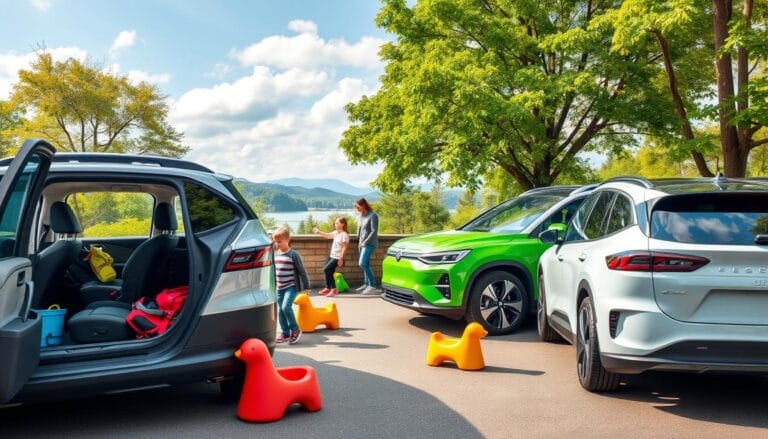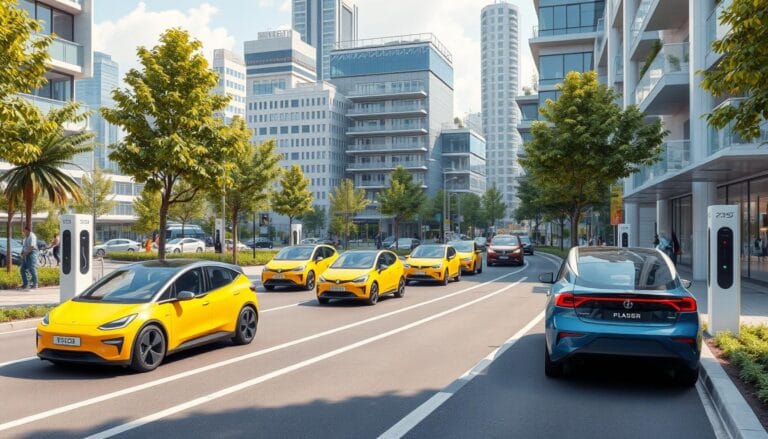
The car industry is moving towards greener options, with plug-in hybrid electric vehicles (PHEVs) at the forefront. These cars use both electric and gasoline power. This makes them great for drivers who care about the environment.
The 2024 ACEEE GreenerCars ratings show how popular electric plug-in vehicles are getting. The Toyota Prius Prime is at the top. It shows how the industry is focusing on sustainable driving.
Now, there are many plug-in hybrid cars to choose from, no matter your budget. Prices start under $35,000 and go up to luxury models. The Jeep Wrangler 4xe is a big hit, making up almost a quarter of Wrangler sales last year.
Even as fully electric cars become more common, PHEVs are still a good choice for those worried about running out of charge or finding charging spots. With only 41 public EV charging stations in New York City, PHEVs are a good option for city drivers looking for eco-friendly cars.
Key Takeaways
- Toyota Prius Prime tops the 2024 GreenerCars rankings
- PHEVs offer a balance of electric and gasoline power
- Many affordable PHEV options are available under $35,000
- Jeep Wrangler 4xe leads PHEV sales in the U.S.
- PHEVs address range anxiety and charging infrastructure concerns
Understanding Plug-In Hybrid Electric Vehicles (PHEVs)
PHEVs are a big step forward in green driving technology. They mix electric power with a gasoline engine’s reliability. This makes them a great choice for many drivers.
What sets PHEVs apart from conventional hybrids
PHEVs are known for their long range thanks to bigger batteries. They can go 15 to 60+ miles on electric power alone. This makes them perfect for daily commutes. Plus, you can plug them in to recharge, making them more versatile and efficient.
Benefits of choosing a plug-in hybrid
Choosing a PHEV has many perks. They can save you a lot on fuel costs, especially for short trips. They are great for saving gas when you drive a lot on electric power. Plus, you can use electric power for everyday driving and the gasoline engine for longer trips.
How PHEVs contribute to eco-friendly driving
PHEVs are key to eco-friendly driving. They are low emissions hybrids that help cut down on pollution from cars. By using electric power for 20 to 40 miles, they reduce emissions during daily commutes. This makes them vital for car makers to meet strict emissions rules.
| Feature | PHEV | Conventional Hybrid | Full Electric Vehicle |
|---|---|---|---|
| Electric-Only Range | 15-60+ miles | 1-2 miles | 200+ miles |
| Charging Capability | Plug-in | Self-charging | Plug-in |
| Fuel Economy | High when charged regularly | Moderate | N/A (Electric only) |
| Emissions | Low | Moderate | Zero (direct) |
The Rise of Plug-In Hybrids in the Automotive Market
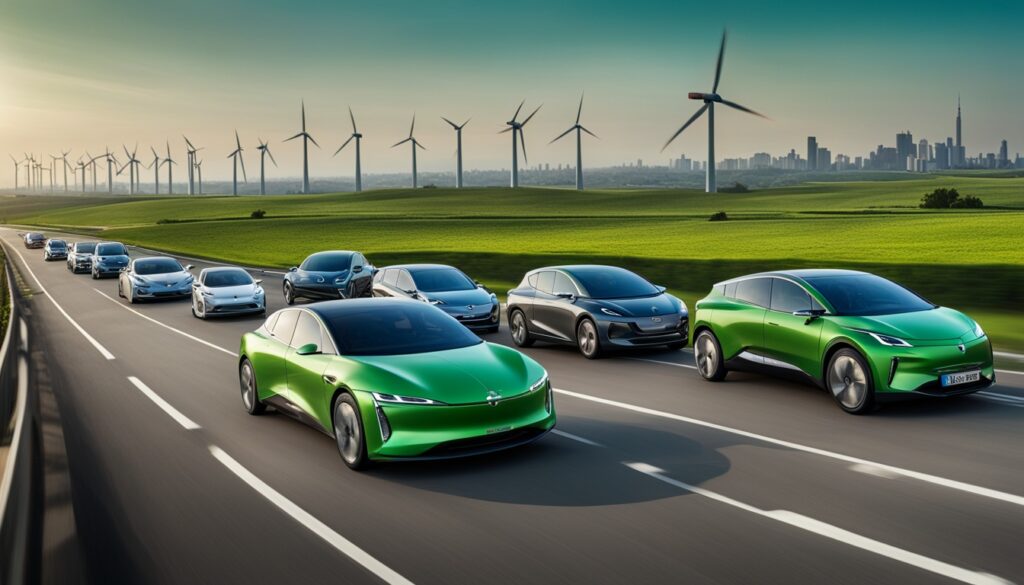
Plug-in hybrid electric vehicles (PHEVs) are becoming more popular in the car world. They let you drive electric for short trips and use gas for longer ones. In 2023, PHEVs were 30% of all new electric vehicle sales worldwide, up a bit from the year before.
In some places, PHEVs are really taking off. For example, Stellantis saw a huge jump in PHEV sales last year, up 124%. They offer great models like the Jeep Wrangler 4xe and Chrysler Pacifica Hybrid. Toyota also saw a big increase, with PHEV sales going up 94% in the first quarter of 2024.
Better technology is a big reason why more people are choosing PHEVs. These energy-saving cars now go about 50 miles on a single charge, up from 33 miles in 2017. This is thanks to bigger, more powerful batteries.
The U.S. market for PHEVs is growing fast. Now, there are over 30 different PHEV models available, from small cars to luxury SUVs. This means there’s a PHEV for almost everyone who wants to drive more sustainably.
| Year | Global PHEV Sales | Average Range (miles) |
|---|---|---|
| 2017 | Data not available | 33 |
| 2023 | 30% of new EV sales | 50 |
Even though they’re popular, PHEVs have some challenges. They might use more fuel in real life than the numbers say, which could make them more expensive to own. But, they’re still a great choice for people who want something between traditional and fully electric cars.
Best Plug In Hybrid Car Options for 2024
Green vehicles are becoming more popular, and plug-in hybrids are a top choice. They mix hybrid tech with a long electric range for great fuel economy. Let’s look at some top picks for 2024.
Toyota Prius Prime: The Efficiency King
The Toyota Prius Prime is a leader in efficiency. The SE trim has an amazing 44 miles of all-electric driving range and 127 MPGe. The XSE and XSE Premium trims also offer 39 electric miles and 114 MPGe. This makes it a top choice for eco-friendly cars.
Kia Niro PHEV: Affordable SUV Alternative
For those wanting an SUV, the Kia Niro PHEV is a great option. It has 34 miles of electric range and gets 84 MPGe overall. It’s a balance of space and eco-friendliness.
Hyundai Tucson Plug-In Hybrid: Sporty and Feature-Rich
The Hyundai Tucson PHEV is sporty yet eco-friendly. It offers up to 33 miles of electric driving and reaches 80 MPGe. This model combines performance with the latest hybrid tech.
Ford Escape Plug-In Hybrid: Tax Credit Eligible Option
The Ford Escape PHEV is a smart pick for those watching their budget. As a plug-in hybrid bought after 2023, it qualifies for a federal tax credit of up to $7,500. This makes it a budget-friendly choice for eco-friendly cars.
| Model | Electric Range (miles) | MPGe |
|---|---|---|
| Toyota Prius Prime SE | 44 | 127 |
| Kia Niro PHEV | 34 | 84 |
| Hyundai Tucson PHEV | 33 | 80 |
These plug-in hybrids show how far green vehicle tech has come. They offer better electric range and fuel economy. They are great for drivers wanting to cut down on carbon emissions without losing out on performance or practicality.
Luxury Plug-In Hybrid Choices
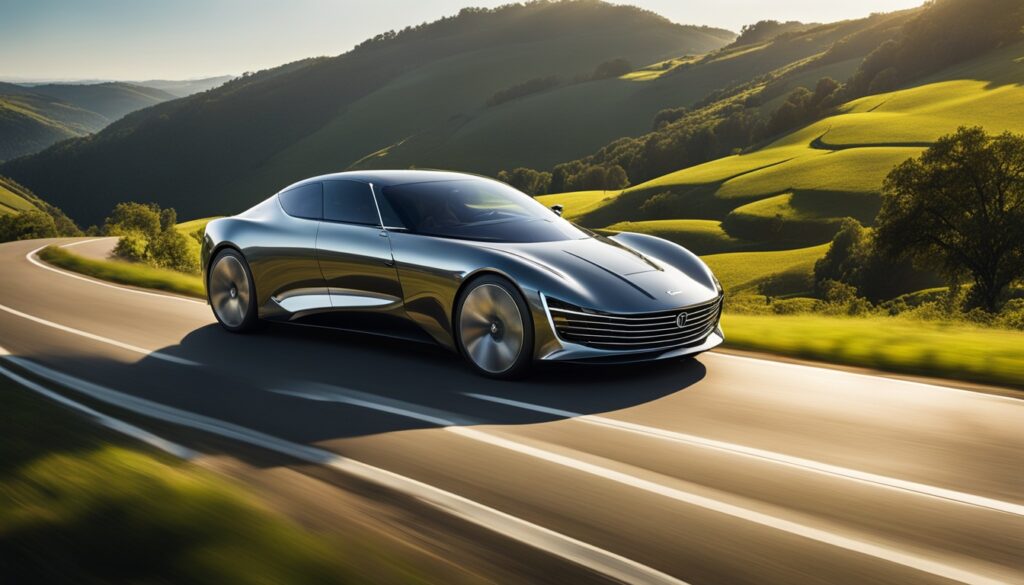
Luxury plug-in hybrid vehicles mix luxury with eco-friendliness. They have great charging options and cut down on emissions. This is all without losing style or performance.
The luxury PHEV market is growing fast. Many manufacturers are offering great options. Let’s look at some top models and their main features:
| Model | Starting MSRP | EPA Est. MPG (Combined) |
|---|---|---|
| Lexus NX PHEV | $58,655 | 36 |
| Volvo S60 Recharge PHEV | $51,250 | 30 |
| Audi Q5 PHEV | $57,400 | 26 |
| BMW X5 PHEV | $65,700 | 20 |
| Land Rover Range Rover Sport PHEV | $102,400 | 19 |
These luxury PHEVs vary in fuel efficiency and electric range. The Lexus NX PHEV is the leader with a 36 miles per gallon combined. The Volvo S60 Recharge is close behind at 30 mpg.
When picking a luxury PHEV, think about the driving experience and cost savings. Many models get tax incentives, making them more appealing. The high initial cost can be offset by savings on fuel and maintenance over time.
Reliability is important for luxury PHEV buyers. A study looked at over 312 million vehicles. It found that the iSeeCars Reliability Rating, from 1 to 10, shows a car’s chance of lasting 200,000 miles or more. This rating, along with resale value and safety scores, makes up the iSeeCars Quality Score.
As cars become fully electric, luxury PHEVs are a great choice. They offer eco-friendly tech and top-notch comfort.
Evaluating Electric Range and Fuel Efficiency
Plug-in hybrid electric vehicles (PHEVs) mix electric and gas power. It’s important to know how they compare in efficiency to choose the best fuel-efficient car.
Understanding MPGe Ratings
MPGe, or Miles Per Gallon equivalent, lets us compare PHEVs with traditional cars. It looks at both electric and gas use. Most PHEVs have high MPGe ratings, showing they use fuel better.
Comparing Electric-Only Ranges
PHEVs can go 20 to 40 miles on electric power alone. This is great for daily commutes. It means drivers can use electric power for most short trips.
Hybrid Mode Efficiency Considerations
When the battery runs out, PHEVs switch to hybrid mode. How well they do in this mode depends on the battery and the car’s weight. Hybrid cars usually get about 37 mpg, beating traditional gas cars at 27 mpg.
| Vehicle Type | Electric Range | Gas Range | Total Range |
|---|---|---|---|
| Plug-in Hybrid | 20-40 miles | 300-500 miles | 320-540 miles |
| Conventional Hybrid | N/A | 300-500 miles | 300-500 miles |
| Electric Vehicle | 200-400 miles | N/A | 200-400 miles |
PHEVs offer the best of both worlds. They’re great for short electric trips and have enough range for longer drives. Their mix of electric and gas power makes them a top choice for those who care about the environment and want a versatile car.
Charging Options and Infrastructure for PHEVs
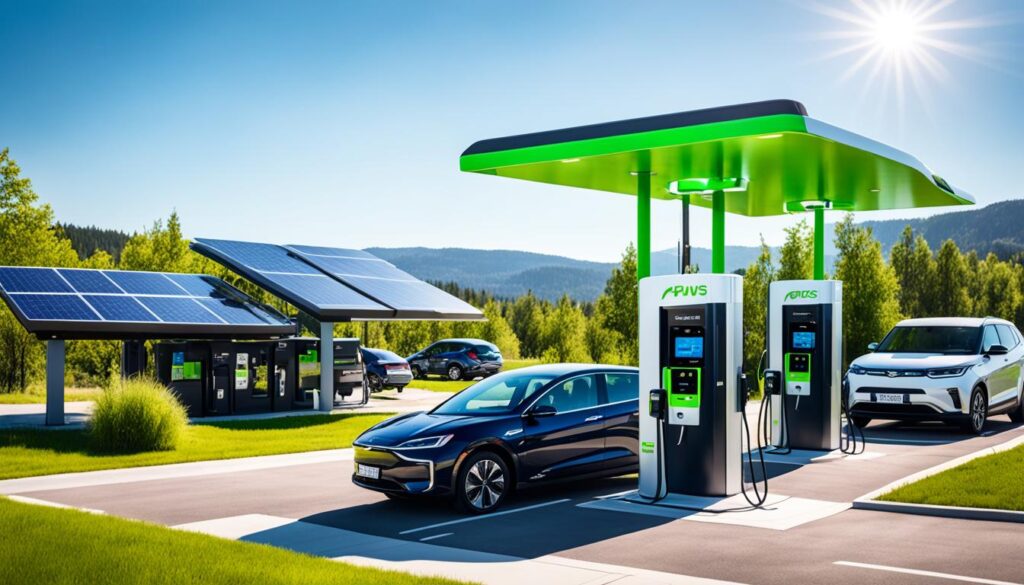
Plug-in hybrid electric vehicles (PHEVs) offer flexible charging options. They are perfect for drivers who care about the environment. You can charge these cars in different ways, each with its own speed and benefits.
Level 1 chargers use standard 120-volt home outlets. They add about 5 miles of range per hour. Most PHEVs can be fully charged in 12 hours or less with this method. It’s great for charging overnight at home.
Level 2 chargers work at 240 volts and charge faster. They give around 25 miles of range per hour. This makes charging most PHEVs in 2 hours or less. These chargers are often installed at home or in public places, offering a good mix of speed and ease.
Some PHEVs also support DC fast charging. This can add a lot of range quickly. For instance, some models can get 40 miles of range in just 30 minutes with a CCS connector.
| Charger Type | Voltage | Charging Speed | Typical Use |
|---|---|---|---|
| Level 1 | 120V | 5 miles/hour | Home overnight |
| Level 2 | 240V | 25 miles/hour | Home/Public stations |
| DC Fast Charging | 480V+ | 100-200+ miles/30 min | Public fast charging |
In 2022, over 80% of public EV charging ports in the U.S. were Level 2. More than 20% were DC fast chargers. This shows how much the charging infrastructure is growing to support electric cars like PHEVs.
Charging your PHEV regularly is key to getting the most out of it. Many owners don’t charge as often as they should. This means they might not use their car’s electric power to its full potential.
Average Americans drive about 37 miles a day. Most PHEVs have a 40-mile electric range. So, many daily commutes can be done on electric power alone. This shows how important a good charging network is for greener transport options.
Cost Considerations: Initial Investment vs. Long-Term Savings
Plug-in hybrid electric vehicles (PHEVs) are a green choice with cutting-edge technology. They might cost more at first, but the long-term gains can make up for it.
Purchase Price Comparisons
PHEVs usually have a higher starting price than traditional cars. For instance, the 2021 BMW X5 e45 PHEV was $3,700 pricier than the X5 xDrive 40i ICE model. The Hyundai Tucson PHEV also costs $3,395 more than its hybrid version.
Fuel and Maintenance Cost Benefits
PHEVs save a lot on fuel thanks to their eco-friendly design. The BMW X5 PHEV, for example, cut fuel costs by $1,110 over 22,980 miles versus its gas-only rival. Models like the Hyundai Santa Fe PHEV can save even more.
| Model | MPGe | EV Range | Fuel Savings |
|---|---|---|---|
| BMW X5 e45 PHEV | 50 | 31 miles | $1,110 |
| Hyundai Santa Fe PHEV | 78 | 30 miles | $2,324 |
Available Tax Incentives and Rebates
PHEVs might get up to $7,500 in federal tax credits, lowering the total cost. This perk, not given to traditional hybrids, can greatly reduce the upfront price. The time it takes to break even depends on your driving habits, local energy prices, and the vehicle’s cost.
Think about your area’s fuel and electricity costs when looking at a PHEV. For example, in Washington State, where electricity is cheaper, a BMW 330e PHEV pays off in about three years. But in California, with its higher energy prices, it takes over seven years to break even.
Performance and Driving Experience of Top PHEVs
Plug-in hybrid electric vehicles offer a unique driving experience. They blend electric efficiency with gas-powered performance. These cars are great for city commutes and long trips.
Many plug-in hybrid vehicles have different driving modes. In electric mode, drivers get quiet, emission-free travel for short distances. When the battery runs out, the gas engine kicks in, making sure you can keep going.
The performance of top PHEVs varies a lot. For example, the 2020 Audi Q5 TFSI e has an electric range of 20 miles and gets 27 mpg in hybrid mode. On the other hand, the 2019 Mitsubishi Outlander Plug-In Hybrid has 22 miles of electric range but only 25 mpg in hybrid mode.
| Model | Electric Range (miles) | Hybrid Fuel Economy (mpg) |
|---|---|---|
| Audi Q5 TFSI e | 20 | 27 |
| Mitsubishi Outlander PHEV | 22 | 25 |
| Subaru Crosstrek Hybrid | 17 | 35 |
Driving a PHEV is smooth and responsive. The electric motors give quick acceleration, and the gas engine keeps you going on the highway. This makes plug-in hybrids perfect for city driving and long trips without worrying about running out of power.
Environmental Impact and Emissions Reduction
Plug-in hybrid electric vehicles (PHEVs) are key in cutting down carbon emissions. The Toyota Prius Prime and other eco-friendly cars emit less greenhouse gases than traditional cars. They produce about 230 grams of CO2 per mile, which is much less than the 73.4 tons from gasoline cars.
Electric vehicles and PHEVs like the Hyundai Ioniq Plug-in Hybrid don’t emit any tailpipe pollution when using electricity. This makes them perfect for short trips and city driving. They also reduce emissions over their entire life, not just while driving.
The Honda Clarity and similar models show big efficiency improvements. Last year, hybrids and plug-in hybrids saw an 83% increase in sales. This shows more people are choosing them for their environmental benefits.
| Vehicle Type | CO2 Emissions (g/mile) | Lifetime Emissions (tons) |
|---|---|---|
| Internal Combustion | 370 | 73.4 |
| Hybrid | 270 | 53.6 |
| Plug-in Hybrid | 230 | 45.6 |
| Fully Electric | 195 | 38.7 |
Fully electric vehicles have the lowest emissions over time. But PHEVs are a good middle ground. They cut emissions by 46% compared to gasoline cars and use fewer critical minerals than battery-electric cars. This makes PHEVs a great choice for drivers who want to make a big environmental impact right away.
Future Outlook: PHEVs as a Bridge to Full Electrification
Plug-in hybrid electric vehicles (PHEVs) are leading the way to a greener future. Models like the Kia Niro plug-in hybrid and Chrysler Pacifica Hybrid are changing the game. They offer great fuel efficiency and performance, making the switch to electric easier.
Thanks to better battery technology, PHEVs are getting more powerful. They can now go further on electric power, making them perfect for daily trips. This boost in performance and eco-friendliness is why more people are choosing PHEVs.
The demand for PHEVs is growing fast. In Germany, 24% of cars sold in 2023 were electric or hybrid, with 6% being plug-in hybrids. This trend is happening worldwide, as electric vehicle adoption keeps rising.
PHEVs will still be important for those who need flexibility. Even as some places stop selling new PHEVs, they’re a good choice for areas with limited charging spots. The future of PHEVs is about better electric range and the ease of having a gasoline backup.
- Extended electric ranges for daily use
- Decreasing costs aided by government incentives
- Growing charging infrastructure improving convenience
- Continued innovation focusing on efficiency and affordability
As cars evolve, PHEVs are key to moving towards full electrification. They offer a mix of being eco-friendly and practical for today’s drivers.
Conclusion
Plug-in hybrid electric vehicles (PHEVs) are a great choice for those who care about the environment. They mix electric and gasoline power, giving you up to 60+ miles on electric alone. This makes them perfect for cutting down on carbon emissions without losing out on convenience.
Thinking about the cost of owning a PHEV is important. They might cost more at first because of their advanced technology. But, they can save you money over time. The U.S. Department of Energy’s “eGallon” helps drivers see how much they can save by using electricity instead of gasoline.
PHEVs are key in moving towards cleaner transportation. They can be charged from outside and still drive like a regular car when the battery runs out. Sure, they might have less space for cargo and take longer to charge. But, their many advantages make them a smart choice for a greener future.
FAQ
What sets PHEVs apart from conventional hybrids?
PHEVs have a charging port and a bigger battery. This lets them drive electric-only for 20-30 miles before using gasoline.
What are the benefits of choosing a plug-in hybrid?
PHEVs are more fuel-efficient and produce fewer emissions. They also cost less to run and can go on long trips without worrying about running out of power.
How do PHEVs contribute to eco-friendly driving?
PHEVs help reduce emissions by using electric power for short trips. They also use less fuel when in hybrid mode. Charging regularly and using the electric range cuts down on carbon emissions.
What are some top plug-in hybrid options for 2024?
For 2024, top PHEVs include the Toyota Prius Prime, Kia Niro PHEV, Hyundai Tucson, and Ford Escape Plug-In Hybrid. These vehicles offer both electric and gasoline power in different types of cars.
What are some luxury plug-in hybrid choices?
Luxury PHEVs include the Bentley Bentayga and Flying Spur, Land Rover New Range Rover P440 PHEV, and BMW XM. These cars mix luxury with green technology.
What is MPGe, and how is it used to evaluate PHEVs?
MPGe (Miles Per Gallon equivalent) measures how efficient PHEVs are compared to regular cars. It looks at electric-only range and hybrid mode efficiency too.
What charging options are available for PHEVs?
PHEVs can be charged with standard 120-volt home outlets, 240-volt Level 2 chargers, or some models support DC fast charging for quick charging.
How do the initial costs of PHEVs compare to long-term savings?
PHEVs cost more upfront because of their big batteries. But, they save money over time by using less fuel and needing less maintenance. Some PHEVs even get federal tax credits.
How does the driving experience of PHEVs compare to conventional vehicles?
PHEVs offer a special driving experience. They have the quick power of electric motors and the comfort of gasoline engines. Many let you choose between electric or gasoline power.
Are PHEVs a transitional technology towards full electrification?
PHEVs act as a bridge from old cars to fully electric ones. They give people the choice between electric and gasoline power, making them useful for many drivers.