The world is moving towards cleaner energy and transport. Knowing how electric cars work is key. Electric vehicles (EVs) use electric motors powered by rechargeable batteries. This means no gasoline and less pollution.
EVs have a complex electrical system that makes them interesting. This system efficiently manages and converts energy. Without a traditional engine, EVs need less maintenance and offer a cleaner drive.
Exploring the mechanics of EVs shows their advanced powertrains and energy-saving features. Features like regenerative braking make these cars stand out. It’s a story of how electricity beats gasoline, making driving smooth and efficient.
Key Takeaways
- Electric vehicles operate with fewer moving parts and lower maintenance needs compared to gasoline-powered cars.
- EVs draw power from a charging station and store it in a rechargeable battery pack, often a lithium-ion composition.
- Different charging levels exist, with Level 1 chargers adding about 40 miles of range from an 8-hour charge, while DC fast chargers can replenish up to 80% battery in 30-60 minutes.
- The median EV range is now 270 miles, with multiple models and battery pack options available to suit different driving needs.
- Both Battery Electric Vehicles (BEVs) like the Nissan LEAF and plug-in hybrid vehicles (PHEVs) contribute to a growing, diverse market of electric transportation options.
- While initially pricier, electric cars offer long-term savings on fuel and maintenance, with increasing infrastructure support from Tesla, Electrify America, and other network providers.
Introduction to Electric Car Technology
The world is seeing a big change in cars with electric car technology. This change is driven by the need to protect the environment and by new technology. Electric vehicles (EVs) are moving us away from old-fashioned engines to greener and smarter cars. This move cuts down on pollution and makes cars work better with new electric car technology.
Electric cars work differently from old cars. They store energy in batteries instead of using gasoline. This means they make less noise, pollute less, and cost less to keep up because they have fewer parts.
The Rise of Electric Vehicles
Electric cars have changed a lot over time. Thanks to better batteries and power systems, they go farther and are more reliable. There are three main kinds of electric cars: Battery Electric Vehicles (BEVs), Plug-in Hybrid Electric Vehicles (PHEVs), and Hybrid Electric Vehicles (HEVs). Each type has its own benefits for different drivers. People like them because they are good for the planet and save money.
Comparing EVs with Traditional Combustion Engines
EVs and old cars are very different. Old cars use fuel to make power, while EVs use electricity from batteries. Electric car technology makes cars run better and use less energy. It also brings new features like regenerative braking and smart car tech that make driving better.
EVs are getting even better with new technology. They have big batteries and fast charging, so you can drive long distances without stopping often. These improvements make electric cars more useful and appealing for people and the planet.
As electric car technology gets better, how we move around will change a lot. We’ll move towards a future that is cleaner, more efficient, and full of new technology.
The Core Components of Electric Vehicles

Electric vehicles (EVs) have advanced engineering and new technologies. These make them work well and efficiently. Knowing about the electric car parts helps us understand how they work.
Understanding the Electric Powertrain
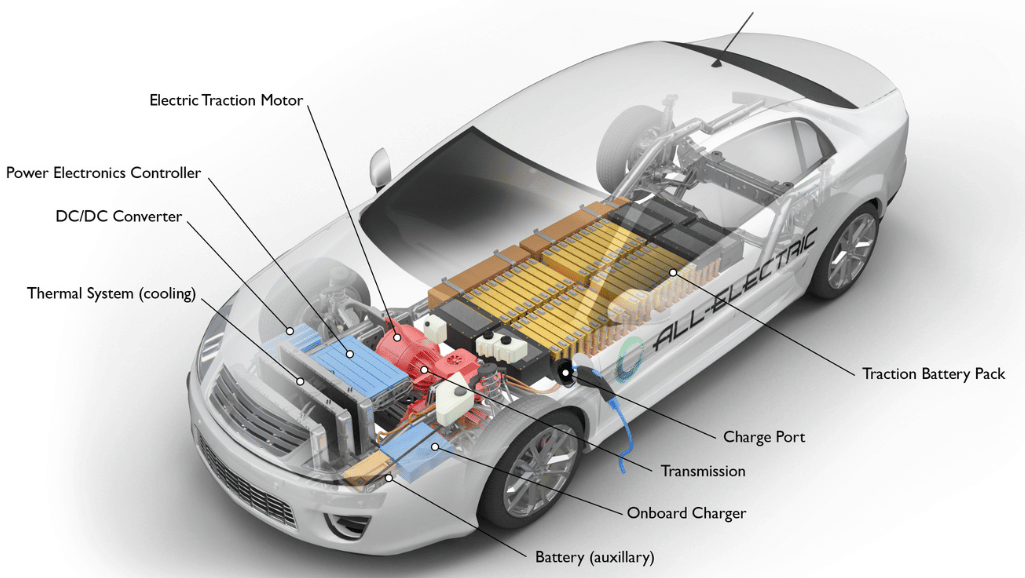
The electric vehicle powertrain is key to how the car moves. It has parts like the electric motor, power inverter, and battery pack. These work together to turn electrical energy into the power to move the car. The power inverter is important because it changes DC from the battery to AC for the motor.
The Role of Batteries in Electric Cars
Batteries are very important in electric cars. They store energy and make sure it gets to the car’s motor and other systems. The battery is often the most expensive and critical part of an electric vehicle.
Here’s a closer look at the parts that make an EV work:
| Component | Function | Type/Example |
|---|---|---|
| Electric Traction Motor | Converts electrical energy into mechanical energy to propel the vehicle. | Brushless DC (BLDC) Motors |
| Power Inverter | Changes DC from the battery into AC for the motor. | Uses high voltage electrical systems |
| Battery Pack | Stores and supplies electrical energy. | Lithium-ion batteries |
| Onboard Charger | Converts AC from external sources into DC to charge the battery. | Installed within the car |
| Thermal System | Maintains optimal operating temperatures for key components. | Includes radiators, fans, and coolant pumps |
| DC/DC Converter | Converts high-voltage DC from the battery to lower-voltage DC to power vehicle accessories. | Integral for electrical system stability |
| Charge Port | Connects the vehicle to an external power source for charging. | Universal compatibility with charging stations |
This network of parts makes electric vehicles work well. They ensure the car moves efficiently and with less harm to the environment.
How Do Electric Cars Work

Understanding how do electric cars work and electric car mechanics is key to seeing the cool tech behind these green vehicles. Electric cars use a simple yet advanced system. They run on energy from electrical sources, which powers the car’s motor. Let’s dive into the details:
First, electric cars get energy through their charging port. This port fits with different charging stations, from home setups to public spots. The onboard charger, a key part of electric car mechanics, changes the AC power to DC for the car’s battery.
The traction battery, big and strong up to 100kWh, holds this energy. It’s mainly in charge of powering the electric motor. This motor is crucial for how do electric cars work. It turns the battery’s energy into motion, making the car move by turning the wheels through a special transmission.
The car’s speed and power are managed by the power electronics controller. This part makes sure power moves smoothly from the battery to the motor. It changes the energy flow and motor’s power for speeding up or slowing down.
Now, let’s look at the benefits of electric car mechanics. With over 120 models out there, these cars can go from 100 to over 500 miles on one charge. This covers daily drives and even long trips, like with the Hyundai Kona Electric and Jaguar I-Pace. In places like California, charging an electric car is cheaper than filling up a gas car for the same distance.
Electric vehicles are simpler than cars with traditional engines, with 90% fewer parts. This means they need less upkeep, saving money and hassle over time. Plus, most electric car batteries have long warranties, making them a smart choice for those who care about the planet.
Electric Car Battery Operation and Management

Electric car batteries, especially lithium-ion cells, are key to modern electric vehicles. They are chosen for their lithium-ion battery efficiency. This efficiency means they can hold a lot of energy and recharge well, which helps the car perform better and be more eco-friendly.
Navigating the Traction Battery Pack
Electric vehicles use advanced traction batteries, mainly made of lithium-ion cells. These cells are vital for storing the huge amount of energy needed. As technology improves, these batteries can now hold more energy and last longer, meeting the car’s needs better.
With a move to electric cars, battery packs do more than just store energy. They also manage power well during use. This keeps the battery healthy for a long time, making the electric car work better.
Insights into Lithium-Ion Battery Advantages
Lithium-ion batteries are key to electric car efficiency. They can store about 300 to 500 Wh/kg, much more than older batteries. This is important for making electric cars go farther without adding extra weight.
These batteries also last a long time, often over 100,000 miles or eight years. In mild climates, they can last up to 15 years. This shows how reliable and long-lasting they are in different environments.
Using lithium-ion batteries helps electric cars go farther, recharge faster, and use less energy. These features are crucial for making cars more eco-friendly.
The ongoing improvements in lithium-ion battery efficiency change how we manage electric car battery operation. These batteries are key to the cost and performance of electric vehicles. Their importance is growing as electric cars become more common.
Decoding the Function of Electric Car Motors

Let’s dive into how electric cars work by looking at their motor. The key to electric car motor functions is their ability to turn electrical energy into mechanical power. Unlike traditional cars, electric vehicles use electric motors instead of internal combustion engines. These motors play a big role in changing the electrical energy from batteries into the motion we need.
Electric motors in cars use alternating current (AC), which comes from the direct current (DC) in the battery. The inverter changes DC to AC. The motor’s design creates a magnetic field that moves the wheels.
This way of moving without a gearbox is a big plus for electric vehicles. Electric motors give smooth acceleration from a standstill. This shows how well electric cars work in delivering power right away.
Looking into electric vehicles shows how well the motor works together for direct power. Without a gearbox, the car is simpler and drives better with quicker responses.
In short, electric car motors turn electrical energy into motion. They offer a clean, efficient, and strong choice over traditional engines. This is leading us to more eco-friendly car options.
The Inverter: Converting Power for Electric Car Use
The inverter in an electric vehicle is key for changing the battery’s direct current (DC) to the alternating current (AC) needed by electric motors. It makes sure your car runs well and uses energy efficiently.
Learning about the electric car inverter function shows its two main jobs. It changes DC to AC for power and helps the car perform better. This lets electric motors work right, changing power based on what you need while driving.
From DC to AC: How Inverters Support EV Functionality
Inverters are vital by changing the low-voltage DC from the battery to high-voltage AC for the motor. This electric vehicle power conversion is key for the car’s performance and efficiency.
Speed Control Through Electric Vehicle Inverters
The electric car inverter function also controls the motor’s speed. It does this by changing the AC power’s frequency. This lets the inverter control speed for smooth starts and stops, making driving better.
| Component | Function | Impact on EV Performance |
|---|---|---|
| Battery (DC Power) | Stores energy | Provides sustained power supply |
| Inverter | Converts DC to AC | Enables motor operation and speed control |
| Electric Motor (AC Power) | Drives the vehicle | Direct impact on torque, speed, and acceleration |
| Cooling System | Maintains optimal operation conditions | Prevents overheating, ensuring efficient performance |
In summary, the inverter is crucial for electric vehicles. It’s key for electric vehicle power conversion and controlling motor speed. It works hard, making sure your electric vehicle runs smoothly, whether you’re speeding up or braking.
Navigating Electric Vehicle Charging Systems
Getting to know the electric vehicle charging system is key for EV owners. Charging systems vary in how they work, speed, and convenience. This affects how people use them and their happiness with them.
Level 1 to DC Fast Charging: Understanding Your Options
The EV charging world has many options, from Level 1 to DC Fast Charging. Each level has its own benefits for users. EV charging levels explained start with Level 1, using a standard 120-volt outlet found in many homes. It takes about 30 to 50 hours for a full charge, adding 4-5 miles of range per hour.
Level 2 charging uses a 240-volt outlet, often found at home or public stations. It’s faster, taking 4-7 hours for a full charge and adding about 25 miles of range per hour. Many workplaces and public areas now offer Level 2 charging for commuters.
Level 3, or DC Fast Charging (DCFC), is the fastest. It can charge many EVs to 80% in 20-30 minutes, adding 100-200 miles of range in half an hour. DCFC stations are key for long trips, located on highways and in cities for quick charging.
Having many charging options gives users flexibility and shows the need for good infrastructure readiness. With more EVs on the road, the public and private sectors are investing in more charging stations. The Bipartisan Infrastructure Law is committing a lot of funding to improve EV charging infrastructure.
The Future of EV Charging Infrastructure
The future of EV charging looks bright, with big plans to make charging easier, faster, and more user-friendly. New fast 350 kW DC chargers could change how quickly we recharge, making it as quick as a coffee break.
This future looks like EV charging will be as common as gas stations, making electric cars more appealing. As Forhad from EV Next Gen points out, we’re moving towards a sustainable and efficient electric future with better EV technology and infrastructure.
Knowing about EV charging levels explained helps new buyers make good choices for their lifestyle and the environment. As charging stations grow and technology gets better, switching to electric vehicles will get easier and more appealing for many.
Regenerative Braking and Energy Recovery Systems
The regenerative braking system in electric vehicles captures kinetic energy that would otherwise go to waste. Electric cars use this system to recharge their batteries when they brake. This not only saves energy but is a big step towards better electric cars energy recovery.
Regenerative braking is very efficient. It can recover up to 70% of kinetic energy when slowing down. This energy helps increase the electric range, especially in cities with lots of stops.
- Improvement in fuel efficiency for hybrids, enabling significant savings on fuel expenditures.
- Extended lifespan of brake pads and rotors, as the regenerative braking system does most of the work in slowing down the vehicle.
- Electric vehicles with advanced regenerative braking systems allow for one-pedal driving, enhancing the driving experience with less need for manual brake application.
The regenerative braking system works well under many conditions, but its effectiveness can change. For example, in very cold weather, it might not work as well because batteries don’t accept energy as well.
| Feature | Benefit |
|---|---|
| Higher kinetic energy recapture | Adds hundreds of miles of range over a year |
| One pedal driving | Enhances user driving experience with less pedal switching |
| Less frequent brake component change | Reduces vehicle maintenance costs |
The regenerative braking system is more than just a way to make vehicles more efficient. It’s a key part of the progress in electric cars energy recovery. It’s helping shape a more sustainable future for cars.
The Electric Car Experience: Performance and Driving Dynamics
Electric vehicles (EVs) are more than just good for the planet. They also offer exceptional driving dynamics and performance. Brands like Tesla, BMW, and Jaguar lead the way, focusing on both efficiency and the driving experience.
Electric cars are famous for their instant torque and smooth acceleration. They don’t need time to build up power like traditional engines do. This means they accelerate faster and respond quicker, making driving more fun. This is especially true for cars like the Tesla Model Y and Porsche Taycan.
Let’s take a closer look at some popular electric vehicles and their features:
| EV Model | Range (miles) | Notable Features |
|---|---|---|
| Tesla Model S | Up to 405 | High range, luxury features |
| Jaguar I-Pace | Up to 234 | Luxury and performance-focused |
| Tesla Model 3 | Up to 272 | Balance of price and performance |
| BMW i3 | Up to 153 (SE) | Compact urban vehicle |
| Porsche Taycan | Up to 200 (base) | Premium performance sedan |
| Tesla Model Y | Up to 330 | Versatility and efficiency |
These vehicles show how electric cars are not just good for the environment but also fun to drive. Even though some top models like the Tesla Model S and Porsche Taycan are pricey, they offer amazing acceleration and luxury.
In the USA, China, and Europe, more people are choosing electric cars. They like the mix of performance, being green, and new tech. As electric cars get better and more affordable, we’ll see even more improvements in how they drive and how far they can go. This change is big news for car makers, pointing us towards a future where cars are fast and kind to the planet.
Cost of Ownership and Environmental Impact of Electric Cars
Electric vehicles (EVs) are becoming more popular, changing how we think about car costs and the environment. EVs are making owning a car cheaper and helping the planet.
The car industry uses a lot of energy, making up about 30% of U.S. energy use and 70% of oil use. EVs are a green choice, giving off no emissions. This means they make the air cleaner than traditional cars.
EVs are cheaper to run. For example, charging them costs about 4.04 cents per mile, much less than the 12.51 cents for regular cars. This means you could save $1,410 a year if you drive 15,000 miles a year. EVs also cost about 11.98 cents per mile to run, which is a lot cheaper than traditional cars.
The U.S. has over 53,000 charging stations with more than 137,000 charging ports as of 2023. This makes it easier to use EVs, with lots of charging spots near where you park. This growth in charging stations helps people use EVs more.
Buying an electric car can also save you money. The U.S. government offers tax credits of up to $7,500, and some states add more savings. This can cut the cost of EVs in half for buyers. These incentives are part of a plan to get more people to use cleaner cars, like California’s goal for all new cars to be zero-emission by 2035.
EVs are getting better in technology and performance. Batteries can last 8 to 15 years, depending on where you live. EVs now go over 130 MPGe and can go 100 miles on just 25–40 kWh. Experts think battery technology will keep getting better, making EVs even cheaper and more efficient.
EVs are a great choice for the environment and your wallet. For more info on how EVs collect data, check out the detailed privacy overview at EV Next Gen.
Conclusion
The journey into electric vehicles (EVs) shows us a new path for transportation. This path leads to a future that is good for our planet. EVs are a key solution to the global problem of reducing carbon emissions.
They offer many benefits, from helping the environment to saving money. EVs don’t have tailpipes, which means they don’t emit harmful gases. This makes the air cleaner, which is better for our health and can lower healthcare costs.
EVs also help reduce our need for fossil fuels. This makes our energy use more diverse and strengthens our national security by cutting down on petrol imports.
Electric vehicles are also good for our wallets. They cost less to run than cars with gasoline engines, which means saving money over time. They also need less maintenance, which saves even more money and time.
Government incentives and tax breaks are making EVs more affordable for people. The instant power and quiet ride of EVs make them more appealing. This is changing how people think about sustainable transport.
EVs are having a big impact on society. They create jobs, spark innovation, and make car companies compete with each other. There are many types of EVs available, from small scooters to big trucks. This shows the industry’s effort to meet different needs and make EVs a part of our lives.
Understanding the advancements in electric vehicles helps us move from cars with internal combustion engines to electric ones. This change will take time but EVs are leading the way. They will have a big impact on the car industry and the cities of the future. Soon, sustainable mobility will be a normal part of our lives.
FAQ
How do electric cars work?
Electric cars use an electric motor and a rechargeable battery pack. The motor turns electrical energy into mechanical power to move the car. They don’t need an internal combustion engine like gasoline cars do.
What are the key differences between electric vehicles and traditional combustion engines?
EVs run on electricity from a battery pack, not gasoline. They don’t emit tailpipe pollutants and need less maintenance. They also have fewer parts moving around.
What constitutes the electric powertrain in EVs?
The electric powertrain includes the electric motor, inverter, battery pack, and drivetrain parts. These work together to change electrical energy into mechanical energy for the wheels.
How do the batteries in electric cars function?
Electric car batteries hold electrical energy for the motor. They’re rechargeable and use lithium-ion cells for high energy density. They manage charge and discharge cycles well.
What is the main benefit of using a lithium-ion battery in electric cars?
Lithium-ion batteries let electric cars go farther on one charge. They last a long time, have high power, and recharge quickly.
How do electric car motors work?
Electric car motors turn electrical energy into mechanical energy. Electrical current through the motor creates a magnetic field. This makes the motor shaft turn, which moves the car’s wheels.
What role does the inverter play in an electric car?
The inverter changes DC from the battery pack to AC for the motor. It also controls the motor’s speed by changing the AC power’s frequency.
What are the various EV charging levels?
EV charging levels include Level 1, using a standard outlet for slow charging. Level 2 uses a 240-volt outlet for faster charging. DC Fast Charging is the quickest, recharging to 80% in under an hour.
How does regenerative braking work in electric cars?
Regenerative braking turns kinetic energy into electrical energy during braking. This energy goes back to the battery, making the car more efficient and extending its range.
What is the environmental impact of electric cars compared to traditional gas-powered vehicles?
Electric cars are better for the environment than gas cars. They don’t emit tailpipe pollutants and often use cleaner energy sources. They also make less noise pollution.