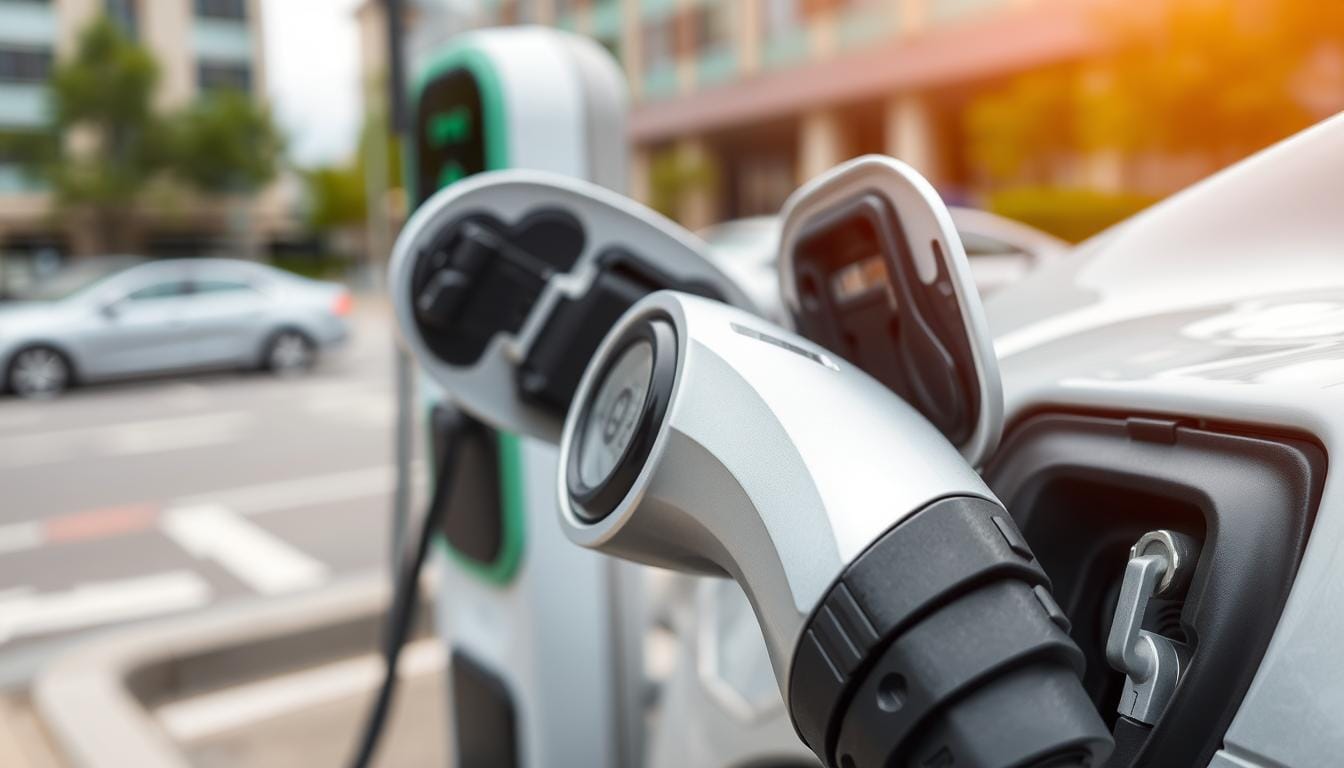
Learning about electric vehicle definition and EVs meaning is key to understanding the shift to cleaner transport. An electric vehicle, or EV, is a car that runs on electric motors. It uses energy stored in batteries, which are charged with electricity, not gasoline or diesel. This change means quieter, cleaner travel.
EVs include both all-electric cars and plug-in hybrid electric vehicles (PHEVs). PHEVs use both electric and gasoline power. Knowing about EVs helps people see the options available, like cars from Ford, GMC, Hyundai, and Lucid Motors. This change offers a wide range of EVs, from small hatchbacks to luxury sedans, meeting different needs.
The way we travel is changing, and what is an EV is more than just a car alternative. It’s a new way to travel and breathe cleaner air.
Key Takeaways
- Electric vehicles (EVs) offer an alternative fuel source to gasoline or diesel, providing cleaner, quieter transportation.
- The market today includes over 70 distinct EV models ranging from 100 to 500+ miles on a single charge.
- CCS Connectors are currently the most common type of charging infrastructure for these vehicles.
- The adoption of EVs is facilitated by the advent of sophisticated technologies like Battery Management Systems and On-board Chargers.
- Government incentives and corporate innovation continue to fuel the growth of EV models, such as the Hyundai IONIQ 6 and the Kia Soul Booster EV.
- Technological advancements ensure that EV batteries can maintain a significant lifespan while managing diverse driving conditions.
What is an Electric Vehicle (EV): Core Definition
The evs definition includes cars that run on electric motors. They get their power from rechargeable batteries. Knowing how do electric vehicles work is key for everyone.
The Electric Motor: An Essential Component of EVs
The electric motor is at the center of every EV. It turns electrical energy into movement. This shows a big change from old cars.
Charging from an External Source: How EVs Power Up
Charging EVs is vital for their use. Strong electric vehicle charging infrastructure helps make electric cars common. This lets cars charge at home or at special stations.
Distinguishing Between EVs and Plug-in Hybrid Electric Vehicles (PHEVs)
EVs and PHEVs both charge from outside. But PHEVs also have a gas engine. This lets PHEVs go farther than EVs alone.
The importance of evs is big. They help the planet and change how we move around. EVs will be key in making travel green worldwide.
Looking at these points helps us see how EVs can change how we travel. They lead to a cleaner, better future.
Electric Vehicle System Overview
The rise of electric vehicle technology is a big change from old cars to new, green ones. To get electric vehicle system overview, you need to know its main parts. These parts are different from what’s in regular cars.
Unlike old cars with engines and exhausts, EVs have electric motors and big batteries. These batteries store energy for the car to move.
The electric motor is key in EVs. It moves the car and also helps recharge the battery when you slow down. This makes the car more efficient, which is good for the planet.
The battery is like a fuel tank but for electricity. How big it is affects how far you can drive. This is something to think about if you’re thinking of getting an EV.
EVs are very efficient. They turn over 85 percent of electrical energy into movement. This is way better than old cars, which only get about 40 percent.
The car’s parts work together thanks to the Electronic Power Control Unit (EPCU). This makes sure the car runs well and uses energy right.
As cars get better, so does the tech around them. There are more ways to charge EVs now. This includes fast charging systems. Also, new battery tech makes EVs go further.
- Level 1 Charging: 2 to 5 miles of range per hour
- Level 2 Charging: 10 to 25 miles per hour
- DC Fast Charging: Charges up to 80% in 45 minutes
Thinking about getting an EV? Knowing the basics is key. A good overview of electric vehicle systems will help you understand how they work. It also shows their good side for the planet and your wallet. Insurance companies are starting to get it too, offering special plans for EVs.
In short, moving to electric cars is a big step towards cleaner travel. It’s helped by better tech, like batteries and charging systems. These changes are making EVs more common and accepted.
| Charging Level | Range Per Hour | Typical Use Case |
|---|---|---|
| Level 1 | 2-5 miles | Home use, overnight charging |
| Level 2 | 10-25 miles | Home, work, public locations |
| DC Fast Charging | Up to 80% in 45 minutes | Highway rest stops, quick charge stations |
Types of Electric Vehicles and Their Technologies
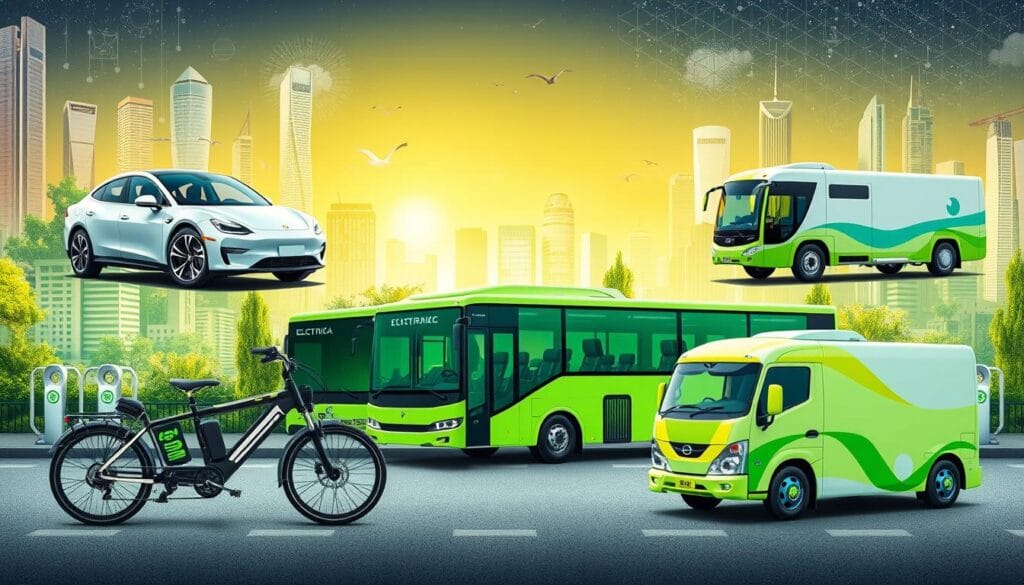
The push for sustainable solutions has made electric vehicles (EVs) very popular. Each type of EV has its own technology and benefits. Knowing about these types helps us make smart choices for green transportation.
Battery Electric Vehicles (BEVs) run only on electricity stored in batteries. They have zero emissions. For example, the 2022 Lucid Air Dream Edition can go over 500 miles on one charge. This shows how far EVs have come in terms of electric vehicle charging.
Battery Electric Vehicles (BEVs): Pure Electricity, No Emissions
BEVs are the top choice for renewable energy vehicles. They need only electric charging stations to refuel. These cars have big batteries that let them drive 150 to 400 miles on one charge. This makes them very appealing to those who care about the environment.
Plug-in Hybrid Electric Vehicles (PHEVs): Dual Power Sources
PHEVs use both electric motors and traditional engines. For example, the Mitsubishi Outlander PHEV GSR starts with electric power for 10 to 50 miles. Then, it switches to gasoline. This gives a longer range while still cutting down on emissions for short trips.
Hybrid Electric Vehicles (HEVs): Assisted Electric Power
HEVs have both electric and combustion engines. The electric motor helps the engine in city driving, where it uses less energy. The Toyota RAV4 Hybrid in Australia is a good example. It’s a practical choice for those moving from traditional to electric vehicles.
Fuel Cell Electric Vehicles (FCEVs): Hydrogen-Powered Future
FCEVs, like those powered by hydrogen fuel cells, are a new direction in EV technology. They can go up to 300 miles on one tank of hydrogen. They also use regenerative braking to capture and reuse energy. This shows the advanced potential of renewable energy vehicles.
It’s important to know about the different types of EVs and how they work. This knowledge is key for anyone looking to help make transportation more sustainable. As technology gets better, electric vehicles will become even more efficient and practical. This is good news for the future of renewable energy in transportation.
The Benefits and Drawbacks of Electric Vehicles
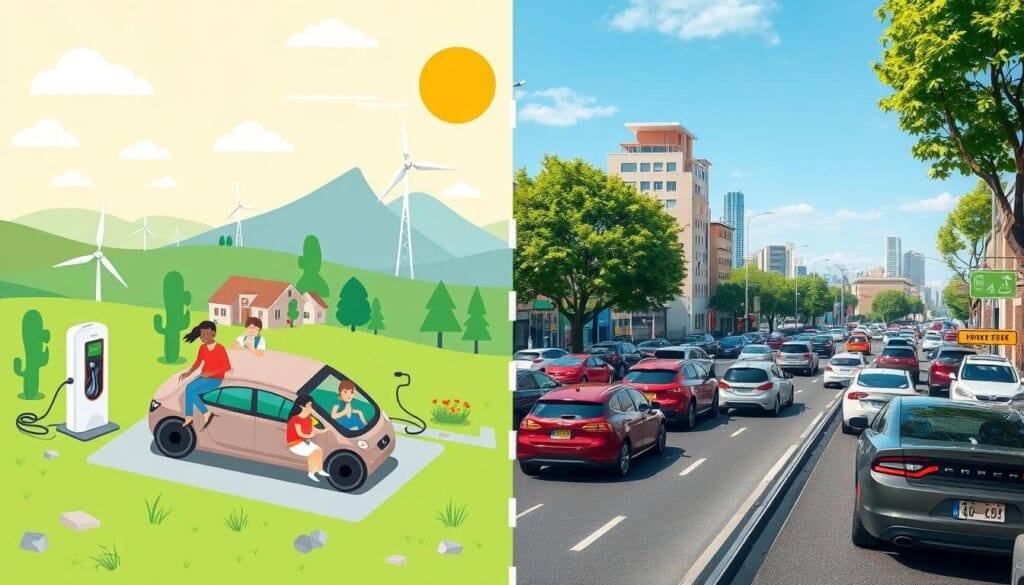
Looking into electric vehicles explained shows a mix of good and bad points. The push for eco-friendly transportation is a big plus. But, it’s important to consider both sides of this new tech.
Eco-Friendly Transportation: Reducing Carbon Footprint
The benefits of electric vehicles are clear in their green impact. They don’t have tailpipes, so they cut down on harmful emissions. This makes them key in the move towards a greener future.
Electric Car Information: Maintenance and Operational Costs
One big plus of electric vehicles is they need less upkeep than gas cars. Their motors have fewer parts, leading to fewer breakdowns and lower repair costs. But, the upfront cost and battery replacement costs are big factors to think about.
EV Technology Explained: The Pros and Cons of Electric Mobility
Electric vehicles explained show both good and bad sides. New battery tech means they go further on a charge. But, long charging times and not enough charging spots can be a problem. Still, electric cars can save money in the long run, especially with how they use energy.
In short, electric cars have their hurdles, but the long-term perks are worth it. They’re better for the planet and can save money. As EV tech and charging spots improve, these points will keep shifting.
Electric Vehicle Charging Infrastructure
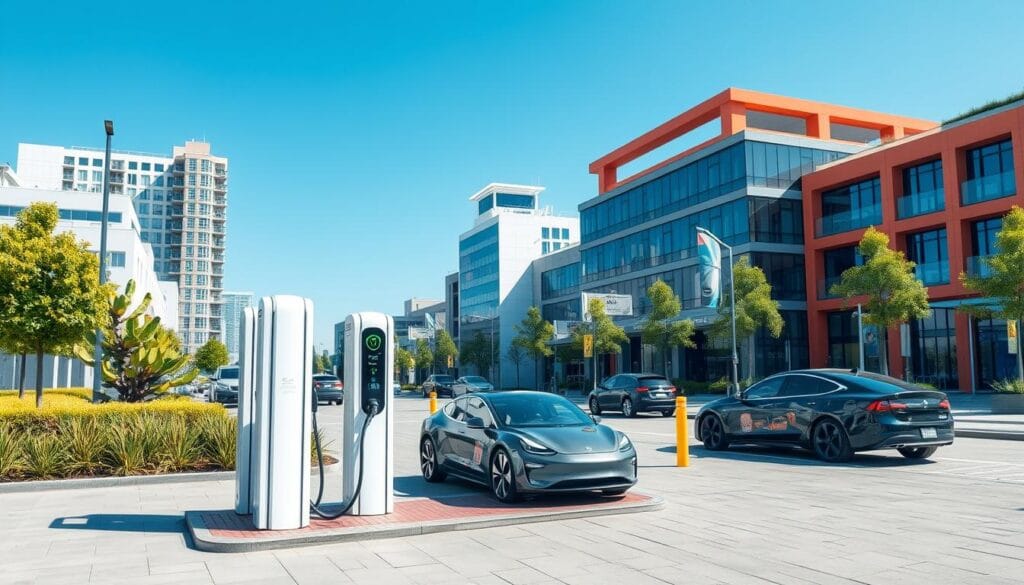
Building a good electric vehicle charging infrastructure is key for EVs to become more popular. There are many types of ev charging options, from slow to fast. These options meet different needs and help make sustainable transportation easier.
Understanding Different Types of EV Charging
There are several ways to charge electric vehicles. Level 1, Level 2, and DC fast charging are the main types. Level 1 chargers are often used at home and take about 20 hours for a 100-mile range. Level 2 chargers cut this time to 4 hours and are found at workplaces or public electric vehicle charging stations.
DC fast chargers are the fastest, giving up to 100 miles range in 40 minutes. They’re great for quick charges on the go.
Fast Charging for EVs: Features and Infrastructure Needs
Fast charging stations are becoming more popular, especially for long trips and emergencies. They are more expensive to set up but are crucial for long-distance travel. With a good plan, these ev charging infrastructure parts could become more affordable and convenient.
This fast charging fits well with today’s fast-paced lifestyle. It encourages people to choose sustainable transportation options.
Current Statistics and Future Projections for Charging Stations
The number of electric vehicle charging stations in the U.S. has doubled in just a few years. California leads with a quarter of all U.S. public EV charging stations. Yet, there are fewer public ports per EV in California than in other states.
In cities, nearly 90% of charging stations are available. But, there’s a need to spread them out more in suburbs and rural areas. This will help make electric vehicle charging infrastructure better for everyone.
Improving the electric vehicle charging stations network is vital for a greener future. It will help current EV users and convince others to switch to electric cars. This will push us towards more sustainable transportation options.
The Environmental Impact of Electric Vehicles
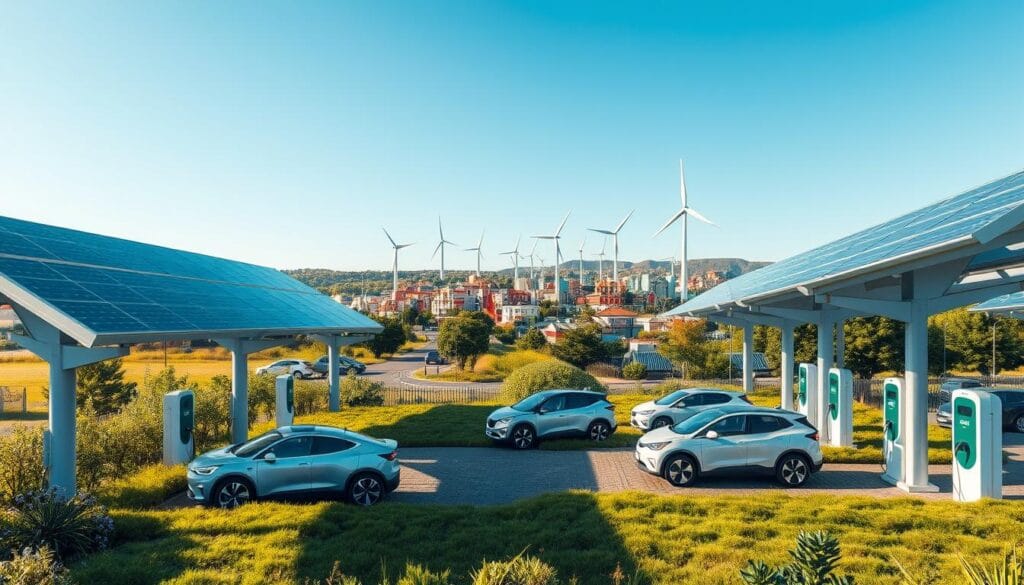
The environmental impact of electric vehicles (EVs) is a big step towards green mobility. They offer a cleaner choice compared to cars that run on fossil fuels. EVs help cut down on emissions and support the use of renewable energy.
EVs are special because they run on electricity alone, which means no emissions from their tailpipes. This helps reduce air pollution in cities. But, we must look at the whole life of EVs, from making batteries to recycling them at the end.
| Emission Type | Conventional Vehicles | Electric Vehicles |
|---|---|---|
| Tailpipe Emissions | High | None |
| Well-to-Wheel Emissions | High | Low (varies by energy source) |
| Cradle-to-Grave Emissions | Significant | Moderate (lower with sustainable practices) |
| Resource Extraction for Batteries | N/A | Significant (cobalt, lithium) |
| Percentage of Recycled Components | Lesser extent | Up to 95% of battery |
The table shows EVs have a big advantage over traditional cars. They emit less pollution, especially when electricity comes from clean sources. This makes EVs a big help in reducing harmful gases and pollutants.
The government wants more EVs on the road by 2030. This shows their commitment to green mobility. They’re also building more charging stations to make EVs more accessible.
But, we need to be careful about the impact of making EV batteries. We must work on making batteries better and finding ways to get materials without harming the environment.
EVs are key to making transportation more sustainable. By improving EV tech and building more charging stations, we can make green mobility a reality for everyone.
EV Battery Technology: Powering Sustainable Transportation
The advancements in EV battery technology are key to making energy-efficient vehicles for sustainable transport. These batteries cut down on greenhouse gas emissions. They also improve vehicle performance and extend their life.
The battery management system (BMS) is at the heart of these vehicles. It’s crucial for keeping batteries efficient by controlling charge and discharge. It also keeps the battery at the right temperature, making the vehicle more reliable and durable.
To learn more about EV battery types and future tech, check out the National Renewable Energy Laboratory here. This resource offers insights into battery tech and sustainability through recycling and repurposing.
Chemical engineering has led to new battery types, like lithium-ion batteries. They have high energy density and last longer, making EVs more effective. This progress has made EVs more appealing to consumers, thanks to better range and efficiency.
The industry is moving towards a circular economy. This means we need a strong battery management system to reuse and recycle batteries. It helps reduce environmental harm and ensures a steady supply of key materials like lithium and cobalt.
Technology is changing how we move, and evs battery technology fits perfectly with global sustainability goals. It’s a step towards a future with more energy-efficient vehicles. These vehicles will be crucial for our planet’s and economy’s future.
By adopting these EV battery tech innovations, we support a greener future. We reduce our reliance on non-renewable resources and cut down on carbon emissions. It’s a step towards a sustainable world for everyone.
Government Incentives and Industry Trends in EV Adoption
The electric vehicle (EV) market is changing fast. This is thanks to evs government incentives and electric vehicle market trends. Countries are using rules and new tech to make EVs more popular, changing how we travel.
There’s been a big jump in electric vehicle incentives everywhere. This has led to more EVs being sold and registered. For example, in Asia, especially China and India, government help and discounts are making EVs more appealing. In North America and Europe, people are starting to prefer cleaner, greener cars more.
| Country | 2023 EV Registrations | Market Growth (%) | Shares of Total Sales (%) |
|---|---|---|---|
| China | 8.1 million | 35 | 5.7 |
| United States | 1.4 million | 40 | N/A |
| Europe | 3.2 million | 20 | 10 |
| India | 80,000 | 70 | 2 |
| Thailand | 90,000 | 400 | 10 |
| Vietnam | 30,000 | Massive Increase from 2021 | 15 |
| Malaysia | 10,000 | 300 | N/A |
The growth in ev industry trends is huge. Norway is a great example, with EVs making up 75% of car sales. This is thanks to good government help and lots of charging spots.
Looking at evs government incentives, many countries offer tax breaks and subsidies. These help make EVs cheaper and encourage more people to buy them. They also help build more charging stations.
In summary, the mix of electric vehicle incentives and ev industry trends is making EVs more popular worldwide. As the industry grows and improves, we can expect even more people to choose EVs. This will be a big step towards cleaner, greener travel.
Conclusion
The future of electric vehicles looks bright, promising a greener way to travel. Our knowledge of EVs has grown a lot. We now know more about their technology and the many choices available.
The electric vehicles explained in detail in this article show how they can change the way we move. They can make our transportation cleaner and reduce harm to the environment. But, we still face challenges like building more charging stations and improving battery technology.
These issues are being worked on through new ideas and laws. This will help us move forward with EVs.
The EVS overview also talks about how important the environment is for EVs. Studies, like one from the Jindal School of Environment & Sustainability, help us understand these issues better. Government help and people wanting to buy EVs are making things happen faster.
Looking ahead, electric vehicles are leading the way to a greener future. With more knowledge about EVs, we’re ready to support new ideas in tech and sustainability. By choosing electric vehicles, we’re helping to create a better world for future generations.
FAQ
What is an electric vehicle (EV)?
An electric vehicle (EV) runs on an electric motor, not a traditional engine. It uses electricity from a battery, which you can recharge from a power source.
How does an electric motor define an EV?
The electric motor is key to an EV. It powers the vehicle, unlike engines that burn fuel. This makes EVs quieter and cleaner.
Where can EVs get their power?
EVs can be charged at home, at charging stations, or even with solar power. As more EVs hit the road, more charging spots are popping up.
What’s the difference between EVs and Plug-in Hybrid Electric Vehicles (PHEVs)?
EVs run only on electricity. PHEVs have both an electric motor and a gasoline engine. PHEVs use electric power first, then gasoline when the battery runs out.
What are the main components of an electric vehicle system?
An EV system includes an electric motor, battery pack, charger, and a control unit. These parts replace the engine and exhaust systems of traditional cars.
What are the different types of EV technologies?
There are four main types: Battery Electric Vehicles (BEVs), Plug-in Hybrid Electric Vehicles (PHEVs), Hybrid Electric Vehicles (HEVs), and Fuel Cell Electric Vehicles (FCEVs). Each type uses electric power differently.
What are the environmental benefits of driving an EV?
EVs cut down on greenhouse gas emissions and air pollution. They have a lower carbon footprint since they don’t have tailpipe emissions.
Are there practical benefits to owning an electric car?
Electric cars are cheaper to run and maintain. They come with tax credits and can be charged at home. They also accelerate faster.
Can the range of EVs improve?
Yes, EV battery technology is getting better. This means batteries are more powerful and take up less space, leading to longer ranges.
How does the EV charging infrastructure affect EV adoption?
The charging infrastructure is key. Easy access to charging options makes people more likely to choose EVs. More investment in this area helps EVs become more popular.
What are governments doing to encourage the use of EVs?
Governments offer tax credits, rebates, and grants to make EVs more affordable. They also invest in charging stations and set rules to support EVs.
What is the global outlook for the future of electric vehicles?
The future of electric vehicles is promising. More people are interested, technology is improving, and governments and companies are supporting EVs worldwide.