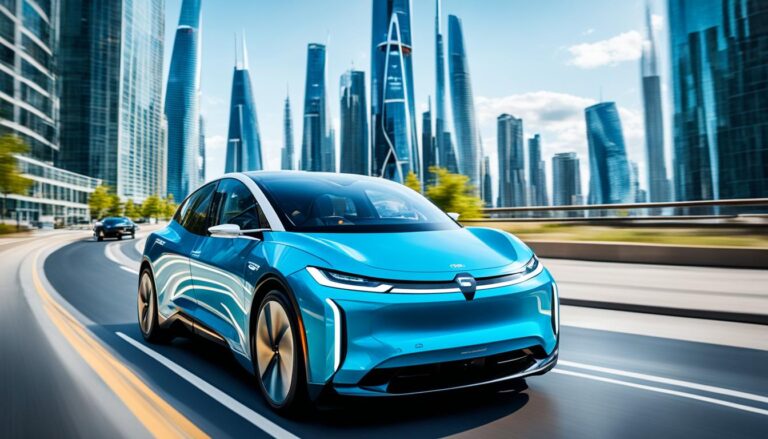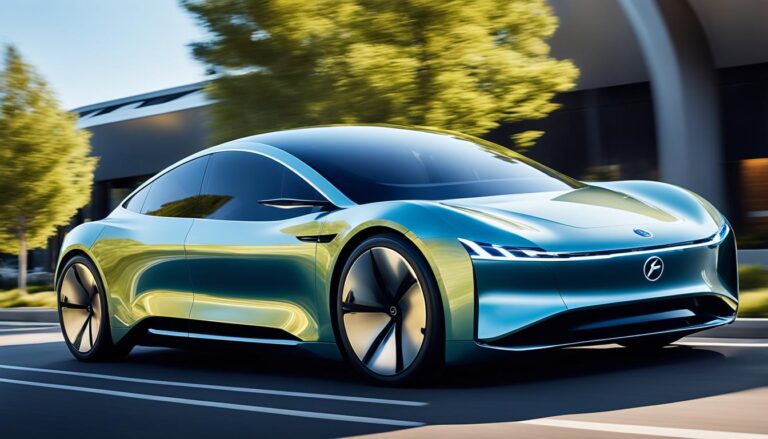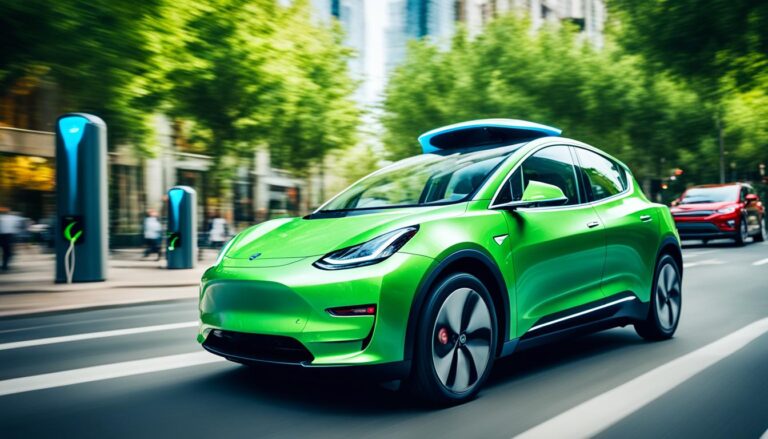
An innovative electric car startup is changing how we see mobility. They are leading the way in sustainable transport. They make top-notch charging gear for many places and create software to make charging easier for everyone.
These startups are key to building a big charging network. This network works well with smart grids and uses renewable energy. It’s important for making electric cars more popular and easy to use.
They work hard to make a connected charging system. This shows their dedication to making things better for everyone. By doing this, they set new standards for the industry and help us move towards greener transport.
Electric car startups lead in making new solutions and custom hardware. They work closely with the power grid and green energy sources. This shows they care about making energy use better and keeping the grid stable. Their work also makes other companies try harder to innovate.
- Electric car startups are key to improving charging and EV tech.
- They make charging solutions for cities and businesses.
- Working with smart grids and renewable energy shows their focus on the planet.
- More EVs on the road show the market is ready for change.
- Companies like XPeng Motors and Northvolt show how startups are growing.
- Charging networks like Electrify America and Ionity are expanding green options.
Charting the Rise of the Electric Car Startup
The electric vehicle (EV) industry is going through a big change. This change is led by new ev startups that are changing the game in clean energy mobility. These startups are not just competing with old car companies. They are leading the way to a future where cars don’t pollute.
Impact of Startups on the EV Market
EV startups are making a big mark on the electric vehicle market. They bring new ideas and advanced technology, making the market more competitive. For example, they’re making batteries better and cheaper, which makes electric cars more affordable for more people.
Disruptive Innovations Fueling the Industry
New companies from the clean energy sector are pushing the electric vehicle market forward. They focus on being sustainable and bringing new tech to the table. This includes better batteries and user-friendly designs. They aim to create a whole system around electric cars, not just sell them.
Case Studies: Success Stories of Electric Car Startups
Rivian started with electric sport utility vehicles and pickups and quickly made a mark. They got a lot of money and made important partnerships. XPeng Motors also stood out by focusing on cool tech and great user experiences. They attract people who love technology.
These startups are doing more than just making new cars. They’re building a future where electric cars are part of a bigger, green transport system. This big-picture approach puts them at the lead of the move to zero emissions.
Electric Vehicle Technology and Its Advancements
The electric mobility industry has seen big changes and new tech that affect how we move and use energy. Electric vehicles have made huge leaps, changing how we see and use cars and buses. These changes focus on being green and sustainable.
Way back in the early 1900s, electric cars were a big deal, making up a third of all cars. Now, they make up over 3% of new car sales worldwide. By 2020, that number could jump to nearly 7%, with around 6.6 million electric vehicles sold each year. This growth is thanks to better tech and a push for renewable energy.
Today’s electric car scene is full of big tech wins. For example, companies like ElectricFish are working on better batteries and charging solutions. They’re making electric cars more practical, efficient, and good for the planet.
Here are some key points about electric vehicle technology:
- Introduction of solid-state batteries improving energy density and safety.
- Development of more efficient charging networks to reduce range anxiety.
- Investments in recycling technologies to ensure sustainability in battery disposal.
- Collaboration between major automotive leaders like Ford and startups for enhancing fleet management and EV charging infrastructure.
These points show how fast the electric car industry is moving towards a greener, more efficient future. This means less carbon emissions and more use of renewable energy.
In summary, the progress in electric vehicle tech marks a big change in the car industry. It’s all about being more eco-friendly and embracing new tech. This fits well with global goals for sustainability and the push for green innovation in cars.
The Role of Sustainable Transportation Business Models
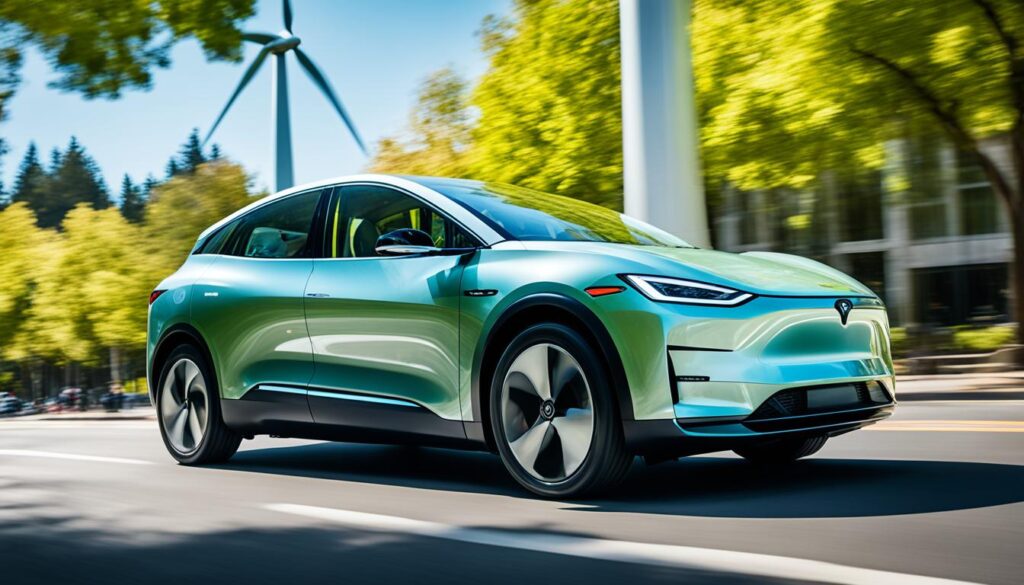
More people want to travel in a way that’s good for the planet. This makes sustainable transportation business models very important. These models help eco-friendly car companies make money while taking care of the environment.
Incorporating Sustainability into Core Business Practices
Eco-friendly car companies are working hard to be more sustainable. They use green technology and use less energy. This helps cut down on carbon emissions, use renewable energy, and use materials that are good for the planet.
Revenue Streams for Eco-Friendly Automobile Companies
The green tech industry is finding new ways to make money. This includes services like mobility on demand and subscription EVs. These new ways of doing things make green transport more available and help move the world towards cleaner transport.
| Year | Global EVs Count | Market Projection | Energy Consumption Change |
|---|---|---|---|
| 2019 | Not Provided | 671 Million EVs by 2040 | 83% Increase from 1990 |
| 2021 | 16 Million | USD 1,821.49 Billion by 2032 | Transportation heavily impacted by pandemic |
| 2021 (Kenya) | 671 Electric Vehicles | 5% of total imports by 2025 | 2.6 Billion USD spent on petroleum imports |
Sustainable transportation businesses are key to growing the market and changing society for the better. They use new tech and sustainable ways to work. This is helping create a future where transport is cleaner and more sustainable.
Green Technology Startup: Spearheading Eco-Friendly Innovations
The eco-friendly automotive industry is changing fast, thanks to green tech startups. These companies are more than just businesses. They are the heart of innovation, focusing on clean tech and sustainable transport to make our future cleaner.
Startups like CarbonCapture, Astraea, and Jackery are leading the way. They use new technologies to cut down on carbon emissions and make energy use better. Their work is backed by strong investments and a focus on making solutions that are good for the planet.
These startups are making big changes in many areas of tech. They’re creating high-efficiency solar panels and wind turbines for cities. They’re also working on solid-state batteries, which could change how we store energy and make transport more sustainable.
| Company | Founded | Location | Funding Amount | Major Investors |
|---|---|---|---|---|
| CarbonCapture | 2019 | Pasadena, California | $35 million | Climate Pledge Fund, Ethos Family Office, Rio Tinto |
| Astraea | 2016 | Charlottesville, Virginia | $16.5 million | Aligned Climate Capital, Carbon Drawdown Collective |
| Jacker | 2012 | Fremont, California | N/A | N/A |
| CellCube | N/A | Denver, Colorado | CDN $10 million | Bushveld Minerals |
| CarbonCure | 2011 | Halifax, Nova Scotia | $97.36 million | Breakthrough Energy Ventures, Microsoft Climate Fund |
The growth of these companies shows the big potential of green tech in the market. By focusing on clean tech and creating a place for innovation, these startups are key to the future of eco-friendly cars.
Challenges Faced by Zero Emission Vehicle Startups
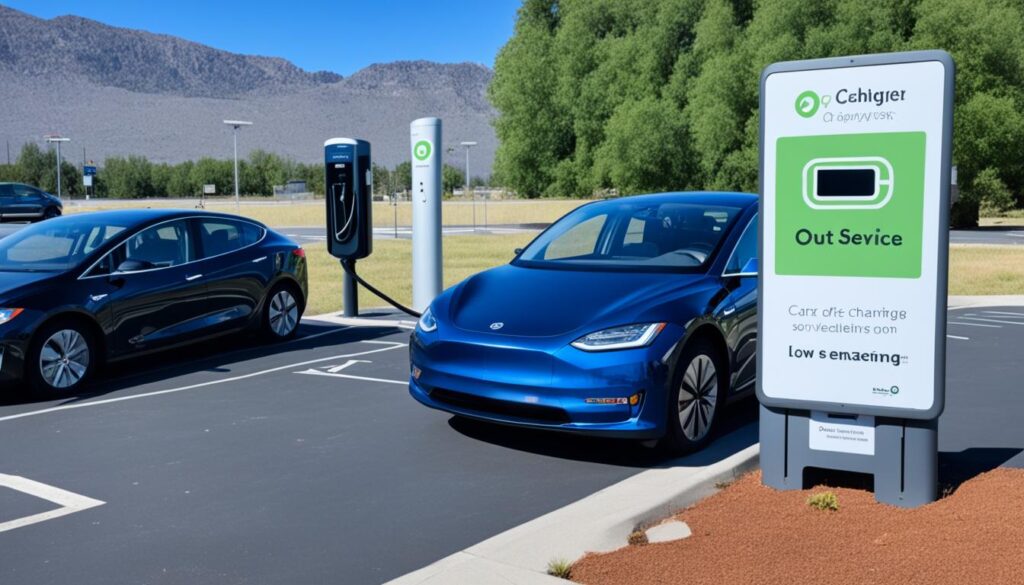
Zero-emission vehicle startups face many hurdles, from getting funding to understanding the market. They aim to make a mark in the electric mobility field. But, they meet both expected and unexpected challenges.
Navigating Funding and Investors for Electric Vehicle Startups
Electric vehicle startups struggle with big financial needs. They need money for research, making the cars, and setting up charging stations. Getting electric vehicle startup funding is key to their success and growth.
There’s a lot of competition for funding. Investors look at many green tech options. To succeed, startups need new ideas, good partnerships, and a clear plan for the future.
Overcoming Technical and Market Entry Obstacles
Improving battery technology is crucial for zero-emission vehicle startups. They also face challenges like meeting strict rules and winning over customers. The market is tough, with big companies and traditional cars already there.
Startups must do better than the rest to stand out. They need to meet and beat what customers expect.
| Challenge | Detail |
|---|---|
| Battery Technology | Ongoing R&D needed to enhance battery efficiency and reduce costs. |
| Charging Infrastructure | Development of convenient, fast, and widespread charging networks is essential. |
| Regulatory Compliance | Adhering to diverse and evolving global standards complicates production and sales. |
| Market Competition | Positioning against established automotive giants and emerging EV firms. |
| Consumer Acceptance | Overcoming range anxiety and proving reliability to potential users. |
Even with the challenges, electric mobility startups have a big chance to grow and make a difference. Innovation, smart funding, and marketing will help some startups not just survive but flourish.
Partnerships in the Electric Mobility Industry

The electric mobility sector is seeing more ev company partnerships. These partnerships are boosting both technology and the market. They’re making big strides in sustainable transportation startup initiatives.
Global Market Expansion and Battery Technology Advancements are key areas gaining from automotive industry alliances. Companies like Tesla with Panasonic and Volkswagen with Ford show the strong teamwork in this field. These partnerships improve battery performance and spread EV technology worldwide. They create a better setup for collaborative electric mobility ventures.
These partnerships focus on making operations sustainable. They work with environmental agencies to make manufacturing greener and recycle batteries responsibly.
With government support and incentives, these efforts are vital for electric mobility. For example, Vattenfall plans to increase charging stations by 2030. This shows the big push for better infrastructure, with lots of investment and government help.
| Company | Type of Partnership | Purpose of Partnership |
|---|---|---|
| Volkswagen and Ford | Automotive Industry Alliance | Explore advanced battery technologies and expand market reach |
| GM and LG Chem | EV Company Partnership | Joint development of battery cells for electric vehicles |
| Vattenfall and Municipalities | Collaborative Electric Mobility Venture | Develop sustainable charging infrastructure |
| Tesla and Panasonic | Sustainable Transportation Startup Initiative | Enhance battery production and performance |
These partnerships are key to moving the industry forward and hitting climate goals. The EV market is growing fast, with sales expected to increase a lot. This shows how important automotive industry alliances are for the future of transport.
Electric Car Startup Business Models and Market Strategies
Startups in the electric car industry are changing the future of transportation. They use new business models and strategies that meet current and future market needs. With a customer-centric EV strategy, they improve car functions and engage users more.
Knowing the shifts in electric mobility is key for startups to grow in the EV market. These changes are driven by consumer trends towards sustainability and efficiency. The fast pace of this sector means businesses must be quick to adapt to what customers want.
Exploring Customer-Centric Approaches in EV Companies
The future of the electric car business model relies on listening to customers during development. This approach meets customer needs and increases market acceptance. Startups that focus on user experience through feedback are better at improving their products to match market demands.
Adapting to Industry Shifts and Consumer Trends
To stay ahead in the EV market, startups need to quickly adapt to trends. Being agile lets them offer products that meet today’s consumer needs. This might mean using better battery technology, faster charging, or partnering with tech companies for more connectivity and automation.
| Year | Expected Increase in EV Sales | Market Size of Charging Stations | Projected Market Growth in Charging Infrastructure |
|---|---|---|---|
| 2024 | 62% | $32.86 billion | $104.09 billion |
| 2027 | 45% (New Automobile Sales) | $76.9 billion | Increasing Rapidly |
| 2030 | 60% (Hybrid or Electric) | Projected Expansion to 35 million charge points in the US | Significant Increase Expected |
These insights into customer-focused strategies and industry changes help companies in the electric mobility field. By understanding and responding to these trends, electric vehicle startups can lead in sustainability and innovation in the automotive industry.
Fostering Innovation: Startup Influence on Electric Vehicle Market Growth
The rise of electric mobility startups is changing the eco-friendly automotive sector. They are key in pushing the electric vehicle market growth forward. Their work includes improving technology, changing how people use cars, and helping with new laws.
Startups bring new ideas to life with bold actions. They use the latest in AI, IoT, and data analytics. This makes cars better, safer, and easier to use while helping the environment.
| Year | Global EV Sales | Market Share | Projected Growth |
|---|---|---|---|
| 2020 | 10 million | — | — |
| 2022 | 15 million | Nearly 10% | — |
| 2023 Q1 (USA) | 320,000 | 60% increase from 2022 | 15.5% CAGR (2023-2032) |
| 2030 | — | Over 30% | — |
EVs are growing fast, thanks to startups. They bring new business models and focus on sustainability. This appeals to eco-conscious buyers. Now, many in the U.S. see EVs as a good choice for fighting climate and air pollution.
Working with big companies and tech firms, electric mobility startups are moving faster into the market. As more people and laws support green transport, startups will play a big part in creating a greener future.
These new companies are pushing for a future where electric cars are common. This will cut down on fossil fuel use and emissions. It’s a big step towards a world with zero emissions.
Conclusion
The shift towards eco-friendly cars is more than a trend; it’s a big change for the automotive industry. Electric car startups are leading this change. They use new technology to make a greener future, balancing innovation with sustainability.
Numbers show a big move towards this new era. The European Union aims to cut greenhouse gas emissions by 55% by 2030. There’s also a big jump in using shared bikes and e-scooters in cities, up 60% from last year.
Investments in the mobility industry have gone over $400 billion in the past decade. EV sales are expected to rise a lot in Europe, China, and the U.S. We also need more battery factories and electric car parts to support this growth.
Tesla’s success shows how electric cars are changing the game. Old car companies are also joining the EV scene, using their knowledge to make better electric cars. With over 10 million electric cars sold in 2022, the market is growing fast.
Now, there are 500 electric car models to choose from, making things more competitive. Electric car startups are pushing the industry forward. They’re leading the way to a future where electric cars are key to our transportation.
Every year, it’s clear that electric mobility is the future. Visionary companies are changing the car industry for the better. They’re making sustainable transportation a must-have, not just a choice.
FAQ
What distinguishes an innovative electric car startup from traditional automakers?
Electric car startups use the latest electric vehicle technology and focus on eco-friendly mobility. They aim to meet the growing need for sustainable transport. They are agile, use advanced engineering, and focus on zero-emission vehicles. This leads to unique and forward-thinking cars that traditional manufacturers don’t offer.
How have electric car startups impacted the EV market?
These startups have greatly added to the electric vehicle market by offering new and competitive options. They push innovation and progress, setting trends that big companies might follow. They increase the number of clean energy vehicles available and offer zero-emission choices that match environmental concerns.
What are some disruptive innovations fueling the electric vehicle industry?
Innovations like better battery performance, improved charging, and smart grids powered by renewable energy are driving the industry. These changes are making electric vehicles more efficient and user-friendly.
How does sustainability play a role in business models for electric car startups?
These companies focus on sustainability in their operations, using renewable energy and green technology. They look for ways to make money without harming the environment. This includes offering Mobility as a Service (MaaS) and using government incentives.
What types of eco-friendly innovations are green technology startups introducing?
Green tech startups are bringing in many eco-friendly innovations. This includes electric vehicles powered by solar energy and other green sources. They also focus on clean tech, aiming to reduce carbon footprints and improve energy efficiency.
What are the major challenges that zero-emission vehicle startups face?
Zero-emission startups face issues like finding enough money, dealing with battery range and efficiency, and entering the market. They also have to follow complex rules and compete with big companies.
Why are partnerships important in the electric mobility industry?
Partnerships are key because they let startups and big companies share technology, expertise, and market access. These partnerships help electric vehicle companies move faster towards sustainable transport. They use the knowledge and resources of big companies.
How do electric car startups adopt customer-centric approaches?
These startups focus on what customers want and use their feedback to shape their business. They adapt to changes in the market and offer features that appeal to eco-conscious buyers. They also provide services that make using electric cars better and promote green transport.
In what ways do startups influence electric vehicle market growth?
Startups bring new technologies and services that meet consumer needs for cleaner, more innovative transport. This leads to market growth as they push forward in electric vehicle tech, like autonomous driving and connectivity. This makes eco-friendly vehicles more accepted and adopted.
What market trends are shaping the electric vehicle industry?
Trends include more people wanting renewable energy transport, the growth of alternative fuel vehicles, and a demand for eco-friendly cars. Startups are responding by creating sustainable models, using green energy innovations, and leading the way in clean and efficient transport.