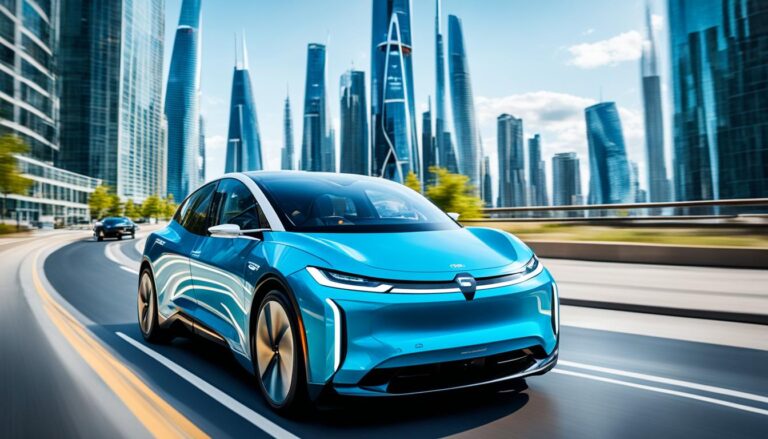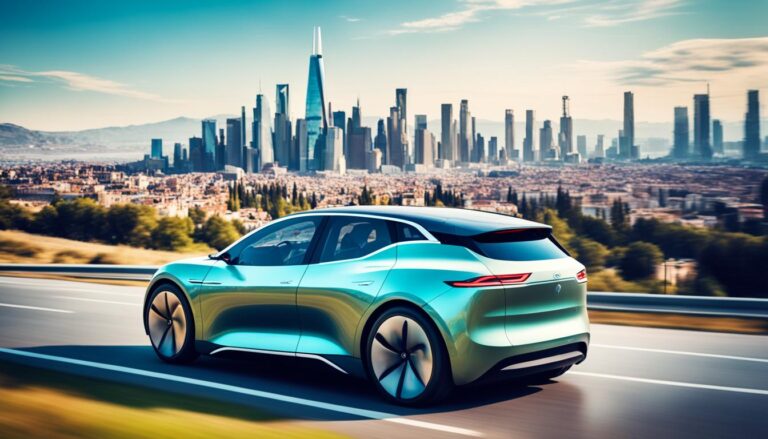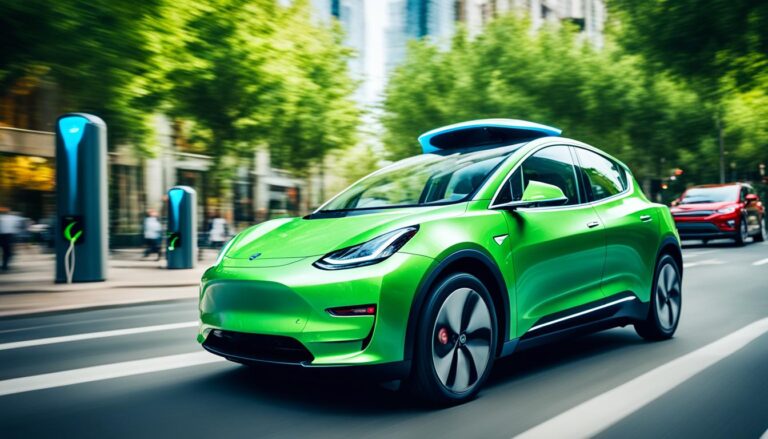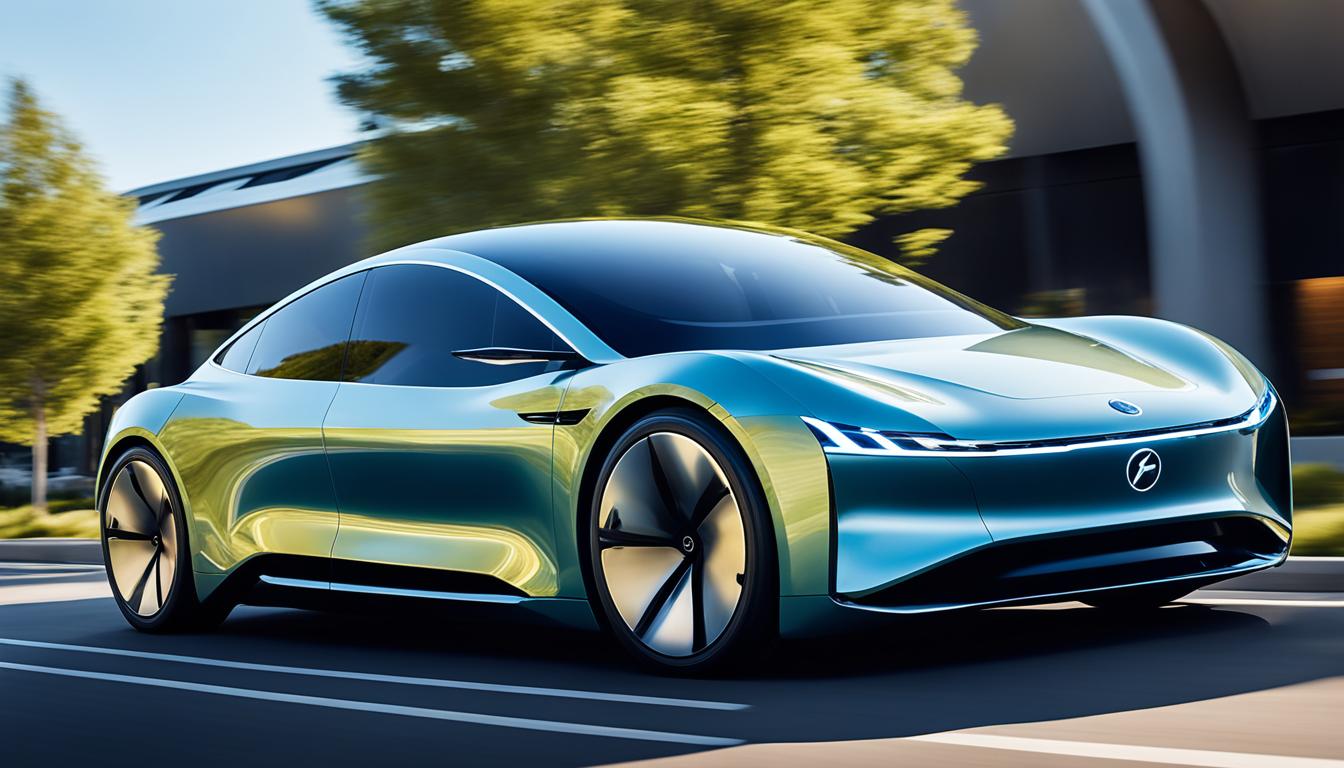
The future of transportation is changing, and electric vehicle design is leading the way. Martin Uhlarik, Global Head of Design at Tata Motors Ltd, sees a big shift towards electric vehicles. This change is not just about new tech; it’s about combining innovation, sustainability, art, and science in electric vehicles.
Today, people want cars that reflect their style and values. Electric vehicle design is now about looks and how it shows off a person’s unique taste. It’s where art meets technology, painting a picture of a sustainable future for cars.
The move to electric vehicles is tackling big environmental, economic, and social changes. It’s changing the car industry, setting new standards for efficiency, and creating new stories about driving and car ownership.
Key Takeaways
- Countries like the UK and Norway plan to stop using non-electric cars by 2025. This shows electric vehicle design is coming soon.
- Higher oil prices and caring for the planet are making people want electric vehicle innovation more, helping the industry grow.
- Thanks to advanced Product Lifecycle Management (PLM), making electric vehicles takes less time, making the market more efficient.
- Electric cars are getting popular with features like self-driving, but they still have a shorter range than cars with traditional engines.
- New tech like fast charging stations and solar roofs is making electric vehicles go farther and work better.
- People want more electric car models, from small cars to big trucks, which is pushing the industry to grow.
The Role of Design in Electric Vehicle Evolution
Electric vehicles (EVs) are getting better, and design is key in making them look good and work well. Ev design concepts and consumer-focused EV design are important for the future of cars.
Merging Aesthetics with Function
New electric car design trends focus on sleek, aerodynamic shapes. These shapes look great and help the car go farther on a single charge. Car makers are using smart aerodynamics, like adjustable spoilers, to make cars more efficient.
Sustainable Transportation and Consumer Trends
People want eco-friendly vehicle design more and more. Cars are using lighter materials like aluminum to go farther. Using 3D-printed parts and recycled materials also helps the planet, making cars more appealing to those who care about the environment.
Personalization: The New Standard in Electric Vehicle Design
Now, EVs can be customized to fit what people want. With more electric SUVs and crossovers, there’s more room and flexibility. This shows that consumer-focused ev design is a big deal.
Here’s a table that shows how EV design is changing:
| Feature | Description | Impact on EV Design |
|---|---|---|
| Material Innovations | Use of lightweight, sustainable materials like aluminum and carbon fiber. | Improves energy efficiency and driving range. |
| Active Aerodynamics | Features such as adjustable spoilers and grille shutters for optimal performance. | Enhances vehicle dynamics and energy consumption. |
| Digital Interfaces | High-resolution displays and touchscreens for enhanced infotainment and control. | Modernizes the user interface, improving user experience. |
| Smart Connectivity | Integration with IoT for seamless control over vehicle functionalities. | Increases convenience and safety for users. |
The EV industry is all about making cars better in every way. It’s about combining looks, efficiency, and sustainability with what people want. This is changing how we think about driving in the city.
Electric Vehicle Design and the Green Transportation Movement
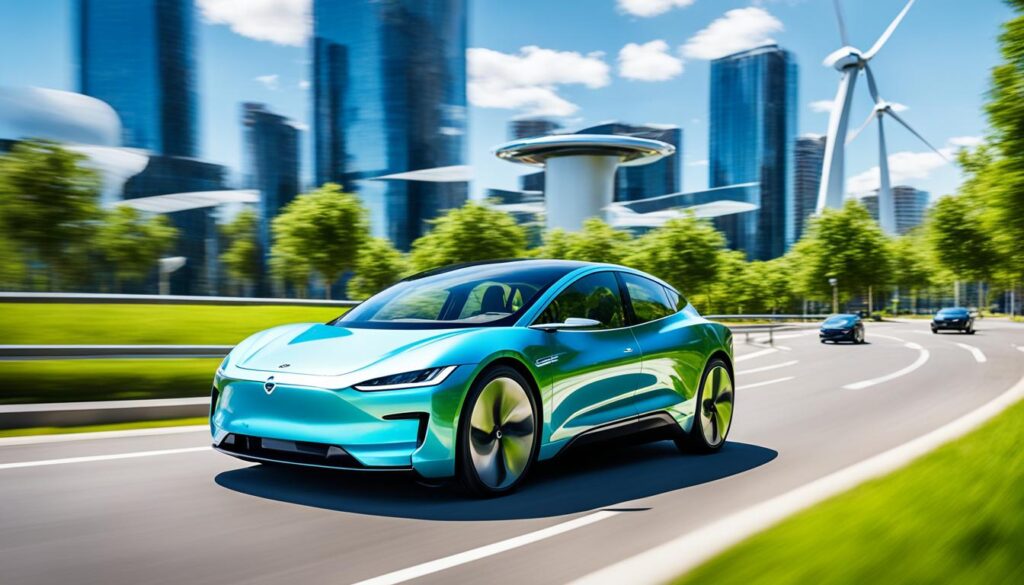
The mix of zero-emission vehicle design and green transportation vehicles marks a big change in cars. EVs are key to making cities more sustainable. They help the environment and boost the economy.
EVs are at the heart of sustainable vehicle innovation. They make cities more resilient against climate change and support healthier living. EVs link sustainable transport solutions with new tech for a better city future. This future values efficiency and includes everyone.
| Economic Enhancement | Community Impact | Technology and Innovation |
|---|---|---|
| Job creation in manufacturing and tech sectors as cities adopt more EVs | Inclusivity in eco-friendly urban planning via electric mobility | Development of smart charging stations and integration of renewable energy sources |
| Expansion of the EV market following significant achievements by companies like Volvo and General Motors | Active promotion of pedestrian-friendly spaces, enhancing urban liveability | Significant reductions in carbon emissions with planned transitions to entirely electric fleets by 2030 |
Cities are creating a supportive environment for sustainable vehicle innovation with electric vans and more EV charging stations. The aim to increase sustainable travel to 50% in Los Angeles County by 2045 shows the commitment to green transportation vehicles and strong communities.
By focusing on zero-emission vehicle design, cities tackle environmental issues and set a sustainable path for the future. The shift to eco-friendly car design is crucial for responsible city planning and building strong communities.
Minimalism: The New Aesthetic of Electric Vehicle Design
The minimalist car design has changed the game in cars. It’s all about simplicity and making driving better. This trend in electric vehicles focuses on what’s really needed, making cars smarter and more efficient.
Brands like Tesla and Porsche use smooth surfaces. These surfaces look good and help the car move better. For instance, the Tesla Model 3 has a big touchscreen instead of many buttons. This makes the car look clean and work better.
Maximizing Space, Efficiency, and Style
Electric cars use space wisely, not just saving energy. The Hyundai Ioniq 5 and Polestar 2 show how to use space well without losing style. They have big screens and few buttons, making the inside feel big and easy to use.
Minimalist designs in electric cars are everywhere, from budget-friendly cars to luxury ones like the BMW iX. By focusing on the basics, car makers make cars look better and work better. This appeals to more people.
Technological Innovations in Electric Vehicle Manufacturing
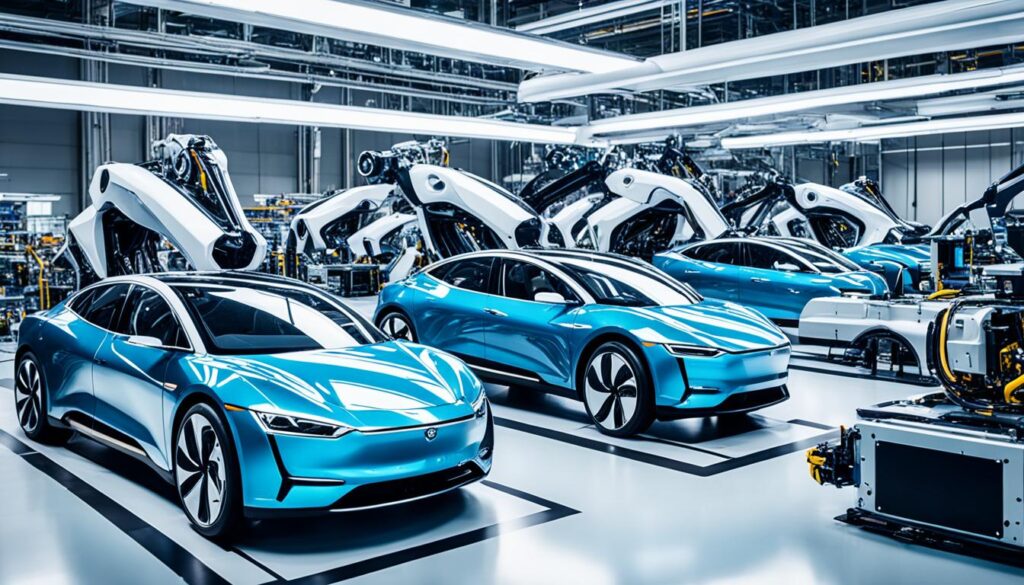
The rise in electric vehicle manufacturing is thanks to big leaps in modern car technology. New battery tech is changing how electric vehicles work. These batteries are now smaller, lighter, and pack more energy. This means EVs can go farther and charge faster.
Advanced automotive engineering is teaming up with smart software. This lets cars talk to charging stations and give drivers real-time info. These tech advances make EVs better and are changing how electric car manufacturing works.
| Statistic | Details | Impact on EV Manufacturing |
|---|---|---|
| EY Consumer Interest | 52% plan to buy an EV next | Drives demand for refined EV designs and technology |
| New Entrants in EV Market | 73% believe in innovation drive | Innovative approaches and fresh competition |
| Powertrain Innovation Drivers | Cost (31%), Efficiency (28%), Storage (27%) | Focus on cost-effective and efficient manufacturing |
| Anticipated Investments | $200 billion in EV charging by 2026 | Expansion of infrastructure supporting EV growth |
Changes in motor tech are also pushing forward electric vehicle manufacturing. New motor types like Axial Flux and in-wheel motors are making EVs more powerful and efficient.
These tech updates tell a story of a bright future for electric car manufacturing. They show us a world where electric vehicles are not just green choices but also lead in performance and ease of use.
The Economic and Environmental Impact of Electric Vehicle Design
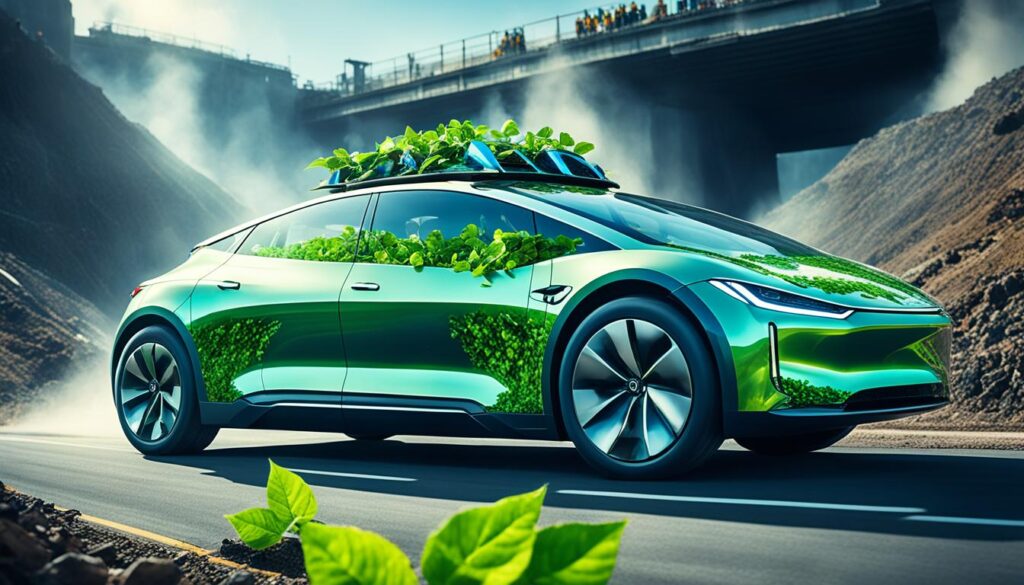
The mix of eco-friendly car tech and sustainable transport solutions is changing the economy and the environment worldwide. Countries like Indonesia are adding electric cars to their economy, showing how EVs help the economy and the planet.
In Indonesia, moving to electric cars has boosted the economy a lot. It adds about 1.5% to the GDP, with a value of Rp. 100.57 trillion. This move shows how electric cars can be good for the economy and help the environment by using less non-renewable energy.
| Economic Indicator | Impact | Environmental Benefit |
|---|---|---|
| Added Economic Value | Rp. 100.57 trillion (1.5% of GDP) | Increases sustainable industrial activity |
| Job Creation | 538,658 jobs | Supports equitable green job transitions |
| Nickel Demand | Rises to 2.6 Mt by 2040 | Boosts local mining with stricter environmental standards |
| Emissions Cost | Rp. 2.23 trillion increase | Prompts investment in cleaner technologies |
The numbers show how electric cars are good for the economy and the planet. For example, the need for more nickel for EV batteries is a big chance for Indonesia. It has about 24% of the world’s nickel.
Worldwide, pushing for eco-friendly vehicle technology is key for the economy and the planet. Using more EVs can cut down on emissions a lot, especially in areas like the US, where transport is a big polluter.
Plans like the Clean Cars for America show how we can tackle this issue. They aim to switch to electric cars and boost the economy with big investments and incentives.
The link between economic gains and environmental benefits in electric cars shows their big potential. It also shows the world moving towards better sustainable transportation solutions.
From Concept to Road: The Electric Vehicle Design Process
The move to eco-friendly cars marks a big change in the electric vehicle design process. As cars become greener, making EV design principles key is crucial. This ensures they meet environmental goals and what customers want.
Electric vehicle prototyping is more than just making cars look good. It’s where design and green thinking come together. Designers and engineers test many versions to see which is best for the planet and performs well. This makes sure new cars help with eco-friendly automobile development.
EVs are growing fast, and sales are expected to beat traditional cars by 2036, says EY. To support this, making charging stations is key. Everyone in the e-mobility world must work together.
Today’s electric cars use new materials and methods to be lighter and stronger. This includes high-strength alloys and innovative composites. Last year, over 10 million electric vehicles were sold worldwide, showing how fast this industry is growing.
Getting electric cars into our daily lives means making charging easy and safe. This means having charging stations that are easy to find and use, even with internet access. Making sure the cars and their charging stations work well together is crucial.
The push for eco-friendly automobile development involves many groups. Automakers, lawmakers, tech companies, and the public all play a part. This effort is about more than just cars; it’s about creating a sustainable future for transport.
The path from idea to road is careful and involves teamwork. With ongoing improvements in the electric vehicle design process, we can expect more zero-emission cars. These cars will meet our climate goals and keep up with tech advances.
Electric Vehicle Design Trends: A Look Ahead
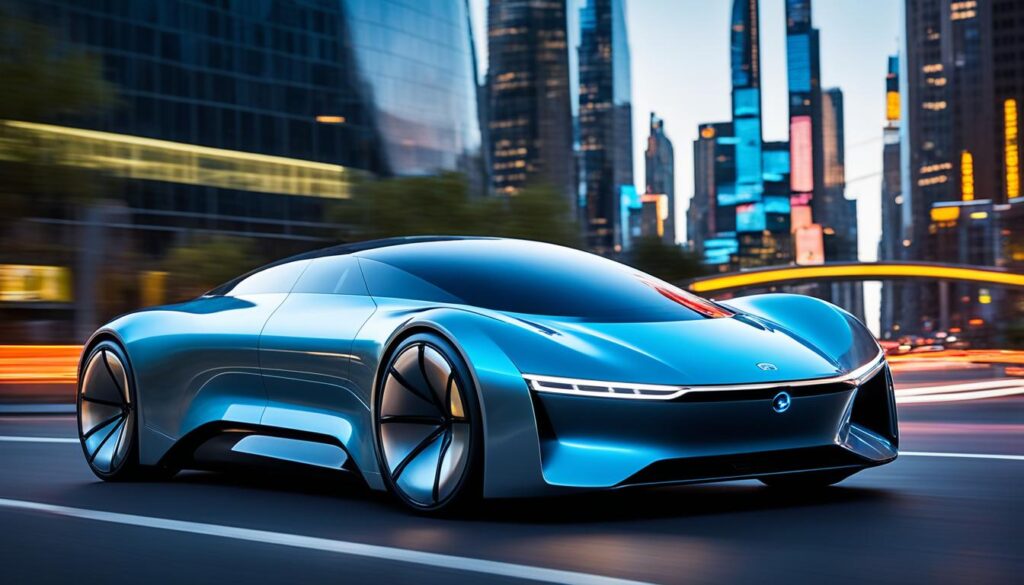
The future of automotive industry is changing fast, thanks to electric vehicle design trends. These trends show a move towards more innovative and user-friendly designs. As people become more eco-friendly and tech-savvy, they want electric mobility trends that fit their needs.
Experts believe that futuristic EV concepts will keep gaining popularity and speed up. This will change how we see transportation. These designs will lead the industry, blending the latest tech with green practices to meet what customers want.
| Year | EV Sales Growth | Market Share Projection |
|---|---|---|
| 2016 | 45% | 3-4% |
| 2021 | N/A | Anticipated 50% by 2030 |
- Increasing energy density in batteries, with cylindrical cells leading at approximately 245 Wh/kg.
- Expansion of manufacturing capabilities, such as Tesla’s new factories and Volvo’s production lines in South Carolina, aimed at boosting output.
- Government initiatives like establishing 500,000 public charging stations to promote EV adoption.
As electric vehicle design trends advance, we’re getting closer to the future of automotive industry. With each step, car makers are adding more electric mobility trends to everyday cars. This is pushing the limits of what’s possible.
These changes point to a bright future where futuristic EV concepts become common. With better infrastructure and new tech, the move to electrified mobility is opening up new paths for both consumers and car makers. It’s changing how we see transportation.
Electric Vehicle Design: Creating a Sustainable Future of Transportation
Electric vehicle design is key to making transportation more eco-friendly. By focusing on eco-friendly vehicle development and green vehicle design, companies are innovating for efficiency. They’re also setting new standards for how cars look and work. This mix of new tech and green design is changing how we see mobility.
The push for sustainable transportation solutions is growing, thanks to more EV charging stations. The U.S. might need 35%-40% more energy by 2035 and 75% more by 2050 for all electric vehicles. To help, the Biden administration plans to add 500,000 public charging stations. This is a big step towards supporting electric vehicle development. It’s important for meeting demand and easing worries about running out of charge.
| Year | Projected Public Charging Stations | Percentage of Required Stations for 2030 EV Growth |
|---|---|---|
| 2030 | 500,000 | Approx. 33% |
Lithium battery costs have dropped by 74% since 2014, and their energy capacity has doubled every four years. This makes EVs more affordable and efficient. These batteries are key to electric vehicle design.
Car makers around the world are committing more to electric cars. Big names like GM and VW are aiming to change their production lines for EVs. This change includes cars, buses, trucks, and utility vehicles, cutting down on emissions and costs.
But, there are still challenges like limited charging spots and battery supply issues. Over 70% of battery production is in China, which could lead to supply chain problems. Yet, new tech like better power semiconductors is helping. These improve charging systems, making them lighter and more efficient.
As we move towards a future with more electric cars, eco-friendly vehicle development and sustainable transportation solutions will guide the market. They’ll shape what cars look like, focusing on both moving people and protecting the planet.
Conclusion
The world of electric vehicle design is changing fast. It’s now a key area for new ideas and improvements. Electric vehicles are moving from a small market to a big player in the car world. They’re helping to reduce pollution and use less energy, which is good news for our planet.
In the United States, the number of electric vehicles has jumped to 275,000. This shows how popular they’re becoming. Europe and China are also embracing electric cars, with big plans to use more of them.
Even though electric cars still face challenges like battery life and charging spots, progress is being made. Companies and governments are working together to make electric cars more appealing. This effort is making cities smarter and greener.
Looking to the future, electric cars are set to change how we travel. They’ll have better range, be cheaper, and have more charging spots. Plus, they’ll work with self-driving tech. This will lead to a new era in car making, blending design, tech, and green thinking.
As we move forward, electric vehicles will lead the way in smart, green transport. They’re not just an option; they’re the future of how we’ll get around. The growth of electric cars will shape our transportation for years to come.
FAQ
What defines innovative electric vehicle design?
Innovative electric vehicle design combines advanced tech, sustainability, and style. It makes cars that are good for the planet and look great. This approach blends form and function to meet today’s needs and tomorrow’s goals.
How is the role of design evolving with the advent of electric vehicles?
Design for electric vehicles is changing to mix looks with practicality. It’s all about making sustainable, personalized transport. Now, cars reflect personal taste and are eco-friendly, thanks to changing consumer wants.
What is the principle of “form follows function” in relation to EVs?
“Form follows function” means a car’s design is shaped by what it does. For EVs, this means simple, clean lines that improve performance and efficiency. It’s about making cars that look good and work better without extra clutter.
How do technological innovations impact electric vehicle manufacturing?
Tech changes are key in making electric vehicles better. They improve battery life, efficiency, and connectivity. This leads to cars that go farther, charge faster, and offer better features, making driving more enjoyable.
What economic and environmental impacts does electric vehicle design have on the automotive industry?
Electric vehicles are changing the game economically and environmentally. They’re cheaper to run and maintain than traditional cars. They also cut down on emissions and use fewer resources, helping the planet and meeting global environmental goals.
Can you describe the electric vehicle design process?
The design process for electric vehicles starts with ideas and goes through testing and refinement. It keeps eco-friendly and user needs in mind at every step. This ensures the car is sustainable, performs well, and looks good.
What are the current trends in electric vehicle design?
Today’s trends focus on simple designs, more personal touches, and the latest tech. Cars are also using sustainable materials and improving the driving experience. They’re designed for the future of mobility and green transport.
How is electric vehicle design contributing to a sustainable future of transportation?
EV design is key to a greener future by cutting emissions and using eco-friendly materials. It’s all about innovation and style that’s good for the planet. EVs are shaping the future of sustainable transport in a big way.