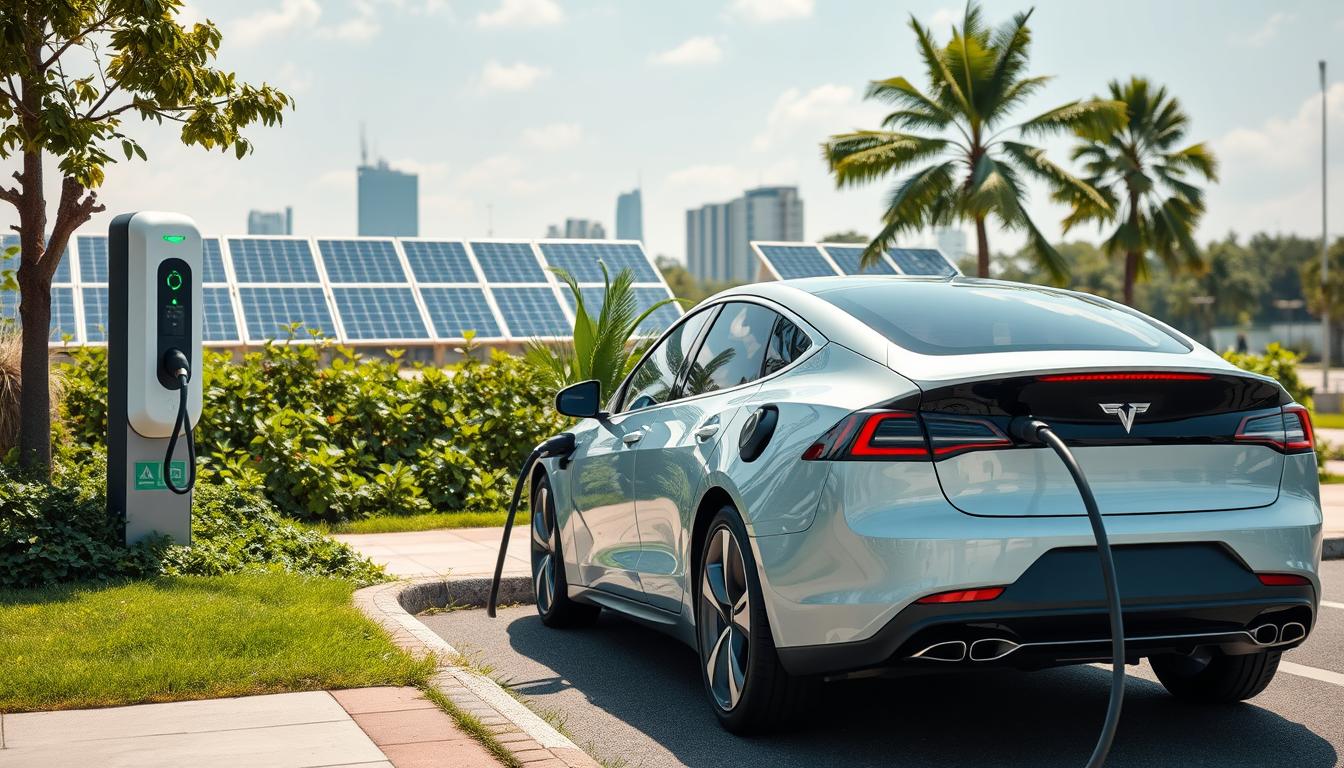
The U.S. government is offering ev charging incentives to boost the electric vehicle (EV) market. The Inflation Reduction Act has extended tax credits for electric car charging stations until 2032. This gives big financial benefits to both individuals and businesses investing in green transportation.
A Pew Research Center study found that four out of 10 Americans are thinking about buying an electric vehicle. To help, the federal government is giving renewable energy tax credits. These credits cover 30% of the cost of buying and installing home EV charging stations, up to $1,000. For businesses, the tax benefits have been increased, allowing them to claim up to $100,000 or 30% per charging unit installed.
The tax credit for residential chargers has been renewed until 2032. Now, it includes bidirectional charging equipment. This lets users power their homes or appliances with their electric cars. This move is expected to increase EV adoption and build a strong charging network across the country.
Key Takeaways
- Federal tax credits for EV charging stations extended through 2032
- Individuals can claim 30% of the cost, up to $1,000, for home EV chargers
- Businesses can claim up to $100,000 or 30% per charging unit installed
- Bidirectional charging equipment now included in the tax credit
- Tax credits expected to drive EV adoption and charging infrastructure development
Understanding Tax Credits for Electric Car Charging Stations
As we move towards green mobility, tax credits help encourage electric vehicles and charging stations. These incentives support eco-friendly choices and reduce emissions. They also help build a sustainable transport network.
What are Tax Credits?
Tax credits lower the tax you owe. Governments use them to make electric vehicles more appealing and affordable. For instance, New Yorkers can save up to $9,500 on an electric vehicle purchase or lease.
Importance of Electric Car Charging Stations
Charging stations are key for electric vehicle adoption. They support the growing number of EVs, easing range anxiety and long-distance travel. Fast chargers, which can recharge in 20 minutes, are vital in high EV areas like New York State.
| Charging Type | Charging Time | Suitable Locations |
|---|---|---|
| Level 1 (120V) | 8-12 hours | Home, Workplace |
| Level 2 (240V) | 4-6 hours | Home, Workplace, Public |
| DC Fast Charging | 20-60 minutes | Public, Highway Corridors |
Overview of Federal Programs
The federal government supports EV charging with several programs. The Alternative Fuel Vehicle Refueling Property Tax Credit offers up to $1,000 for individuals and $100,000 for businesses. The Bipartisan Infrastructure Law also funds grants to expand public chargers to 500,000 by 2030.
The Inflation Reduction Act of 2022 expands charging access and can save families and businesses up to 30% off the installation cost.
By using these federal programs and tax credits, we can grow a strong EV charging network. We also get financial benefits and support emissions reduction efforts.
Eligibility Criteria for Tax Credits
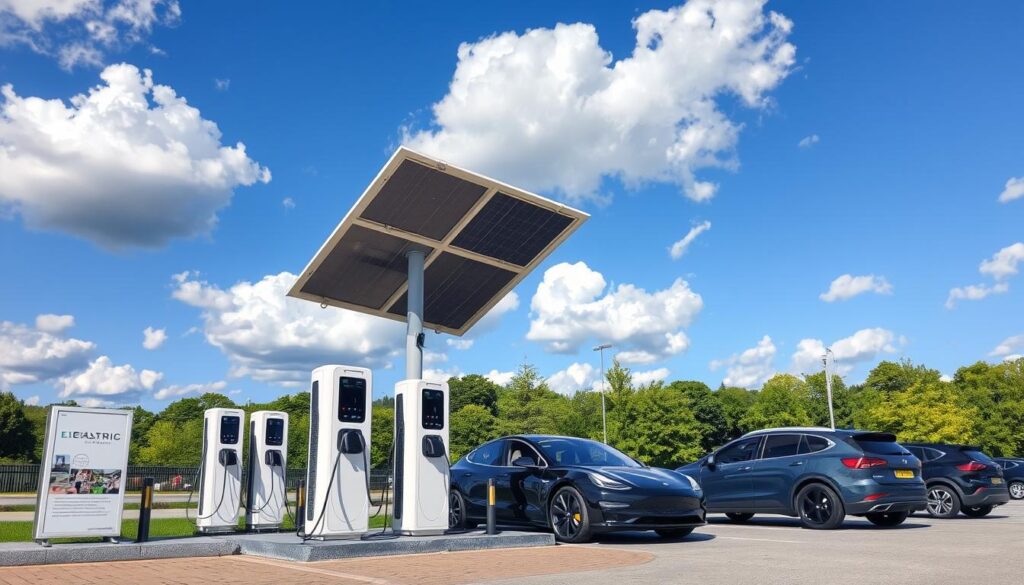
The tax credit for electric car charging stations in 2024 is a big chance for businesses and people to cut down on carbon footprint. It also comes with financial benefits. To get the tax credit for electric car charging, you must meet some rules.
Types of Charging Stations Qualifying for Credit
The tax credit is for different kinds of charging stations. This includes Level 1, Level 2, and DC fast chargers. Businesses can get up to $100,000 in tax credits for each charging station they install.
Tax-exempt and government groups can also get up to $100,000 in tax credits. They can choose to get the credit as a payment instead of a tax deduction.
Requirements for Home Installations
Homeowners and renters can get a tax credit of 30% of the cost for EV charging stations. This is up to $1,000 per station. The credit is for stations installed from 2022 to 2033.
To get the credit, you need to get the right permits and approvals. The $1,000 credit is only for stations installed after 2022.
Business Installation Requirements
Businesses can get a tax incentive of up to 30% of the cost for EV chargers. The Inflation Reduction Act (IRA) has raised the limit to $100,000 per charger. This is up from $30,000 before.
Businesses in low-income or non-urban areas can get the full 30% credit. They must meet certain wage and apprenticeship rules. Municipalities can also get the credit, even if they don’t pay taxes. They can make an “elective payment election” to get the credit as a direct payment from the IRS.
Knowing the rules for the tax credit for electric car charging station helps businesses and individuals. They can make smart choices and get financial benefits. Companies like EV Connect can help with the tax credits and rebates for EV charging.
Financial Benefits of Investing in Charging Stations
Investing in electric vehicle infrastructure rebates and charging stations can bring big financial gains. As more people choose electric cars, installing charging stations is good for the planet and your wallet. It also comes with great savings and incentives.
Estimated Savings from Tax Credits
The government gives big tax credits to help install electric car charging stations. People can get up to $1,000 per charging port. Businesses can get up to $100,000 per EV charger.
The Federal Alternative Fuel Infrastructure Tax Credit offers up to 30% of the cost. This can be up to $30,000.
Long-term Cost Efficiency
Charging stations save money in the long run. Electric cars cost less to fuel and maintain than gas cars. As more people use electric cars, properties with charging stations will be worth more.
Businesses can make money by charging for EV charging. This steady income can pay off the initial cost. Plus, customers might spend more while waiting to charge, boosting sales.
Local Incentives and Rebates
States and local governments offer extra help for EV charging. For example, New York State has great benefits:
- The Charge Ready NY 2.0 program gives rebates of $2,000 to $4,000 per charging port for workplaces and public places.
- Businesses can get a state tax credit of up to $5,000 per charging station or 50% of the cost.
- NYC utilities offer rebates for commercial EV charging projects, from 50% to 100% based on the project and location.
Using these local incentives can make installing EV charging stations cheaper. It makes the investment even more appealing.
How to Apply for the Tax Credit
Getting the tax credit for EV charging stations can save you a lot of money. Knowing how to apply and what documents you need is key. This way, you can enjoy the ev charging incentives and clean energy tax benefits.
Step-by-Step Application Process
To get the tax credit, just follow these steps:
- Check if you qualify based on the charger type and installation rules.
- Collect all needed documents, like receipts and installation proof.
- Fill out the right tax form:
- Individuals: Use Form 8911 with your tax return.
- Businesses: Use Form 8911 for the credit.
- Send in your tax return and wait for it to be processed.
Required Documentation
Make sure you have these documents ready for a smooth application:
- Receipts for the charger’s cost and installation fees.
- Proof of installation, like permits or contractor bills.
- A certification from the charger’s maker that it’s eligible.
Common Mistakes to Avoid
Watch out for these common mistakes when applying for the tax credit:
- Not meeting the criteria for the charger type or installation spot.
- Not providing enough documents to back up your claim.
- Not subtracting the credit amount from the charger’s cost.
- Missing the tax return filing deadline to claim the credit.
By following these tips and checking your application carefully, you can increase your chances of getting the tax credit for your EV charger.
Potential incentives for EV charging stations can reach up to $62,248, including federal tax credits and local rebates.
| Incentive | Amount |
|---|---|
| Maximum Federal tax credit for new electric vehicles (Income Qualified) | $7,500 |
| Available local incentives for used all-electric vehicles | $1,500 |
| Maximum local incentive for vehicle retirement | $1,000 |
| Maximum local vehicle incentive for purchasing a new zero-emission vehicle | $2,500 |
Future of Tax Credits for Electric Vehicle Infrastructure
The world is moving towards a greener future, and electric vehicles (EVs) are key. Governments and groups offer tax credits and incentives for EVs. The Inflation Reduction Act has helped extend these credits, boosting the EV market.
Emerging Trends and Policies
The Biden-Harris Administration is committed to EVs, with $623 million for a national EV charging network. They aim for 500,000 public chargers by 2030. Big car makers also plan to add 30,000 chargers in North America.
These efforts, along with subsidies, will help more people use EVs. This will cut down on harmful emissions from cars.
Potential Changes in 2025 and Beyond
As EVs become more popular, tax credits and incentives might change. Governments could introduce new programs or tweak old ones. For example, they might make tax credits available for more types of charging stations.
As the EV market grows, we might see a shift from direct subsidies to other solutions. This could include carbon pricing or emissions trading schemes.
Impact on Adoption of Electric Vehicles
Tax credits and incentives for EVs will greatly help their adoption. They make charging easier and cheaper, overcoming range anxiety. This will make more people want to buy EVs.
More EVs will lead to more investment in EV tech and infrastructure. This creates a cycle that speeds up our move to a greener transportation system.
FAQ
What is the tax credit for electric car charging stations?
The Inflation Reduction Act extended the tax credit for electric vehicle charging stations. It now runs through Dec. 31, 2032. Individuals can get a 30% tax credit, up to
FAQ
What is the tax credit for electric car charging stations?
The Inflation Reduction Act extended the tax credit for electric vehicle charging stations. It now runs through Dec. 31, 2032. Individuals can get a 30% tax credit, up to $1,000, for home EV charging stations.
Businesses can get a tax credit of up to 30% of the total cost. The maximum credit is $100,000 per EV charger.
Why are electric car charging stations important?
Electric car charging stations are key for more electric vehicles. They help cut down on greenhouse gas emissions and fossil fuel use. The government offers tax credits and grants to help install EV charging.
What are the eligibility criteria for the EV charging station tax credit?
The property must be for clean-burning fuel or to recharge electric vehicles. It must be placed in service in the tax year. It also needs to start with the taxpayer and be used mostly in the U.S.
For home use, it must be on the taxpayer’s main home. Business installations need to meet wage and apprenticeship rules for the full 30% credit.
What are the financial benefits of investing in electric car charging stations?
Investing in EV charging stations offers tax credits and long-term savings. Individuals can get up to $1,000 per charging port. Businesses can claim up to $100,000 per charger.
Electric vehicles cost less to fuel and maintain over time. States and local governments offer rebates, making installation cheaper.
How can I claim the tax credit for an electric car charging station?
Individuals file Form 8911 with their tax return. Businesses also file Form 8911. You need receipts for the charger and installation.
Avoid mistakes like not meeting criteria or not providing the right documents. Also, don’t forget to reduce the property basis by the credit amount.
What is the future outlook for tax credits related to electric vehicle infrastructure?
The outlook is good, thanks to the Inflation Reduction Act. It extends the tax credit until 2032. The Biden-Harris Administration plans to fund a national EV charging network.
They aim for 500,000 public chargers by 2030. Automakers are also investing in EV charging. These efforts will help more people use electric vehicles and reduce emissions.
,000, for home EV charging stations.
Businesses can get a tax credit of up to 30% of the total cost. The maximum credit is 0,000 per EV charger.
Why are electric car charging stations important?
Electric car charging stations are key for more electric vehicles. They help cut down on greenhouse gas emissions and fossil fuel use. The government offers tax credits and grants to help install EV charging.
What are the eligibility criteria for the EV charging station tax credit?
The property must be for clean-burning fuel or to recharge electric vehicles. It must be placed in service in the tax year. It also needs to start with the taxpayer and be used mostly in the U.S.
For home use, it must be on the taxpayer’s main home. Business installations need to meet wage and apprenticeship rules for the full 30% credit.
What are the financial benefits of investing in electric car charging stations?
Investing in EV charging stations offers tax credits and long-term savings. Individuals can get up to
FAQ
What is the tax credit for electric car charging stations?
The Inflation Reduction Act extended the tax credit for electric vehicle charging stations. It now runs through Dec. 31, 2032. Individuals can get a 30% tax credit, up to $1,000, for home EV charging stations.
Businesses can get a tax credit of up to 30% of the total cost. The maximum credit is $100,000 per EV charger.
Why are electric car charging stations important?
Electric car charging stations are key for more electric vehicles. They help cut down on greenhouse gas emissions and fossil fuel use. The government offers tax credits and grants to help install EV charging.
What are the eligibility criteria for the EV charging station tax credit?
The property must be for clean-burning fuel or to recharge electric vehicles. It must be placed in service in the tax year. It also needs to start with the taxpayer and be used mostly in the U.S.
For home use, it must be on the taxpayer’s main home. Business installations need to meet wage and apprenticeship rules for the full 30% credit.
What are the financial benefits of investing in electric car charging stations?
Investing in EV charging stations offers tax credits and long-term savings. Individuals can get up to $1,000 per charging port. Businesses can claim up to $100,000 per charger.
Electric vehicles cost less to fuel and maintain over time. States and local governments offer rebates, making installation cheaper.
How can I claim the tax credit for an electric car charging station?
Individuals file Form 8911 with their tax return. Businesses also file Form 8911. You need receipts for the charger and installation.
Avoid mistakes like not meeting criteria or not providing the right documents. Also, don’t forget to reduce the property basis by the credit amount.
What is the future outlook for tax credits related to electric vehicle infrastructure?
The outlook is good, thanks to the Inflation Reduction Act. It extends the tax credit until 2032. The Biden-Harris Administration plans to fund a national EV charging network.
They aim for 500,000 public chargers by 2030. Automakers are also investing in EV charging. These efforts will help more people use electric vehicles and reduce emissions.
,000 per charging port. Businesses can claim up to 0,000 per charger.
Electric vehicles cost less to fuel and maintain over time. States and local governments offer rebates, making installation cheaper.
How can I claim the tax credit for an electric car charging station?
Individuals file Form 8911 with their tax return. Businesses also file Form 8911. You need receipts for the charger and installation.
Avoid mistakes like not meeting criteria or not providing the right documents. Also, don’t forget to reduce the property basis by the credit amount.
What is the future outlook for tax credits related to electric vehicle infrastructure?
The outlook is good, thanks to the Inflation Reduction Act. It extends the tax credit until 2032. The Biden-Harris Administration plans to fund a national EV charging network.
They aim for 500,000 public chargers by 2030. Automakers are also investing in EV charging. These efforts will help more people use electric vehicles and reduce emissions.