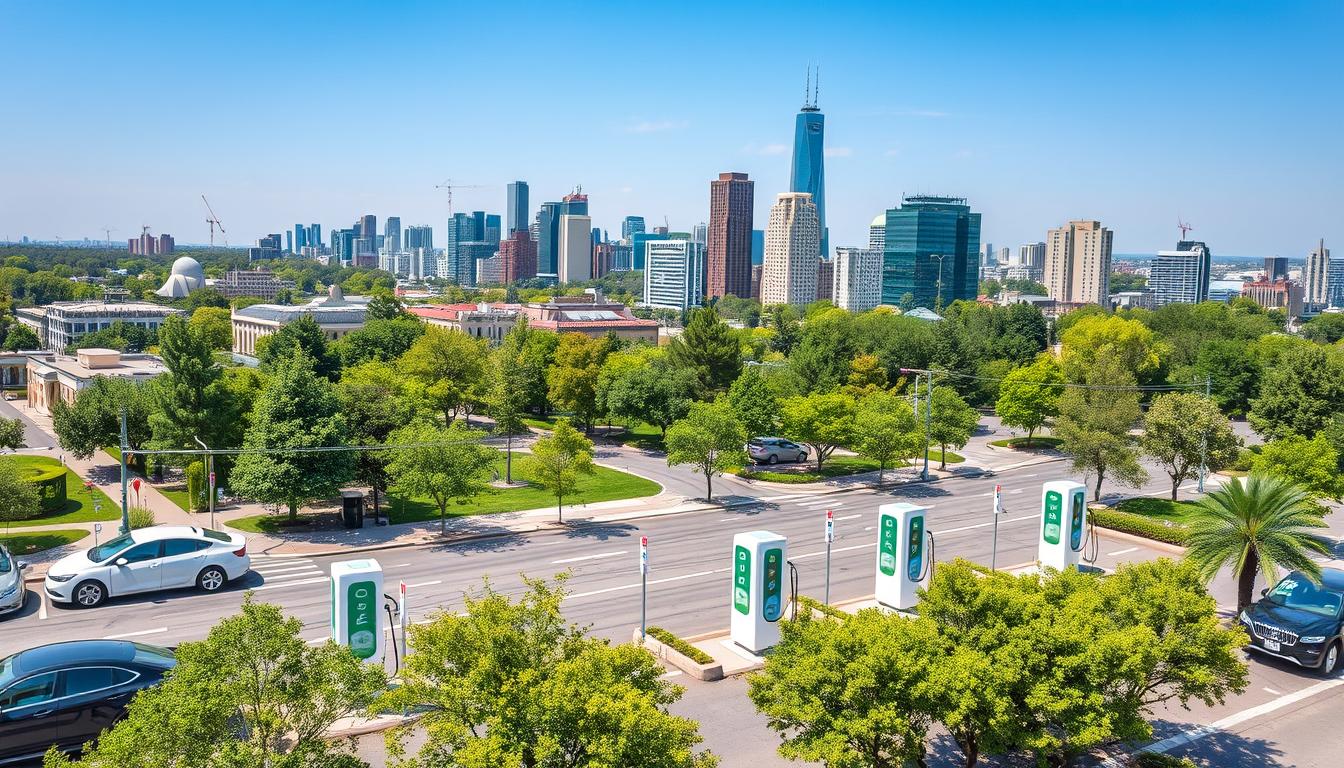
The electric vehicle (EV) market is growing fast. This means more people need easy ways to charge their cars. Today, over 113,000 charging stations are available in the U.S. This growth is huge, with public stations making up about 88% of all charging spots. Now, finding free EV charging stations is easier than ever.
The National Renewable Energy Laboratory says public charging is key for long trips. It’s also great for those who can’t charge at home. Free EV charging stations are a green and affordable choice. With the right tools, drivers can find these spots and plan their routes.
You can find free EV charging stations in many places. For example, Pennsylvania’s state parks and forests have over 40 charging spots. There are 48 public stations in total. These can charge your car in 2.5 to 7 hours, perfect for outdoor adventures.
Key Takeaways
- Public charging infrastructure is crucial for supporting long-distance travel and those without access to home charging.
- Free EV charging stations offer a cost-effective and environmentally friendly solution for EV owners.
- EV charging stations locator tools and electric vehicle charging maps make it easy to find free charging points.
- State parks, forests, and other public spaces are common locations for free EV charging stations.
- Charging times at free stations typically range from 2.5 to 7 hours, depending on the vehicle and charger type.
Understanding the Benefits of Free EV Charging Stations
Electric vehicles (EVs) are becoming more popular. Free charging stations are a big plus for EV owners. These free ev charging spots nearby make life easier and are good for the planet and wallet.
Economic Advantages for Electric Vehicle Owners
Free EV charging stations save money for EV owners. Charging an EV is cheaper than gas. With free charging, the savings grow even more.
EV prices have fallen by nearly 22.4% or $15,000 in a year. This makes EVs more affordable for many people.
While buying and installing EV charging stations costs money, the long-term benefits are worth it. Home charging is often cheaper for drivers. But, the cost depends on the type of charging station used.
Environmental Impact of Utilizing Free Charging
Free EV charging stations help the environment and your wallet. They encourage using EVs, which cuts down on carbon emissions. As more people drive EVs, the planet benefits more.
Some free charging stations use solar power. This cuts down on energy costs for EV owners and supports green practices.
How Free Charging Supports EV Adoption
Free charging stations help more people choose EVs. They make EVs a practical option for daily and long trips. This reduces worries about running out of charge.
Businesses and universities offer free EV charging to encourage using EVs. This attracts people who care about the environment. It also helps meet sustainability goals.
| Incentive | Description |
|---|---|
| Manufacturer Incentives | Some EV manufacturers offer free or discounted access to charging stations |
| Federal Tax Credit | Up to $7,500 for purchasing a new EV and 30% (up to $1,000) for home charger and installation |
| Charging Rewards Programs | Points or discounts for using charging services, redeemable for free charging or other rewards |
How to Locate Free EV Charging Stations
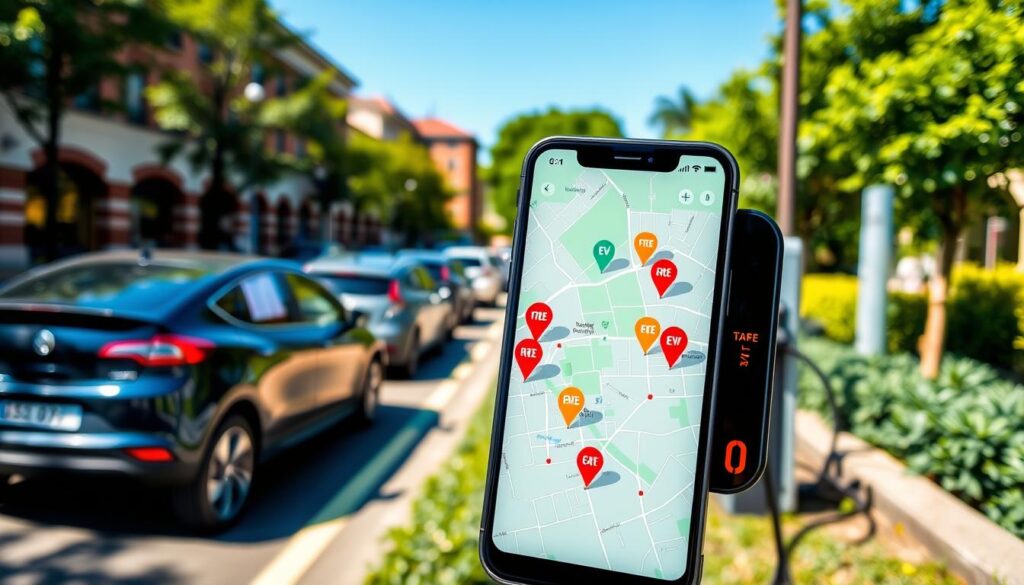
As electric vehicles become more popular, finding affordable charging spots is key. Luckily, there are many ways to find free EV charging stations. This makes it easy for drivers to keep their cars charged without spending a lot.
Utilizing Mobile Apps for Real-Time Information
Mobile apps are a great way to find free EV charging stations. Apps like PlugShare, ChargePoint, and Recargo give you the latest info on charging spots. PlugShare even has a map with over 400 free stations across the US.
Apps like Chargemap, ChargeHub, EVgo, EVHotels, and EVmatch let you filter by cost, availability, and charger type. This makes it simple to find the best free charging spot for your needs.
The PlugShare app is very popular among EV owners in the US. ChargeHub offers charger availability info and has a Passport feature for easy payment. Remember, different EVs need different plugs, but most apps let you search by vehicle type.
Online Resources and Websites to Explore
There are also many websites and online resources for finding free EV charging stations. While Google Maps and Waze list some stations, sites like PlugShare.com and ChargePoint.com have more detailed info.
These websites have interactive maps, user reviews, and details on charger types and speeds. Some even let you filter by your car model for the best fit.
Community Resources for Local Charging Options
Local community resources can also help find free EV charging stations. Many cities and towns have EV charging projects with utility companies or green groups. These projects often include free charging spots in busy areas like downtowns and parks.
For example, Dublin, California, has several free charging spots for EV owners:
| Location | Number of Cars Accommodated |
|---|---|
| Don Biddle Community Park | 10 |
| Dublin Library | 3 |
| Fallon Sports Park | 3 |
| Heritage Park and Museum | 3 |
| Public Safety Complex | 3 |
| Shannon Community Center | 3 |
| The Wave Waterpark | 6 |
| Dublin Sports Grounds (upcoming) | 14 |
| Wallis Ranch Community Park | 2 |
By keeping up with local projects and talking to other EV owners, you can find free charging spots easily.
Types of Free EV Charging Stations Available
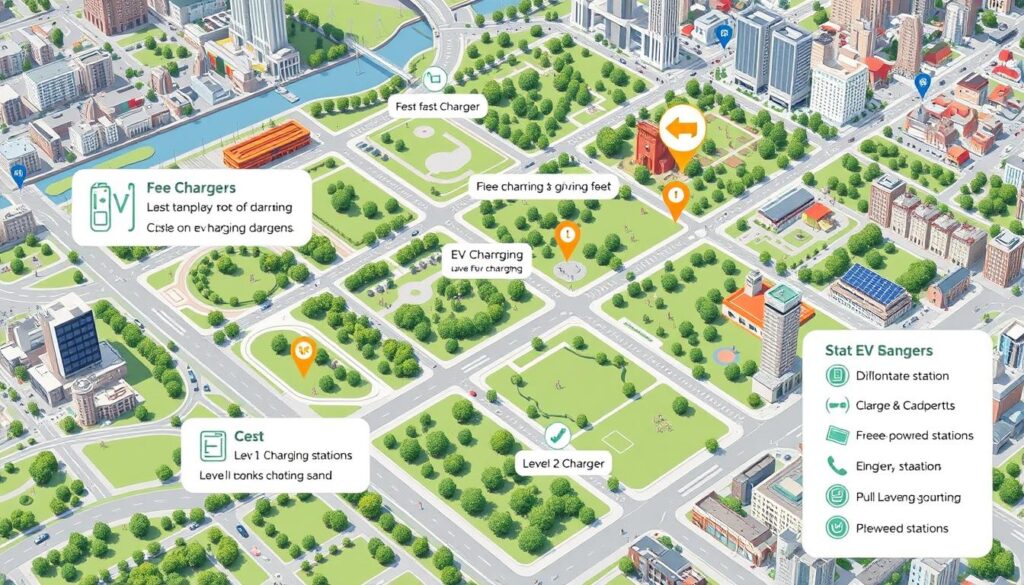
When looking for free EV charging stations, it’s key to know the different types. Each type has its own speed and fits certain electric vehicles.
Level 1 vs. Level 2 Charging Stations
Level 1 stations use a standard 120-volt outlet and are the slowest. They add about 3.5 – 6.5 miles of range per hour. You’ll often find them at homes.
On the other hand, Level 2 stations use 240 volts and charge faster. They add about 14-35 miles of range per hour. You’ll see them more in public places and cost around $400. Installation can cost $400-$1,500.
DC Fast Charging: What You Need to Know
DC fast charging, or Level 3, is the fastest option. It can add up to 10 miles of range per minute. This means you can charge up to 80% in just 30 minutes.
But, not all electric vehicles can use DC fast charging. The cost per kilowatt hour (kWh) is also higher, about 40 cents in California.
Home Charging Solutions and Community Charging Hubs
For those who want to charge at home, Level 2 stations are the top choice. In places like California, you can get up to $4,200 back for installing one within 120 days of buying an electric vehicle.
Community charging hubs, found in places like apartments, also offer Level 2 charging. They might have special deals for installation. It’s important to think about electricity rates, which change with the season and time of day, to keep costs down.
Municipal Programs Promoting Free EV Charging
Many cities in the U.S. are promoting electric vehicles (EVs) with free charging stations. These efforts aim to cut down on transportation emissions. For instance, in San Antonio, transportation emissions are a big part of the city’s greenhouse gas output.
Overview of City Government Initiatives
City governments are launching various programs to support EV growth. Some key examples include:
- The City Council of San Antonio passed Resolution No. 2017-06-22-0031R in support of the Paris Climate Agreement and adopted the Climate Action & Adaptation Plan by Ordinance 2019-10-17-0840.
- Austin Energy’s Plug-In Everywhere Program offers Level 2 charging at $0.09 per kWh and DC Fast charging at $0.21 per minute.
- The Dallas-Fort Worth-Arlington and Houston-Woodlands-Sugar Land areas have over 2,000 charging stations each, while Austin-Round Rock has more than 1,600, and San Antonio-New Braunfels has over 800.
Funding and Grant Opportunities for Free Stations
Cities and utility companies offer rebates and grants for free ev charging stations near me. Some examples include:
| Entity | Rebate/Grant |
|---|---|
| Texas | $250 to $1,200 for Level 2 EV chargers |
| Austin Energy | 50% rebate on Level 2 EV chargers, up to $1,200 for residential customers |
| Entergy | $250 rebate for Level 2 EV chargers (residential), up to $1,500 for DC Fast Charging stations (commercial) |
| SWEPCO | $250 rebate for ENERGY STAR-certified Level 2 EV chargers (residential) |
| United Cooperative Services | 50% of the cost to install a Level 2 EV charging station, up to $500 (residential) |
Partnerships with Private Businesses
Municipal programs often team up with businesses like Whole Foods, Target, and energy-focused companies to offer free charging. Some companies give free EV charging stations to their employees as part of their green efforts. Also, some initiatives cover the costs of running and keeping free chargers, like Rivian’s support for stations in national parks.
“Driving an electric vehicle can result in significant savings in fuel costs for individuals.”
By supporting free EV charging stations, cities and businesses are making electric vehicles more appealing. This helps in creating a cleaner, more sustainable future.
Popular Locations for Free EV Charging Stations
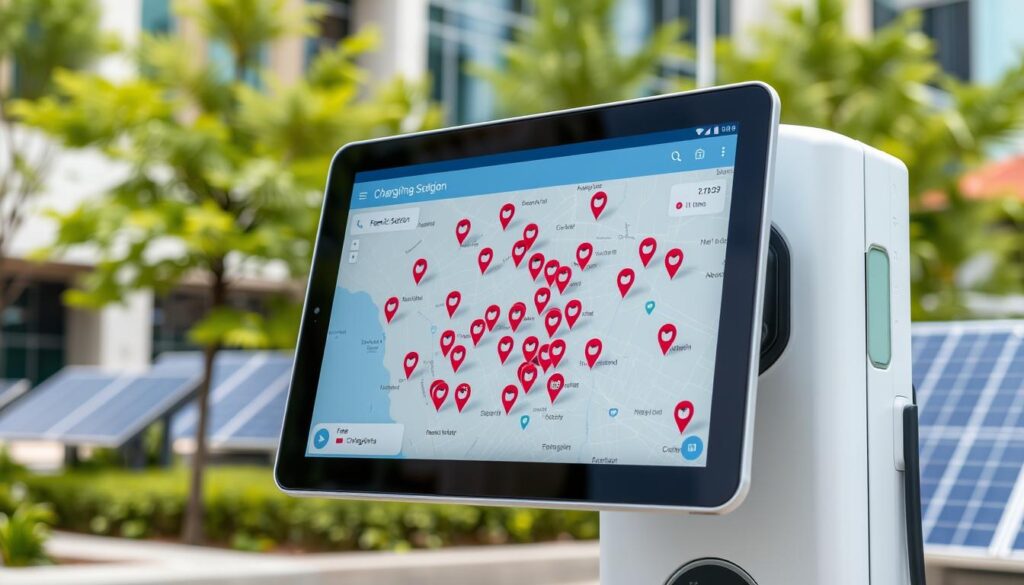
More people are driving electric vehicles (EVs) than ever before. This means they need easy ways to charge their cars. Luckily, many places now have free EV charging stations. This makes it simple for drivers to keep their cars charged while they do their daily tasks. EV owners can find these free spots using an ev charging station locator tool.
Shopping Centers and Retail Outlets
Shopping centers and stores are adding free EV charging stations. This is to attract customers who care about the environment. Big names like Macy’s and Whole Foods offer free charging at some spots. It’s a great way for EV owners to charge while they shop.
Parks and Recreational Areas
Parks and outdoor spots are also getting free EV charging stations. Places like Yosemite and Death Valley have them. These stations help EV owners and encourage using electric cars to protect the environment.
Government Buildings and Public Spaces
Government buildings and public areas are adding free EV charging stations too. Schools like Santa Clara University and hotels like Marriott offer free charging. This makes it easier for EV owners to travel without worrying about charging.
Using an ev charging station locator tool helps EV owners find these free spots. As more places offer charging, EVs are becoming more popular. This is good news for a greener future.
Best Practices for Using Free EV Charging Stations
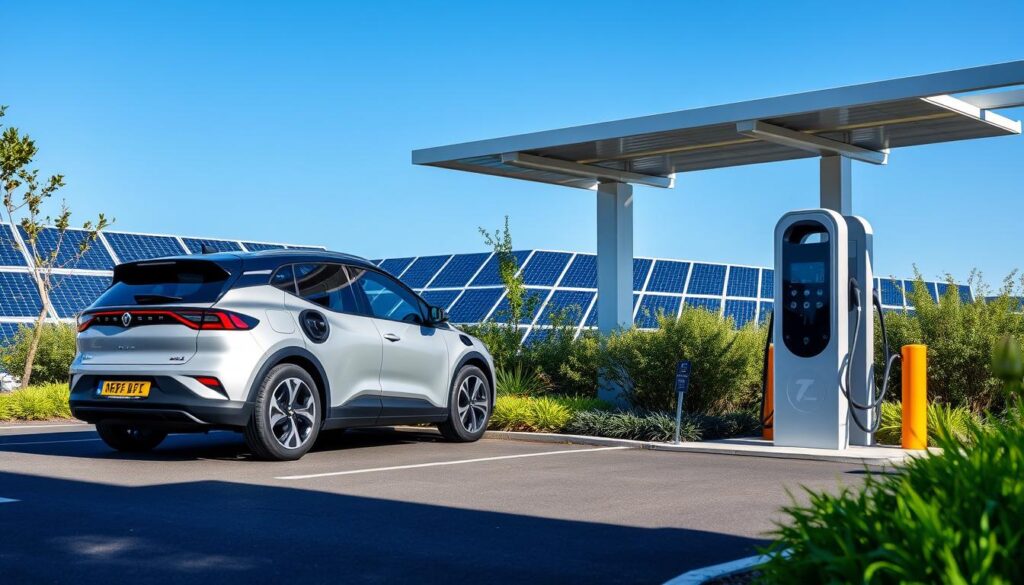
As more people drive electric vehicles, the need for charging spots grows. The US now has nearly 161,562 charging stations, up from 87,352 in 2019. Knowing how to use these free stations well is key. This ensures a good experience for everyone, helping you and others find EV chargers easily.
Being considerate is crucial when using free EV charging stations. These spots are for everyone, so move your car once charged. This is vital since public charging has grown by 88% since 2019.
Understanding Charging Etiquette
Following good charging etiquette is important. Here are some tips:
- Move your car quickly after charging to let others use the spot.
- Don’t park in charging spots if you’re not charging.
- Respect others’ charging needs and don’t unplug or move their cars without asking.
- If you have trouble with a station, tell the network provider to keep it working for everyone.
Managing Charging Time for Optimal Use
Plan your charging times wisely to get the most out of free stations. Here are some tips:
- Charge during off-peak hours to avoid crowds and save money.
- Charge while you’re out running errands or at events, like shopping centers or parks.
- Know any time limits for the station and respect them so others can charge too.
- Use apps like PlugShare, ChargeFinder, and ChargeHub to find free stations and check their status.
Reporting Issues with Charging Stations
If you have trouble with a charging station, report it to the network provider. This keeps the stations working well for everyone. Here’s how to report an issue:
- Write down the station’s location and details, like the station ID or network name.
- Get in touch with the network provider through their customer support, like a phone number or online form.
- Describe the problem clearly, including any error messages or damage you see.
- If you can, take photos of the problem to help the provider understand and fix it.
By being a responsible EV owner and following these tips, you help make free EV charging stations better. This makes it easier for more people to use electric vehicles and find EV chargers.
Future of Free EV Charging Infrastructure
As electric vehicles become more popular, the future of free EV charging looks bright. New tech, government support, and renewable energy will shape this future. We can expect big changes in the coming years.
Technological Advancements on the Horizon
EV charging is getting better with new tech. Faster charging systems, like DC fast charging, are being developed. This makes charging quicker. Companies like Qmerit are leading the charge, installing over 450,000 stations in the U.S. and Canada.
Impact of Government Policies and Incentives
Government support is key for free EV charging. States like Texas offer rebates for EVs and charging stations. For example, Texas residents can get up to $1,500 for installing Level 2 chargers. These programs help more people go electric and expand charging networks.
| City | Number of Free EV Charging Stations |
|---|---|
| Houston | Over 400 |
| Austin | Over 300 |
| Dallas | Over 200 |
Trends in Renewable Energy Integration
Renewable energy is becoming a big part of EV charging. More stations are using solar and wind power. This makes driving electric even better for the planet. Texas is leading with its growth in clean energy projects.
The demand for accessible charging stations is increasing as more people switch to electric vehicles.
With more EVs on the road, free charging will grow. Renewable energy will play a big role. Together, we’re moving towards a cleaner future. Supporting these trends will help us get there faster.
Conclusion: Making the Most of Free EV Charging Stations
As electric vehicles become more popular, finding free charging stations is key. By using free EV charging stations near you, you can save money and help the environment. These stations, like Level 2 chargers, are often found in public spots like malls and parks.
Encouraging Community Engagement and Support
To get more free EV charging, we need to work together. Local governments, businesses, and groups can team up to fund and keep these stations running. Tax breaks or grants can help businesses install free chargers, drawing in EV owners.
Also, teaching people about electric cars and free charging can help. This way, more folks will know about the benefits of EVs and where to find free charging.
Resources for Further Information and Assistance
There are many tools to help EV owners find and use free charging stations. Apps like PlugShare and ChargeHub show where to charge and when. Car makers like Tesla and Nissan offer free charging for new buyers.
Local programs and electric companies also offer free or cheap charging at off-peak times. This helps balance the grid and supports EVs.
By using these resources and getting involved in their communities, EV drivers can fully benefit from free charging. As technology gets better, finding and using free EV charging will get easier. This will help make our transportation greener for the future.
FAQ
How many public EV charging stations are there in the U.S.?
As of 2021, the U.S. has over 113,000 public EV charging stations. This number has grown a lot since 2019. Now, public charging makes up about 88% of all charging ports.
Is charging an electric vehicle cheaper than filling a gas tank?
Yes, charging an EV is usually cheaper than filling a gas tank. The cost to fully charge an EV at a public station ranges from to . This depends on the vehicle’s MPGe, charger type, and electricity cost. Sometimes, charging can even be free.
What apps can I use to find free EV charging stations near me?
You can use PlugShare, ChargePoint, and Recargo to find free EV charging stations. PlugShare has a map for over 400 free stations in the U.S. Other apps like Chargemap, ChargeHub, EVgo, EVHotels, and EVmatch let you filter by cost, availability, charger type, and speed.
What are the different types of EV chargers?
There are three main types of EV chargers: Level 1, Level 2, and DC fast chargers (Level 3). Level 1 chargers use a standard 120-volt outlet and are the slowest. Level 2 chargers use 240 volts and charge 4-6 times faster. DC fast chargers are the most powerful, charging up to 80% in 30 minutes. Public stations usually have Level 2 and 3 chargers, while Level 2 is common for home charging.
Where can I find free EV charging stations?
Free EV charging stations are available at various places. You can find them at select Macy’s, Cinemark, Kohl’s, Fred Meyer, Stop & Shop, Harris Teeter, Kroger, Safeway, and Whole Foods stores. Some Marriott, Hilton, and Radisson hotels offer free charging for guests. Many colleges, like Santa Clara University and the University of Florida, provide free charging for students and staff. Also, some national parks, like Yosemite and Death Valley, have free chargers.
What should I keep in mind when using public EV charging stations?
Be considerate of others by moving your vehicle once fully charged. Plan charging times during off-peak hours for lower costs and less congestion. If you encounter any issues with a charging station, report them to the network provider to maintain functionality.
Are there any free charging promotions offered by automakers?
Yes, some automakers are offering free charging promotions to attract customers. For example, Audi provides two years of unlimited DC charging with Electrify America for certain models.
How will the future of free EV charging evolve?
The future of free EV charging will be shaped by government policies, incentives, and the growth of public charging infrastructure. Renewable energy integration, like solar-powered chargers, will also play a role in the future of free EV charging.