The electric vehicle (EV) scene in America is changing fast. The Biden administration wants to make more cars electric. They plan to use a mix of electric, plug-in hybrids, and gas cars to cut pollution by 50% by 2032.
Using EVs can save money and reduce emissions. They can go over 130 MPGe and use only 25-40 kWh per 100 miles. This makes them a great choice for the future.
The Environmental Protection Agency says EVs pollute less than gas cars. Even if power plants use coal or gas, EVs still have lower emissions. The road to an electric vehicle future is clear thanks to better batteries. This means EVs can run on zero emissions and help our planet.
But, there are challenges to using EVs. They cost more, and there aren’t enough charging spots. The U.S. grid might need to grow by 3,360 percent by 2035 to handle EVs.
Despite these issues, the U.S. government is helping. They’ve set aside $5.5 billion for EV chargers every 50 miles. They’ve also given $2.5 billion in grants to fix charging gaps at state and local levels.
Key Takeaways
- The Biden administration aims to electrify the car industry, relying on a mix of fully electric vehicles, plug-in hybrids, and other gas-powered cars.
- Electric vehicles can reduce fuel costs and emissions, with the potential to exceed 130 MPGe and consume only 25-40 kWh per 100 miles.
- Charging electric vehicles emits lower levels of pollutants compared to internal combustion engine cars, even if power plants use coal or natural gas for electricity generation.
- The adoption of electric vehicles faces challenges such as higher purchase prices, limited charging infrastructure, and consumer perception.
- The U.S. government has approved significant funding for the National Electric Vehicle Infrastructure program to install electric vehicle chargers along American roads and address charging station gaps.
Overview of Electric Vehicle Energy Landscape
The electric vehicle (EV) market is growing fast, with global sales set to hit new records soon. In the U.S., EVs made up 7% of new car sales in 2023, the best year yet. This growth is thanks to better battery technology, more charging infrastructure, and people learning about electric cars.
Big names like General Motors and Toyota are leading the EV charge. They’re making hybrid electric vehicles (HEVs) and plug-in hybrids (PHEVs) to help people switch to electric. HEVs save fuel, and PHEVs and BEVs cut emissions and costs.
Current State of Electric Vehicles in America
2023 was a record year for EV sales in the U.S., with 1.2 million sold. This trend is set to keep going, thanks to government support. Tax credits, rebates, and more charging spots are making EVs easier to get and use.
Key Players in the Market
China leads the world in EV sales, with six out of ten EVs sold there. Chinese brands like BYD and SAIC-GM-Wuling are making more cars to meet demand. Europe is also seeing a big increase in EV models, with sales expected to quadruple by 2030.
Advances in Battery Technology
New battery tech is key for EVs to become more popular. Better batteries last longer and cost less, making EVs more appealing. Some batteries can go over 200,000 miles with little loss of power. Battery management systems and regenerative braking also improve EVs’ performance and efficiency.
| Region | EV Sales (2024 Projection) |
|---|---|
| China | Highest |
| Europe | Second Highest |
| North America | Third Highest |
| South Korea | Fourth Highest |
| Japan | Fifth Highest |
As EVs evolve, working together will be crucial. Automakers, policymakers, and consumers must join forces for a greener, more efficient future.
Government Policies Supporting Electric Vehicles
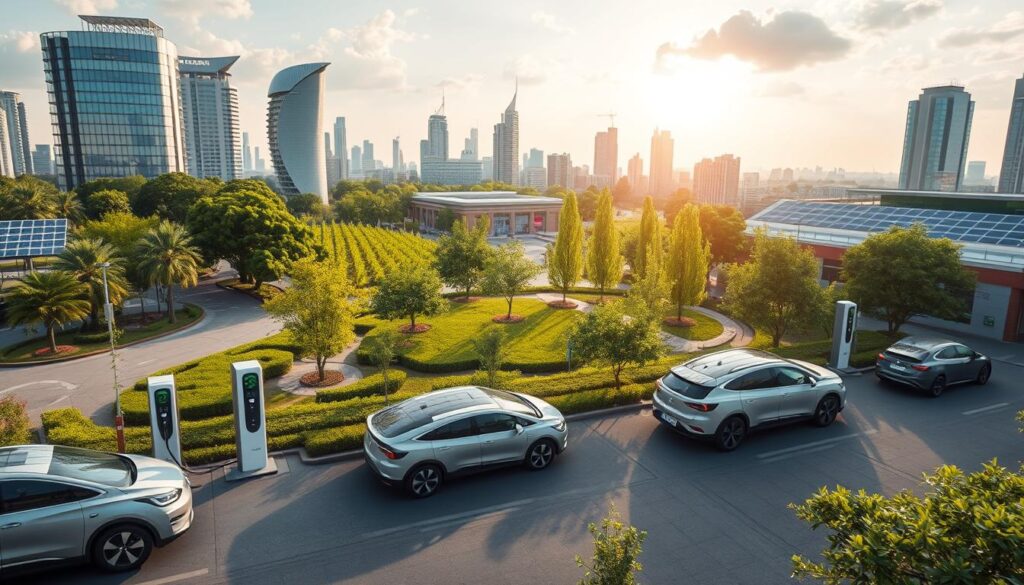
The U.S. government has set up many policies and incentives to help electric vehicles (EVs) grow. These efforts aim to make EVs more affordable and to build the needed charging stations. This will help the country move towards a cleaner, greener future.
Federal Incentives and Tax Credits
One big help for EVs is the Clean Vehicle Tax Credits. These credits help people, businesses, and others buy clean vehicles and charging stations. The Inflation Reduction Act made these credits last longer and added new ones for commercial and used EVs.
The government also gave a lot of money to make school buses and federal vehicles electric. The Clean School Bus program got $2.5 billion to buy electric school buses. The Inflation Reduction Act gave $3 billion to make the federal fleet electric, covering costs.
State-Level Initiatives
States and electric utilities also offer incentives for EVs. You can find these state incentives in the Laws and Incentives database. They include rebates, tax credits, and lower fees for electric cars. Some states, like California, have big goals for EVs, aiming for all new cars to be electric by 2035.
Regulations Driving Adoption
Emissions regulations play a big role in EV growth in the U.S. The Environmental Protection Agency (EPA) wants to cut car pollution by 50% by 2032. These rules, along with federal and state incentives, help the EV market grow.
“The use of energy-efficient vehicles like hybrid and electric vehicles supports the U.S. economy and helps diversify the transportation fleet, contributing to the nation’s energy security.”
By investing in EVs and charging stations, the U.S. government is cutting down on greenhouse gas emissions. This move also makes the country less dependent on foreign oil. It makes the country more ready for any supply problems.
The Role of Renewable Energy in EV Charging
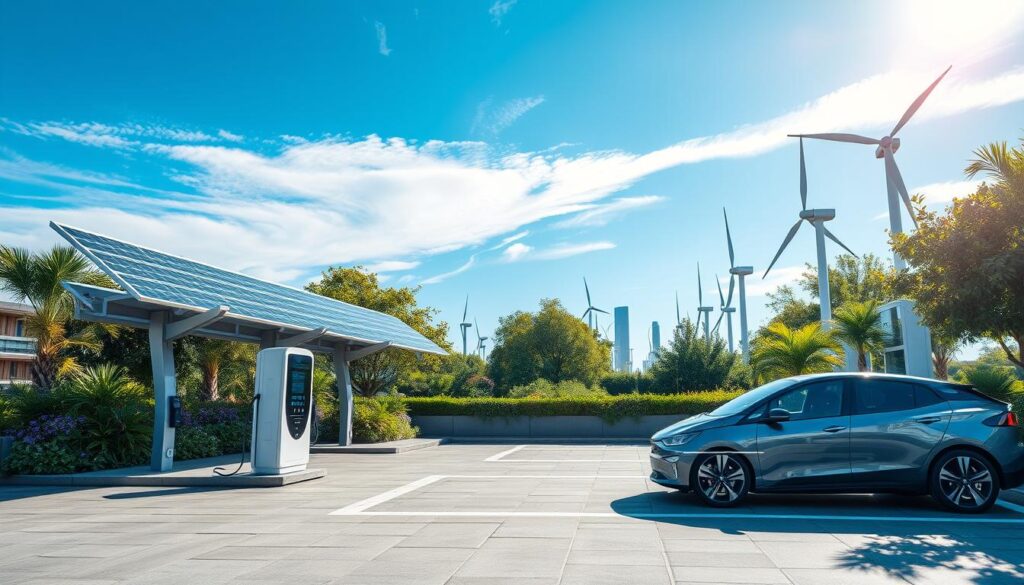
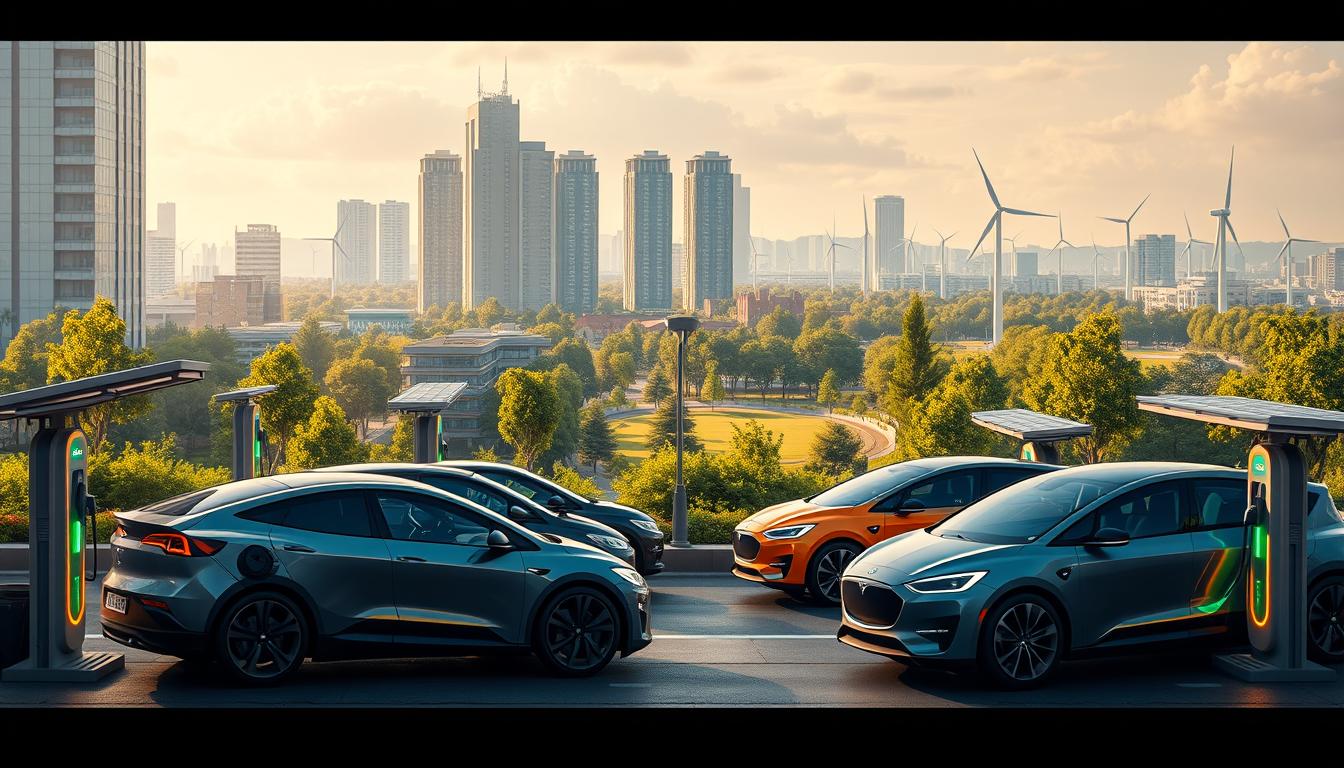
As electric vehicles (EVs) become more popular, using renewable energy to charge them is key. Solar power and wind energy can make EV charging greener and help our planet. This move towards sustainability is crucial for our future.
Solar power is a top choice for EV charging stations. These stations use sunlight to make electricity, cutting down on fossil fuel use. They also save money over time because solar tech gets cheaper.
Wind Energy Contributions
Wind energy is also vital for EV charging. Wind turbines can make a lot of electricity. This electricity can power EV charging stations, making our energy mix cleaner and more reliable.
Impact on Grid Stability
More EVs mean more strain on the electrical grid, mainly during peak hours. But, smart grid tech and energy management systems can help. They make sure EV charging doesn’t overload the grid.
Adding solar and wind power to the grid also helps. These sources provide extra electricity when we need it most. Smart grid tech lets EVs send electricity back to the grid, acting as mobile batteries.
Switching to renewable energy for EV charging is good for the planet and our wallets. Solar and wind power are cheaper and more reliable than fossil fuels. By investing in renewable energy for EV charging, we can make our transportation system greener and cheaper.
Governments and companies must work together to support renewable energy for EVs. They need to fund research, offer incentives, and build the right infrastructure. As more people see the benefits, we can move towards a cleaner, more efficient future.
Challenges Facing Electric Vehicle Energy Adoption
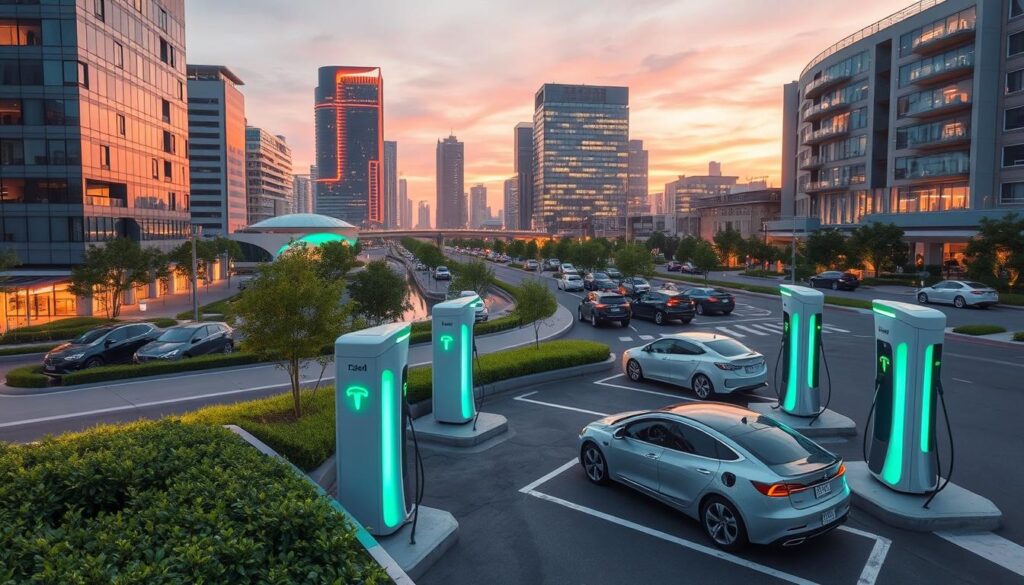
Electric vehicles (EVs) are becoming more popular, but there are big hurdles to overcome. One big problem is the lack of charging stations. A study by Deloitte found that only 11% of people in the US who might buy an EV plan to use public chargers. This makes drivers worry about running out of power on the road.
Battery production is another big issue. EVs need expensive batteries made from materials like lithium and cobalt. Making these batteries harms the environment and uses a lot of energy. There are only 29 electric car models in North America, compared to over 400 gasoline models. This limited choice makes it hard for people to switch to EVs.
How people see EVs also matters a lot. Some worry about their maintenance costs and how they perform. EVs are pricier than gas cars, mainly because of battery costs. Even though some EVs can go over 300 miles without needing to charge, they still can’t match gas cars’ range. Charging an EV takes a lot longer than filling up a gas car.
Charging Infrastructure Comparison
| Charging Level | Power Rating | Charging Time |
|---|---|---|
| Level 1 | 1kW | More than 20 hours |
| Level 2 | 5kW | Several hours |
| Level 3 (DC Fast Charging) | 80kW | 100 miles in about 40 minutes |
Despite these challenges, there are efforts to help. The Zero-Emission Vehicles Act of 2020 aims to make half of new cars sold in the US EVs by 2025. New technologies, like Exro Technologies’ smart Coil Driver™, could make EVs more affordable and easier to use.
Technological Innovations in EV Energy Solutions
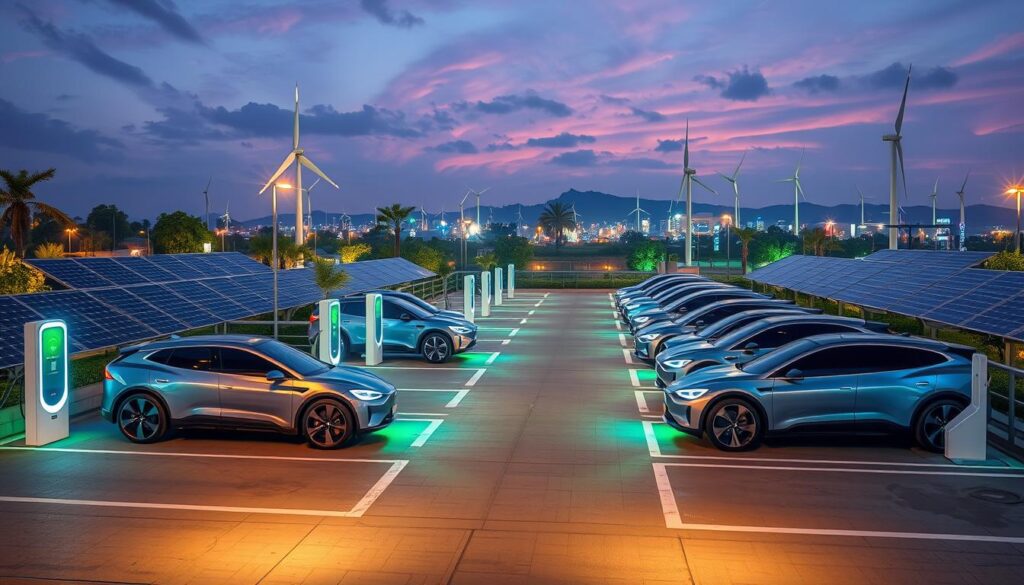
The electric vehicle (EV) industry is changing fast. New technologies are making EVs more efficient and green. These changes help solve problems like range anxiety and limited charging spots.
Smart Charging Systems
Smart charging systems are changing how we charge EVs. They find the best times to charge, considering energy demand and prices. By 2026, we’ll see a big jump in EV charging investment, thanks to companies like ev.energy.
ev.energy’s software manages over 120,000 EVs every day. Their latest funding will help them reach 400 million energy customers.
Vehicle-to-Grid Technology
Vehicle-to-grid (V2G) technology lets EVs send energy back to the grid. This helps keep the grid stable and might cut down on the need for new power plants. California is considering making all new EVs V2G-capable by 2027.
Energy Storage Advances
Better batteries are key for EVs to become more popular. Lithium-ion batteries are getting better at storing energy and charging fast. New battery types could make EVs even better.
| Battery Type | Advantages |
|---|---|
| Lithium Iron Phosphate (LFP) | Faster charging, lower manufacturing costs |
| Solid-State Batteries | Higher energy density, faster charging, increased safety |
| Lithium-Sulfur Batteries | Higher energy density, potentially lower costs |
Studies say today’s EV batteries can last 8 to 15 years. Better thermal management systems also help batteries last longer. This means EVs can perform well in different weather.
Future Trends in Electric Vehicle Energy

The electric vehicle (EV) market is growing fast. This is thanks to new tech, government help, and people wanting greener cars. EVs are changing the car and energy worlds for the better.
Potential Market Growth
The global EV market is set to grow a lot soon. In 2023, many new electric cars were registered:
- China: 8.1 million (35% more than 2022)
- United States: 1.4 million (40% more than 2022)
- Europe: 3.2 million (20% more than 2022)
The U.S. will have 26.4 million EVs by 2030. This is over 10% of all vehicles. With government support and more people knowing about EVs, their share will grow fast.
Advancements in Charging Technologies
Charging EVs used to be a big problem. But now, fast charging and wireless charging make it easier. Fast chargers can fill up an EV’s battery in minutes. Wireless charging means no cables are needed.
The U.S. Bipartisan Infrastructure Law gives $7.5 billion for EV charging by 2030. It aims to add 500,000 new chargers. This will make EVs more accessible and reduce worries about running out of charge.
Impact of Artificial Intelligence
Artificial intelligence (AI) will make EVs better. AI optimization helps manage energy use based on how you drive. Predictive maintenance by AI can spot problems early, saving time and money.
AI also helps with smart charging. It lets EVs charge when it’s cheapest, saving money and helping the grid. This makes the grid more stable and saves energy.
“The future of electric vehicles is not just about the vehicles themselves, but also about the entire ecosystem that supports them. AI will be a game-changer in optimizing energy management and enhancing the overall EV experience.”
As we move towards a greener future, EVs are changing the energy world. With growth, new tech, and AI, electric cars are the future of transport.
Conclusion: Shaping the Future of Transportation
Electric vehicles are leading the way to a greener future in America. The use of renewable energy and better battery tech are key. In Washington state, electric car numbers have doubled in just a year.
Tesla is at the forefront with cars that can go over 800 kilometers. They are more efficient than other brands like Nissan and BMW. This makes them a top choice for many.
Working together is crucial for electric cars to succeed. Governments, companies, and people need to join forces. This includes using federal incentives and improving charging stations.
Lower battery costs and cheaper running costs are making electric cars more appealing. The growth of charging stations and wireless charging is making them more convenient. This article on the future of transportation shows how electric cars are making our world cleaner.
Electric cars are not just for personal use. They are also being used in fuel cell vehicles. This shows people want to use cleaner transport options. By investing in electric cars, America can make its transport cleaner and more efficient.
Importance of Sustainable Energy Solutions
Using solar and wind power for EV charging is key to reducing transport’s environmental impact. These clean energies help charge cars and make the grid more stable. New battery tech is also important for making EVs better.
Technologies like solid-state batteries aim to make EVs more efficient. They want to increase how far cars can go and charge faster. This makes electric cars more practical and sustainable.
Collaborative Efforts Needed
For a greener transport future, everyone needs to work together. Governments, car makers, energy providers, and consumers must collaborate. Governments can offer incentives and build more charging stations.
Car makers should focus on making EVs more affordable and efficient. Energy providers should invest in clean energy and help EVs fit into the grid. Consumers need to learn about EVs and choose them for a greener future.
Vision for a Greener Future
The dream of a greener future with electric cars is within reach. EV tech is improving fast, and more charging stations are being built. This makes America a leader in green transport.
By choosing electric cars and clean energy, we can cut down on pollution. This benefits our air, health, and planet. Electric cars also offer economic benefits and create jobs. Let’s work together to make our future greener and more sustainable.
FAQ
What are the benefits of electric vehicles compared to traditional gas-powered cars?
Electric vehicles save money on fuel and cut down on emissions. They are also more energy-efficient, using less power to go the same distance. This makes them a greener choice for driving.
What challenges does the adoption of electric vehicles face in America?
Electric cars are pricier than gas cars and there aren’t enough charging spots. People worry about running out of charge when they’re far from a station. These issues make it hard for more people to switch to EVs.
How do government policies support the adoption of electric vehicles?
The U.S. government offers tax credits for buying electric cars. This helps make EVs more affordable. Some states and electric companies also give extra incentives to encourage people to buy EVs.
What role does renewable energy play in the sustainability of electric vehicle charging?
Renewable energy, like solar and wind, is key for charging EVs greenly. Using solar power for charging stations cuts down on pollution. As more people drive EVs, smart grids and energy systems will help manage the power needed.
What technological innovations are helping to address the challenges facing electric vehicle adoption?
New tech, like smart charging and vehicle-to-grid systems, is making EVs more practical. These innovations help charge cars at the best times, use less grid power, and make EVs last longer.
What is the future outlook for electric vehicle energy in America?
The future for EVs in America looks bright. More people want EVs, and governments and tech are supporting them. By 2025, EVs could be 20% of new car sales. By 2030, that number could jump to 40%, and by 2040, almost all new cars will be electric. New charging tech and AI will play big roles in this shift.