As we move towards a greener future, electric vehicles (EVs) are becoming more popular. The need for efficient home charging solutions is growing with EVs. In this guide, we’ll cover everything about electric vehicle home chargers. We’ll look at the basics, types, features, installation, costs, and future trends.
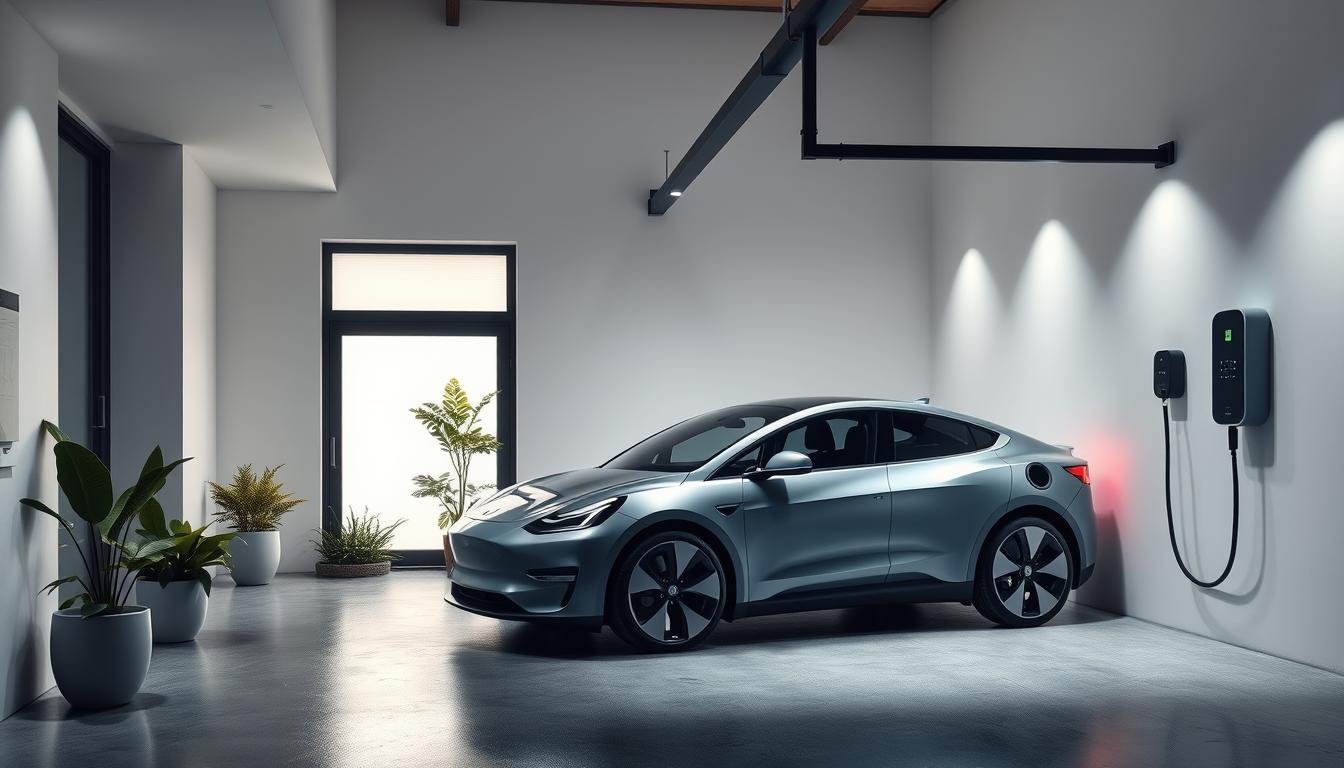
Electric vehicle home chargers are key for EV owners who want to charge at home. They come in forms like wall-mounted and portable chargers. By choosing a home charger, you help the environment and enjoy green energy benefits.
Transportation is a big source of emissions in New York City, making up about 30% of them. NYC aims to cut these emissions to zero by 2050. The city has started by installing 100 Level 2 charging ports across the five boroughs. NYC DOT also plans to add fast-charging hubs at municipal parking facilities.
Charging speeds vary by level: Level 1, Level 2, and Level 3 (DC fast charging). Level 2 can give up to 20 miles of range per hour. Level 3, or DC fast charging, can give over 30 miles of range in 10 minutes. Charging at DC fast chargers in NYC costs $0.39 per kWh, plus parking fees.
Key Takeaways
- Electric vehicle home chargers are crucial for convenient and eco-friendly EV charging.
- There are three levels of charging: Level 1, Level 2, and Level 3 (DC fast charging).
- NYC is actively installing charging infrastructure to support the growing number of EVs.
- Charging speeds and costs vary depending on the level of charging and location.
- Proper research and consideration of key factors are essential when choosing a home charger.
Understanding Electric Vehicle Charging Basics
Electric vehicles (EVs) are becoming more popular. It’s key to know how to charge them. EV charging stations safely and efficiently charge your car’s battery. This lets you drive longer without needing gas. We’ll look at how chargers work, the different charging levels, and EV charging terms.
How Electric Vehicle Chargers Work
Chargers turn grid power into direct current for your car’s battery. The car’s Battery Management System controls this safely and efficiently. Charging speeds vary by charger type, from 50 kW to 350 kW.
Different Levels of Charging
There are three main charging levels for EVs:
- Level 1 chargers: Use a 120V outlet and charge slowly, adding 4-5 miles per hour.
- Level 2 chargers: Need a 240V outlet and charge faster, adding 25-30 miles per hour. They’re common in public and home use.
- DC fast chargers: Charge quickly, adding 80% in 30 minutes. Most EVs can fast charge, with over 1,000 stations in the US.
Charging an EV is about 35% cheaper than gas. This makes EVs a cost-effective choice over time. For more on this, check out this article.
Common Charging Terminology
When talking about EV charging, you’ll hear some terms:
- kW (kilowatt): A power unit showing energy use or generation rate.
- kWh (kilowatt-hour): An energy unit showing power used over time.
- J1772 connector: The standard connector for Level 1 and 2 charging in North America.
- NACS (North American Charging Standard) connector: Used for DC fast charging, works with most EVs.
- Smart charging systems: Advanced tech that optimizes charging, cuts costs, and works with green energy.
Knowing EV charging basics helps you choose the best option for you.
Types of Electric Vehicle Home Chargers
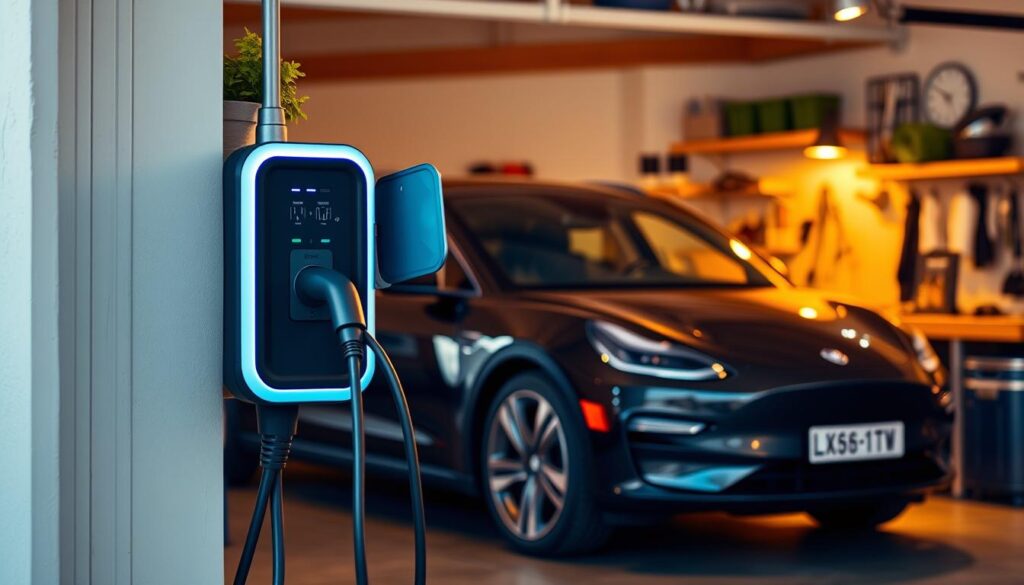
There are several options for charging your electric vehicle at home. You can choose from Level 1 chargers, Level 2 chargers, and DC fast chargers. Each has its own benefits, so it’s key to know the differences before making a choice.
Level 1 Chargers
Level 1 chargers are the simplest and most common at home. They use a standard 120V outlet and charge slowly, at 3-6 kW. It can take 8-12 hours to fully charge an EV with one, but many find it enough for daily needs.
These chargers are affordable and work well for those with regular schedules and short commutes.
Level 2 Chargers
Level 2 chargers are faster and better for those with longer commutes or bigger EVs. They need a 240V outlet and can charge at 3.9 kW to 19.2 kW. Most public chargers are 7 kW or 22 kW.
They can fully charge an EV overnight, making them a good choice for quick charging. You can get help with installation costs through state and utility incentives.
DC Fast Chargers
DC fast chargers, or Level 3 chargers, are the fastest. They can charge up to 80% in 20 minutes, with speeds of 50 kW or more. But, they’re rare at home because of their high cost and power needs.
They’re more common in public charging stations. They offer a quick charge for those on the move.
When picking a home charger, think about your daily driving, EV battery size, and budget. Knowing the benefits of each charger helps you choose the best one for you.
Key Features to Consider When Choosing a Charger
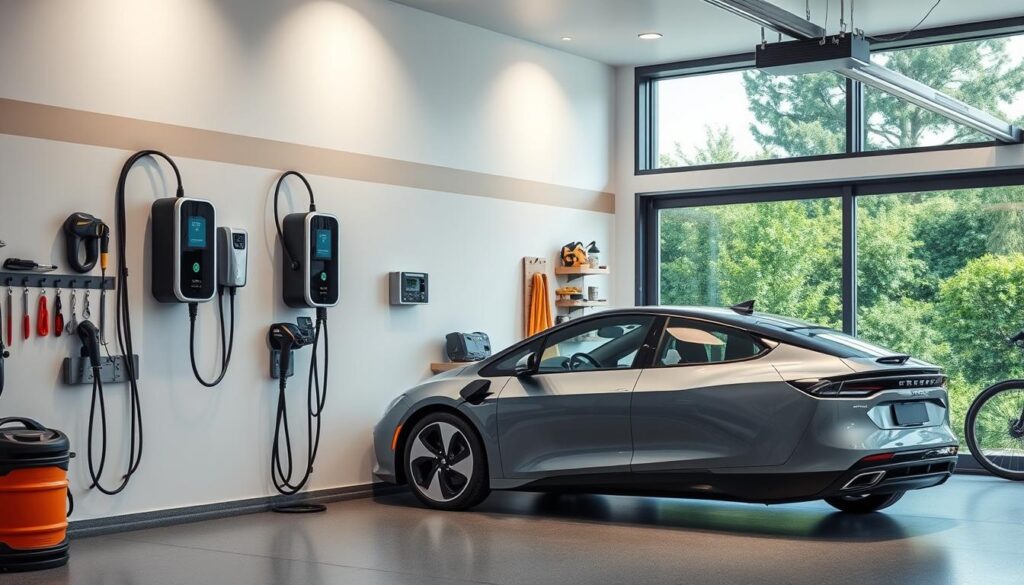
When picking an electric vehicle home charger, several important factors come into play. These include charge speed, power output, smart charging, and compatibility. Knowing these features helps you make a smart choice.
Charge speed and power output are key. Level 2 chargers, common for homes, can add 20 to 40 miles of charge per hour. They fully charge an EV’s battery overnight. The charger’s power depends on the outlet’s voltage, with 240-volt outlets being faster than 120-volt ones.
Smart Charging Capabilities
Smart charging systems are gaining popularity. They offer remote access, scheduling, and energy optimization. For many EV owners, energy efficiency and ease of use are top priorities. These features help save on energy costs and make charging convenient.
| Key Consideration | Percentage of EV Drivers |
|---|---|
| Energy Efficiency | 65% |
| Ease of Use | 54% |
| Long Warranties | 47% |
| Viewing Charging Session Costs and Fees | 42% |
Compatibility with Your Electric Vehicle
It’s vital to ensure your EV and charger are compatible. Most non-Tesla EVs before 2025 have a J1772 connector. Starting in 2025, more will have a NACS plug. Tesla vehicles use a NACS plug for both AC and DC charging.
When choosing a wall-mounted charger, check for safety certifications like UL or ETL. These ensure the charger meets high safety and quality standards. By considering these features, you can find the right charger for your EV.
Installation Process for Home Chargers
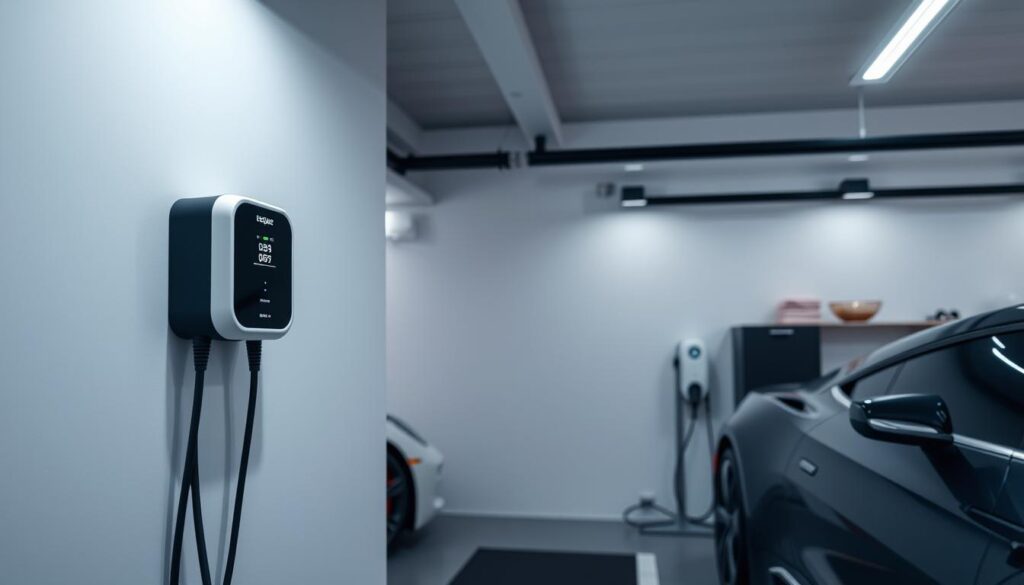
Installing an electric vehicle home charger is key for a smooth charging experience. Before starting, think about a few important things and plan well.
Pre-Installation Considerations
First, check if your electrical system can handle the charger’s load. Pick a spot for your charger that’s close to where you park and has an outlet. Also, get any needed permits from your local government to follow the rules.
Step-by-Step Installation Guide
After you’ve thought about these things, here’s how to install your charger:
- Mount the charger on the wall, making sure it’s straight and at a good height.
- Connect it to your home’s electrical panel, following the maker’s guide and local codes.
- Check that the system works right and is safe.
Installing an EV charger can take anywhere from under an hour to several hours. Sometimes, you might need to upgrade your meter box, which can cost more.
Hiring a Professional vs. DIY
While you can install some chargers yourself, it’s safer and better to get a pro. In some places, doing it yourself can be against the law and might get you fined. Experts are crucial for Level 2 chargers because they need a special circuit and complex wiring.
Remember, some installers might charge extra for tricky setups. Here’s a look at some popular chargers and their prices:
| Charger Model | Original Price | Current Price | Rating |
|---|---|---|---|
| ChargePoint Home 25 Plug | $749.00 | $699.00 | 5.00 out of 5 |
| Tesla Wall Connector (Generation 3) | $420.00 | $419.00 | 5.00 out of 5 |
| Wallbox Pulsar Plus | $699.00 | $699.00 | 5.00 out of 5 |
Most EV drivers charge at home, which is the most common spot. By choosing wisely and following the right steps, you can charge your EV easily and save money.
Cost Analysis: Electric Vehicle Chargers
Thinking about getting an electric vehicle home charger? It’s key to know the costs. This includes the initial price, installation costs, and long-term savings. These factors help figure out if an EV charger is a good deal.
Initial Purchase Costs
The price of an electric vehicle home charger depends on the charging level. Level 1 chargers, which use a standard outlet, cost between $200 and $1,000. Level 2 chargers, which charge faster, cost between $1,500 and $5,000.
For even quicker charging, Level 3 (DC fast charging) stations start at $20,000. They can cost up to $100,000 or more for extra features.
Installation Costs and Factors
Installation costs for EV chargers also vary a lot. Level 2 charger installations can cost over $10,000, not counting maintenance. Level 3 chargers can cost around $100,000 per charger, making the total investment up to $200,000 per charger.
Things that affect installation costs include the number of chargers, permits, grid capacity, parking, and construction needs.
Long-Term Savings and Incentives
Even with the high initial costs, an electric vehicle home charger can save money in the long run. Charging at home is cheaper than at public EV charging stations. Many governments also offer tax credits and rebates to encourage using green energy solutions like electric vehicles and home charging.
“Between December 2017 and October 2021, the California Energy Commission through CALeVIP funded 244 projects for electric vehicle chargers, deploying over 500 Level 2 chargers and around 300 DC fast-charging units.”
While the upfront costs of an electric vehicle home charger seem high, the long-term benefits are worth it. These include lower fuel costs and potential incentives. This makes it a good choice for EV owners who want sustainable transportation.
Future Trends in Home Charging Technology
As more people choose electric vehicles, home charging tech is getting better. Smart charging systems are now popular. They manage power, schedule charging, and work with green energy. This makes charging easier, cheaper, and better for the planet.
Wireless Charging Innovations
Wireless charging for EVs is a big deal. Companies like ChargePoint are working on faster charging. This could make EVs more appealing to everyone.
Inductive charging pads let cars charge without cables. This makes charging at home easier and more convenient. As this tech gets better, charging EVs will be even simpler.
Integration with Smart Home Systems
EV chargers are now part of smart homes. You can control charging with your phone or voice. This lets you start charging remotely and see how much energy you’re using.
By linking EV charging with smart homes, you save money and use energy wisely. It’s all about making life easier and greener.
Upcoming Government Regulations and Incentives
World governments are backing electric vehicles and home charging. Soon, we’ll see new rules and perks for using home chargers and green energy. Expect subsidies, tax breaks, and rules for new homes to have chargers.
These steps will help make electric cars more common. They’ll also encourage people to use home charging tech more.
FAQ
What are the different levels of electric vehicle charging?
There are three main levels of EV charging. Level 1 uses a standard household outlet and is the slowest. Level 2 charges faster and needs a 240V circuit. DC fast charging is the quickest but is rare at home due to high costs.
How do I choose the right home charger for my electric vehicle?
Look at charge speed, power output, and smart features when picking a charger. Make sure it fits your car’s connector type. Also, check for safety certifications and if it meets your needs.
Can I install an electric vehicle home charger myself?
DIY installation is possible for some chargers. But, it’s safer to hire a pro. A pro can check your electrical setup, get permits, and ensure it’s code-compliant.
How much does it cost to purchase and install an electric vehicle home charger?
Charger prices vary by type and brand. Level 2 chargers cost between 0 and ,000. Installation can add 0 to ,000. But, home charging saves money in the long run and may get tax credits or rebates.
What are some future trends in electric vehicle home charging technology?
Wireless charging, like inductive pads, will make charging easier. Smart home integration will let you control charging easily. Governments may also offer more support for home charging to help the environment.
Are there any portable electric vehicle chargers available for home use?
Yes, there are portable EV chargers for home or travel. They charge at Level 1 or Level 2 speeds. These chargers are great for those without a permanent charging spot or who travel a lot.