The car industry is changing fast as electric vehicles (EVs) become more popular. They are making transportation more sustainable. Thanks to new tech, more people trust EVs, and they’re seen as a good choice for daily travel.
The Edison Electric Institute says there will be 26.4 million EVs in the U.S. by 2030. This is over 10% of all cars. This growth comes from saving money, tax breaks, and cheaper batteries. People also want to help the planet and follow state rules for zero-emission mobility.
More than 320,000 electric cars were sold in the first quarter of 2023. This is a 60% jump from the same time last year. People like saving on fuel and maintenance. They also get help from government tax credits.
More people are choosing EVs because they’re good for the environment. Places like California and New York have more EVs than others. This is because they have more charging spots and offer more incentives.
The Bipartisan Infrastructure Law is helping EVs by funding $7.5 billion for charging spots by 2030. They want to add 500,000 new chargers. Most EVs can now go over 200 miles, making people feel more confident about buying one.
Key Takeaways
- Electric vehicles are rapidly gaining popularity, with projections of 26.4 million EVs on U.S. roads by 2030.
- Economic factors like cost savings and government incentives, along with societal factors such as environmental benefits and state mandates, are driving EV adoption.
- The EV market saw significant growth in the first quarter of 2023, with a 60% increase in sales compared to the previous year.
- The Bipartisan Infrastructure Law invests $7.5 billion in EV charging infrastructure to support the growing market.
- Improved battery technology and increased driving ranges are addressing consumer concerns and boosting confidence in EVs.
Understanding the EV Landscape Today
https://www.youtube.com/watch?v=lbRNmQdF7C4
The electric vehicle (EV) market has grown a lot in recent years. Global sales have soared, and big car companies are putting a lot of money into EVs. People are worried about climate change and want cleaner ways to travel, making EVs more popular.
Current Market Trends
EV sales have skyrocketed, making up 7% of new car sales worldwide in 2023. This shows a big change in what people want to buy. China leads the way, with most EV sales happening there. The U.S. and Europe also saw big jumps in EV sales last year.
Major Players in the Industry
Big car companies and new startups are all trying to make EVs. Tesla is a leader, but others like General Motors, Volkswagen, and Toyota are catching up. They’re spending a lot on new EV models and tech.
Technological Advancements
Better batteries are key for EVs to succeed. They need to last longer, charge faster, and be cheaper. Governments and companies are working on more charging spots. As batteries get better, EVs will be more affordable for everyone.
| Country | EV Sales (2023) | Market Share |
|---|---|---|
| China | 8.1 million | 35% |
| United States | 1.4 million | 40% increase |
| Europe | 3.2 million | 20% increase |
The EV world is changing fast. More people want EVs, and technology and support are making them better. As things keep improving, EVs will become even more popular, helping us travel cleaner and greener.
Environmental Impacts of Electric Vehicles
The world is fighting climate change and cutting down on greenhouse gas emissions. Electric vehicles (EVs) are seen as a key solution for carbon footprint reduction. They help lower the CO2 emissions from transportation, a big source of pollution.
Studies show EVs produce much less CO2 per mile than gas cars. In the U.S., EVs emit 214g of CO2 per mile, while gas cars emit 356g to 409g. As more renewable energy powers our grid, EVs’ benefits grow, leading to zero-emission mobility.
Reduction of Carbon Footprint
Using EVs can greatly reduce transportation’s carbon footprint. Gas cars cause 41% of CO2 emissions in transportation. Switching to EVs cuts these emissions, helping fight climate change.
EVs also have lower environmental impact overall. Life cycle assessments show they’re better than traditional cars. Even with battery production CO2, EVs are about 50% better for the environment.
Life Cycle Assessment of EVs
Understanding EVs’ full life cycle is key. Battery production creates CO2, but EVs still have lower emissions than gas cars. This makes EVs a greener choice.
“Electric cars are by far the lowest lifecycle greenhouse gas emissions compared to conventional cars, even for cars registered today.”
As battery tech improves and production gets more efficient, EVs will be even greener. This makes them a better choice for consumers.
Comparison with Traditional Vehicles
EVs and traditional cars have different environmental impacts:
- EVs emit less CO2 per mile than gas cars.
- EVs save $1,410 a year over 10 years compared to small gas cars.
- EVs cost 11.98 cents per mile to run, 10 cents less than gas cars.
As EVs become more common, their benefits will grow. By 2030, 52% of new car sales could be electric. Embracing EVs and clean energy helps us achieve a greener future.
Government Policies and Incentives
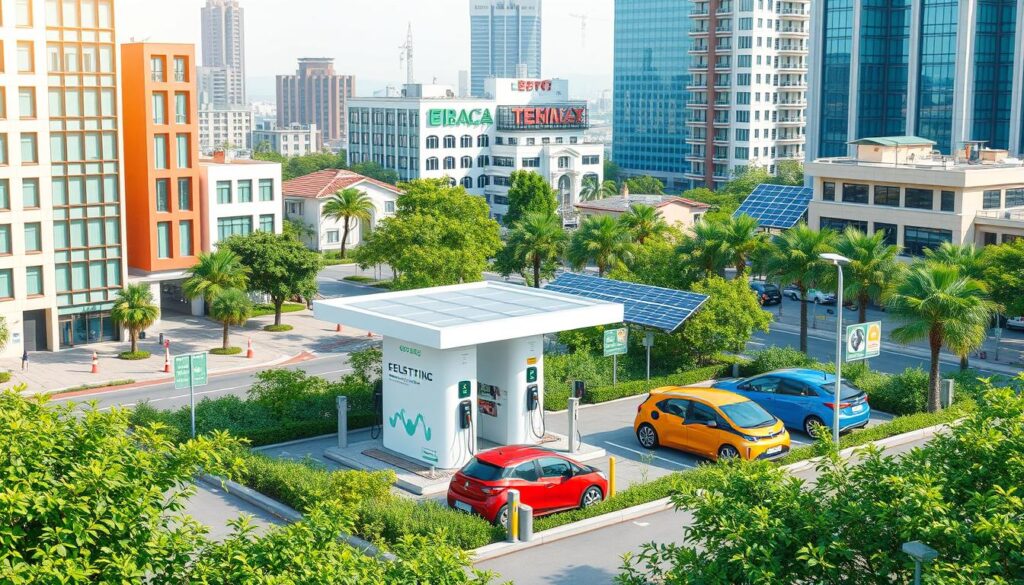
Governments worldwide are pushing for more electric vehicles (EVs) to fight climate change. They offer tax credits, grants, and state programs to make EVs cheaper and more accessible. This has led to a big jump in EV sales, with a 40% increase in 2020 alone.
Federal Incentives for EV Buyers
In the U.S., there’s a tax credit of up to $7,500 for buying a new EV. This big incentive helps lower the cost for buyers. The government also plans to spend hundreds of millions to boost EV manufacturing and use.
The Bipartisan Infrastructure Law set aside $5 billion for EV charging stations. Another $2.5 billion is for grants to support more charging spots. This helps ease worries about running out of charge and encourages more people to buy EVs.
State-Level Initiatives
States like California and New York offer their own EV incentives. California gives up to $7,000, while New York offers up to $2,000. Some states also let EV owners use special lanes and pay less for registration.
Many states plan to stop selling gas cars soon. California wants to ban them by 2035, and New York by 2035 too. These state plans are pushing the auto industry and buyers towards electric cars.
Impacts of Legislation on Adoption Rates
With federal and state help, EV sales have soared. In 2020, 4.6% of all car sales were electric. To meet climate goals, we need 230 million EVs by 2030.
Legislation has been key in boosting EV sales. As more countries aim for zero emissions, EV adoption will keep growing.
Advancements in EV Technology
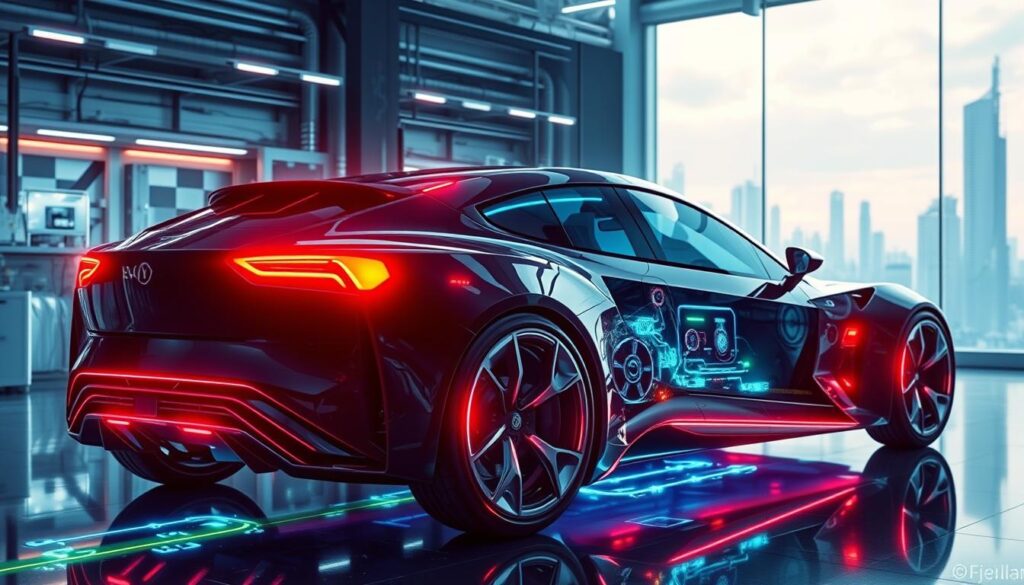
The electric vehicle (EV) industry has grown fast, thanks to new tech. Improvements in batteries, charging, and driving tech have made EVs better. They are now more practical, efficient, and appealing to people.
Battery Innovations
Batteries are key to EVs. Lithium-ion batteries are the top choice because they are light, efficient, and work well in different temperatures. Over 10 years, EVs have gotten 15% more efficient and their range has increased by 200%.
But, scientists are still working on new battery types. They want to make EVs even better:
- Solid-state batteries could charge faster and hold more energy.
- Lithium-sulfur batteries are lighter and might go further.
- Silicon anodes could increase how much energy EVs can store.
- Lithium-iron phosphate batteries charge quicker and cost less to make.
Charging Infrastructure Developments
More charging spots are needed for EVs to become common. Governments and companies are putting in a lot of money to add more stations. The U.S. has a plan to add 500,000 new chargers by 2030.
New charging tech is also being developed. This includes:
- Ultra-fast charging that can give hundreds of miles in minutes.
- Wireless charging, which is getting more popular.
- Vehicle-to-grid (V2G) tech, letting EVs send energy back to the grid or home.
- Easy payment methods like mobile apps and NFC.
Autonomous Driving in EVs
EVs with self-driving tech could change how we travel. They could make driving safer and more efficient. Many EV makers are working on this, offering features like:
- Adaptive cruise control
- Lane-keeping assist
- Automatic emergency braking
- Self-parking
As self-driving tech gets better, EVs will become even more popular. They could make traveling cheaper and improve city traffic.
| Region | EV Market Share |
|---|---|
| California (U.S.) | 25% |
| U.S. (National Average) | 7.6% |
| European Union | 22% |
| China | 25% |
| Japan | 3% |
| South Korea | 1.8% |
Consumer Adoption and Awareness
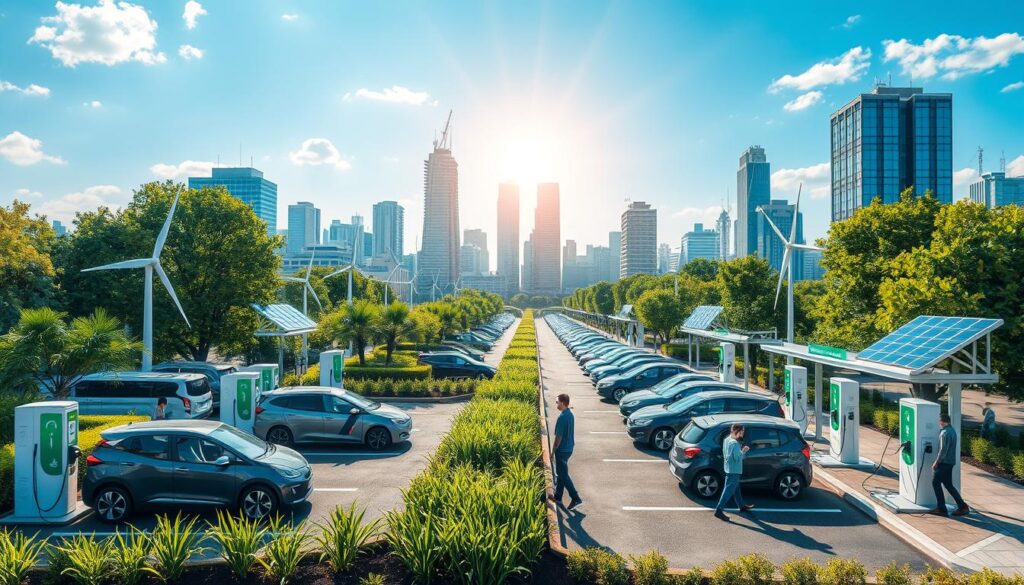
The electric vehicle (EV) market is growing fast. Over one million EVs were sold in the U.S. in 2023. By January 2024, more than 3.2 million EVs were on American roads. Yet, getting more people to use EVs is still a big challenge.
Many people don’t know much about EVs. Almost half of those looking to buy a car are unsure about EVs. They worry about the cost, charging spots, and how far they can go.
Teaching people about EVs is key. Utilities and car makers can help by sharing guides and info. For example, free charging and maintenance could make EVs more appealing.
The Power of Social Media
Social media is changing how we think about EVs. 74% of new EV buyers were inspired by online ads. Celebrities and influencers showing off their EVs can also spark interest.
| Year | Percentage of Vehicle Shoppers Considering EVs |
|---|---|
| 2026-2028 | 79% |
| 2033 | 90% |
Social media’s role in EV adoption will only grow. Soon, 79% of car shoppers will consider EVs, and by 2033, it will be 90%.
Addressing the Used EV Market
More people are interested in used EVs. In 2021, 62% of those considering EVs looked at used ones. Now, that number is 77%. This is a chance to teach people about the value of used EVs.
As the EV market grows, we must focus on teaching people. We should use social media and highlight the benefits of used EVs. This will help more people choose sustainable transport options.
The Future of Charging Infrastructure
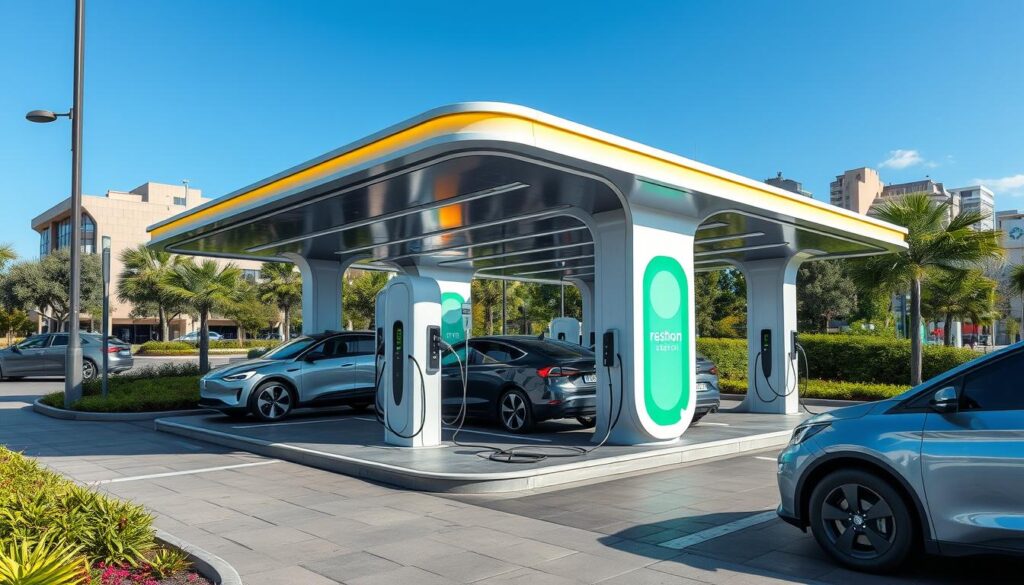
As electric vehicles (EVs) become more popular, a strong charging network is key. The future of EV charging will include fast charging solutions, a mix of home and public stations, and using renewable energy.
The U.S. has over 50,000 public charging spots with more than 130,000 charging ports. But, with EV sales expected to hit 1 million in 2023, we might need more. Experts say we could need up to 1.2 million chargers by 2030.
Fast Charging Solutions
Fast charging is key to making long trips easier. A level 3 DC fast charger can add 200 miles in about 30 minutes. This is much faster than level 2 chargers, which take an hour to add 25 miles.
Companies are also exploring new ideas like robotic charging and portable chargers. These innovations aim to make charging more flexible and reduce worries about running out of power.
Home vs. Public Charging Stations
Home and public charging stations are both important. Right now, 80% of EV owners charge at home, using overnight charging. But, public stations are vital for those without home charging and for long trips.
The Bipartisan Infrastructure Law has set aside $7.5 billion for 500,000 new public chargers by 2030. This will help those in underserved areas and along highways across the country.
Renewable Energy Integration
Using solar and wind power in charging is crucial for EVs’ environmental benefits. As EVs become more common, the need for renewable energy integration will grow. By 2040, we might need to invest around $500 billion in chargers, showing the big funding needed for sustainable upgrades.
To make charging easy for everyone, we need standard connectors, payment methods, and customer support. Rules and laws are being made to make charging stations more accessible and work together better.
The future of EV charging looks promising with new tech, government support, and a focus on green energy. As more EVs hit the roads, we need a reliable, efficient, and easy-to-use charging network. This will help us move towards a cleaner, greener future.
Challenges Facing the EV Industry
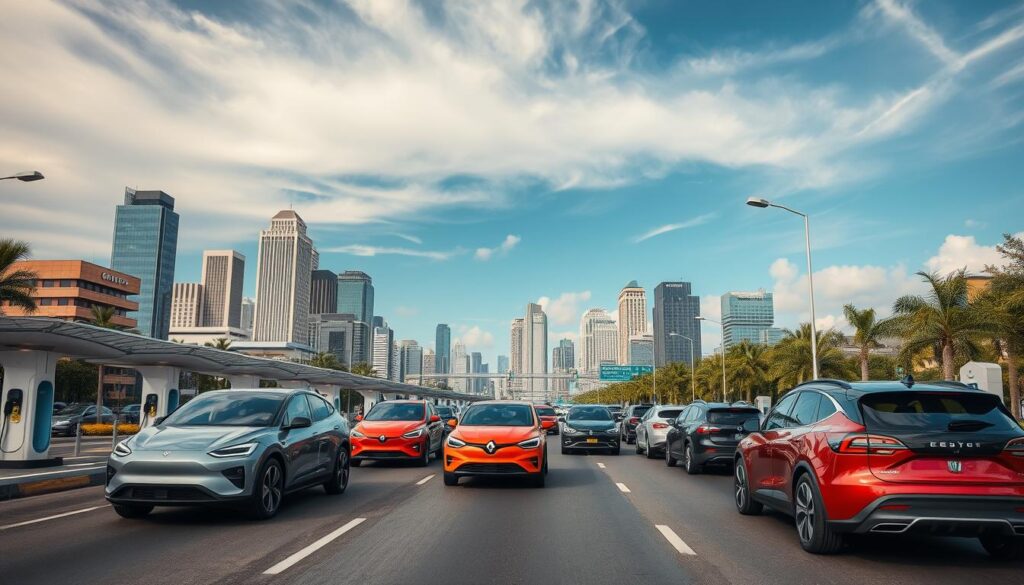
The electric vehicle (EV) industry has grown a lot in recent years. The market value of pure EV makers jumped from USD 100 billion in 2020 to USD 1 trillion by 2023. But, this fast growth has also highlighted several big challenges. These need to be solved for the industry to keep growing and be sustainable in the long run.
Supply Chain Issues
One big challenge is the supply chain. Getting raw materials for batteries, like lithium, is a big problem. In Australia, companies like Albemarle and Liontown Resources have cut spending and jobs in 2024 because of these issues.
Also, the power grid needs to handle more EVs. Experts say there will be a 38% increase in electricity use by 2050 because of EVs. This shows we need a strong and reliable power grid.
Market Competition
Market competition is another big challenge. Big automakers and new players are fighting for customers. This has led to more innovation but also makes it harder to stand out and keep costs down.
In 2023, BYD and Tesla sold 35% of all electric cars. BYD became the top EV seller worldwide, including plug-in hybrids. European carmakers still have a big share in Europe, but their share has dropped from over 80% in 2015.
This fierce competition has caused prices to drop in some markets. For example, in China, prices for compact electric cars and SUVs fell by up to 10% in 2023.
| Company | Market Share (2023) | Strategy |
|---|---|---|
| BYD | 20% | Mass-market focus |
| Tesla | 15% | High-end models with high profit margins |
| Hyundai-Kia | 8% (US market) | Overtaking traditional automakers |
Environmental and Ethical Concerns
Environmental and ethical issues are also big challenges. The EV industry needs to make sure it gets raw materials responsibly and deals with battery disposal. EV batteries degrade about 2.3% each year.
Even with warranties, the industry must find ways to reduce waste. Battery leasing could help lower costs, extend EV life, and reduce waste.
Despite these challenges, the EV industry keeps growing and improving. By fixing supply chain problems, dealing with market competition, and focusing on the environment and ethics, it can lead to a greener and more responsible future in transportation.
Vision for the Future of EVs
The electric vehicle (EV) market is set to grow a lot in the future. Experts say EV sales will make up over 50% of new car soon. This is thanks to better tech, government help, and more people knowing about EVs. EVs will help cut down on harmful emissions and fight climate change.
EVs will also play a big role in smart cities. They will use bidirectional charging and vehicle-to-grid tech. This means EVs will not just use power from the grid but also help keep the energy stable. Smart cities plan for EVs to work well with the city, saving energy and cutting down on pollution.
Predictions for Market Growth
The EV market has grown a lot lately, with Tesla leading. But, other big car makers like Hyundai, General Motors, and Ford are catching up. They plan to sell over 100,000 EVs each year, changing the market. The whole market is expected to grow fast, with over $275 billion in investments in 2022 and 2023.
Integration with Smart Cities
EVs and smart cities go hand in hand. Governments and companies are putting in a lot of money to build more charging spots. The U.S. government, for example, is spending $5.5 billion to add chargers every 50 miles. Tesla’s charging standard is also becoming the norm in the U.S. and Europe, making charging easier for everyone.
The Role of EVs in Sustainable Transportation Solutions
EVs are a big part of making transportation better, but they’re not the only answer. We need to improve tech, build better roads, and make policies that help. This includes walking, biking, and using public transport more. As battery tech gets better, EVs will become even more appealing and useful.
FAQ
How many electric vehicles are expected to be on U.S. roads by 2030?
The Edison Electric Institute predicts 26.4 million EVs on U.S. roads by 2030. This will be over 10% of all vehicles.
What are the major factors driving the growth of the electric vehicle market?
The EV market is growing due to tech advancements and more consumer confidence. Long-term savings, tax breaks, and affordable batteries also help. Environmental benefits and state mandates are key factors too.
Which states are leading in EV adoption in the United States?
California, Washington, and New York lead in EV adoption. This is thanks to incentives, charging infrastructure, and environmental awareness.
How do the carbon dioxide emissions of electric vehicles compare to conventional vehicles?
EVs in the U.S. emit 214g of carbon dioxide per mile. This is much less than the 356g to 409g from conventional vehicles.
What role do government policies and incentives play in promoting the adoption of electric vehicles?
Government policies and incentives, like federal tax credits and state initiatives, support EV growth. Future bans on gasoline vehicles also help.
What advancements in EV technology are driving the growth of the industry?
Advances in battery technology and charging infrastructure are key. Autonomous driving capabilities are also driving growth.
What are the barriers to entry for consumers when it comes to adopting electric vehicles?
Higher upfront costs and limited charging infrastructure are main barriers. Range anxiety is another concern. Education helps address these issues.
What is the importance of fast charging solutions in the future of charging infrastructure?
Fast charging is crucial for long-distance travel and reducing range anxiety. It makes EVs more practical for widespread use.
What are some of the challenges facing the electric vehicle industry?
The EV industry faces supply chain issues and competition from established and new automakers. Environmental and ethical concerns about raw materials and battery disposal are also challenges.
How will electric vehicles contribute to sustainable transportation solutions in the future?
EVs will be key in sustainable transportation, along with walking, cycling, and public transit. They are part of the Avoid-Shift-Improve (ASI) framework for sustainable mobility.