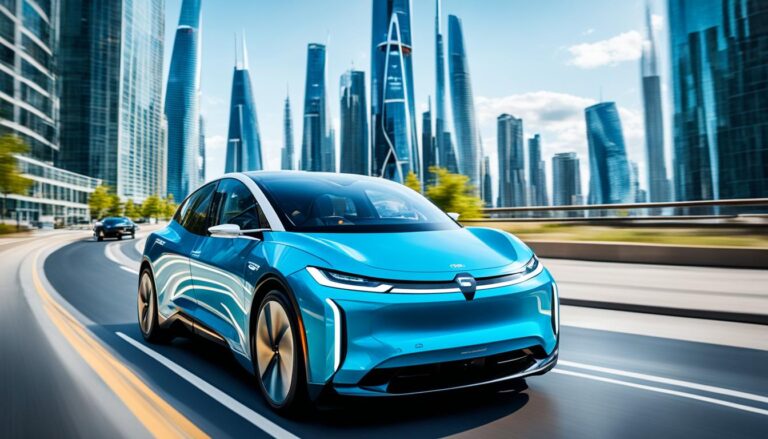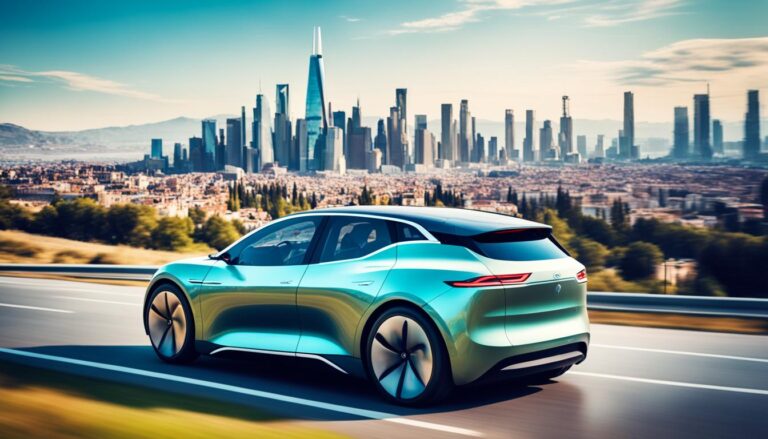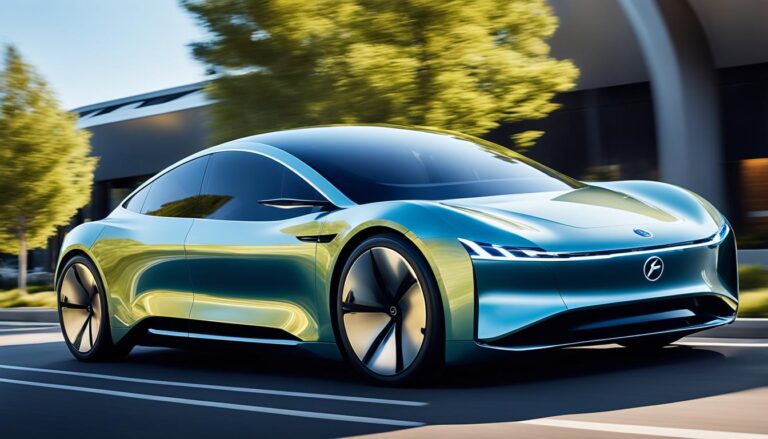
The future of how we travel is changing fast, with self-driving cars leading the way. These cars use advanced tech to bring many benefits. They make travel safer, more accessible, and better for the environment.
Studies show self-driving cars could add $67 billion to the economy and $3.1 trillion in benefits by 2024. By 2040, they might make up 25% of the global market. This is because they can cut down on accidents by removing human mistakes, which cause 94% of crashes.
Self-driving cars also help seniors and people with disabilities travel more easily. They make delivery services safer and more efficient, thanks to the pandemic. As tech improves, these cars promise a safer, more accessible future for all.
When paired with advanced battery tech, self-driving cars get even better. They can drive more efficiently, cutting down on emissions and improving air quality. This makes them key players in a greener, more sustainable future.
Key Takeaways
- Self-driving cars are expected to generate significant economic value and societal benefits in the coming years.
- Autonomous vehicles have the potential to greatly reduce crashes and save lives by eliminating human error.
- Driverless cars can increase mobility for seniors, people with disabilities, and underrepresented communities.
- The integration of self-driving technology with electric vehicles can contribute to a more sustainable future.
- Autonomous vehicles offer numerous benefits, including enhanced safety, increased accessibility, and environmental sustainability.
Introduction to Self Driving Cars
Self-driving cars, also known as autonomous vehicles, are changing the car world. They bring new safety features and better travel options for those who struggle to get around.
These cars can drive safely and smartly without a person. They use sensors, cameras, and AI to see and react to their surroundings fast. This helps them avoid accidents and drive well.
Definition and Overview
Self-driving cars have systems that let them drive on their own. They use tech like lidar, radar, GPS, and computer vision. This helps them understand and move through their environment.
The Society of Automotive Engineers (SAE) has levels of driving automation. Levels range from no automation to full automation. Most cars today have safety features that help drivers. But companies like Waymo and Tesla are working on higher levels for safe driving on roads.
Current Technological Advancements
Self-driving car tech is growing fast. These cars use advanced AI and machine learning. This lets them learn and adapt quickly to new situations.
These cars also make travel better for everyone. They can give freedom to the elderly and disabled. They can also cut down on traffic and save fuel by driving smarter.
As tech keeps getting better, self-driving cars will change how we travel. Big names like Google, General Motors, and Volkswagen are investing a lot. This means a safer, more accessible, and greener future for driving.
Enhanced Safety Features
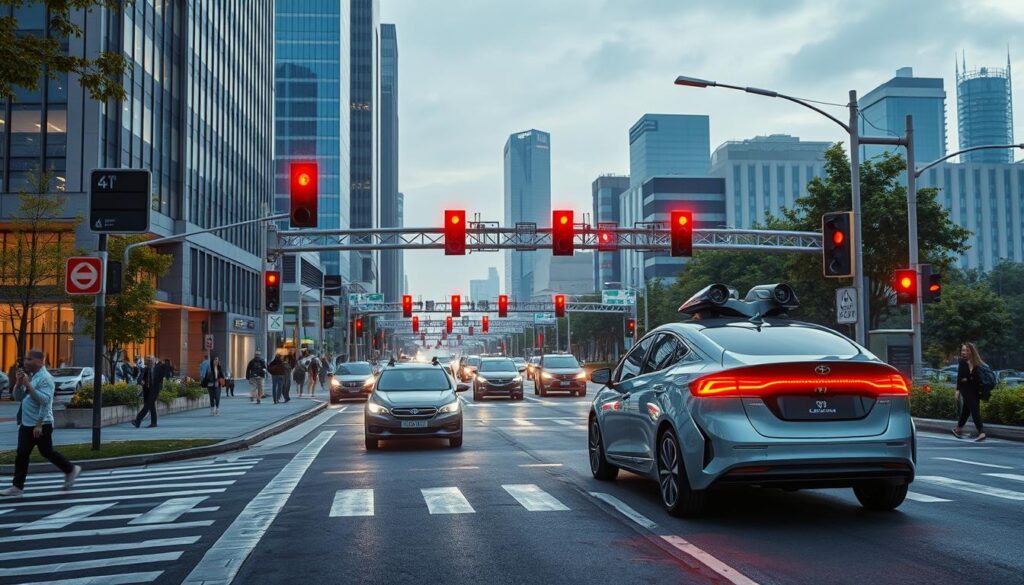
The merits of driverless technology are clear as safety features improve. Self-driving cars could change how we travel, making roads safer and saving lives.
Reduction in Traffic Accidents
In 2022, the U.S. saw 42,795 traffic deaths, with 94% caused by human mistakes. Self-driving cars could cut these numbers by removing human error. Studies show they could lower deaths from drunk driving, speeding, and crashes with fixed objects by a lot.
Advanced Sensor Systems
Self-driving cars have top-notch sensors. They use cameras, radar, and lidar to see their surroundings well. This lets them stay safe from other cars, people, and things, even when it’s dark.
AI and Machine Learning Improvements
AI and machine learning keep making self-driving cars safer. These techs help cars learn from their experiences. A study found self-driving cars have fewer accidents than human drivers in many cases.
“The ability for consumers to buy self-driving cars by 2035 is unlikely, as most car manufacturers have shifted towards providing driverless mobility services instead.” – Industry Expert
While we might not see self-driving cars for personal use soon, they’re coming for taxis and other services. As they get better, they’ll make our roads safer and travel more efficient.
Increased Accessibility and Mobility
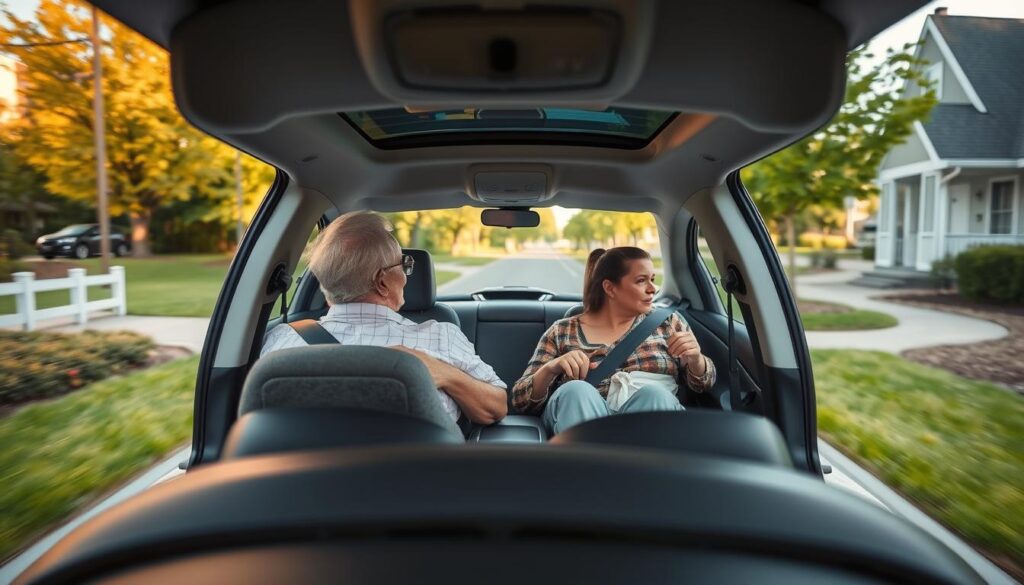
Autonomous driving technology is changing how we move around, making it easier for the elderly and disabled. It opens up new ways to travel, improving life for those who struggle to get around. This is a big step forward for millions who face transportation challenges.
In the United States, about one in five people, over 57 million, have a disability. Six million of them struggle to get the transportation they need. Self-driving cars could be a game-changer, offering more freedom and independence to those who need it most.
Benefits for Elderly and Disabled Individuals
Autonomous vehicles offer safe, reliable, and easy travel for the elderly and disabled. The main benefits are:
- More independence and freedom to move
- Less need for caregivers or family for rides
- Easier access to healthcare, cutting down on missed appointments
- More chances to socialize and get involved in the community
Helping people with disabilities get around could save $19 billion a year in healthcare costs. It could also create 2 million jobs for them.
Reducing Transportation Barriers in Urban Areas
Self-driving cars can also help in cities, where many lack cars or reliable public transit. Here are some key points:
| Urban Transportation Barrier | Impact | Potential Solution with AVs |
|---|---|---|
| Lack of elevator access in subway stations | 76% of New York City Subway stations lack elevators | AVs can provide door-to-door service, eliminating the need for inaccessible public transit |
| Reliance on paratransit services | About 100 million riders annually used paratransit services before the COVID-19 pandemic | AVs can offer a more cost-effective and efficient alternative to paratransit |
| High cost of transportation | The cost of operating an AV is estimated to be 80 or 90 cents per vehicle mile | Shared autonomous vehicles can reduce personal transportation costs |
By adding autonomous vehicles to city transport, we can make cities more open and welcoming. Everyone will have a chance to fully join in their communities.
Autonomous vehicles are expected to save $1.3 trillion through better productivity, lower fuel costs, and fewer accidents. It’s important that we make sure this technology helps those with disabilities, so everyone can enjoy its benefits.
Environmental Impact and Sustainability
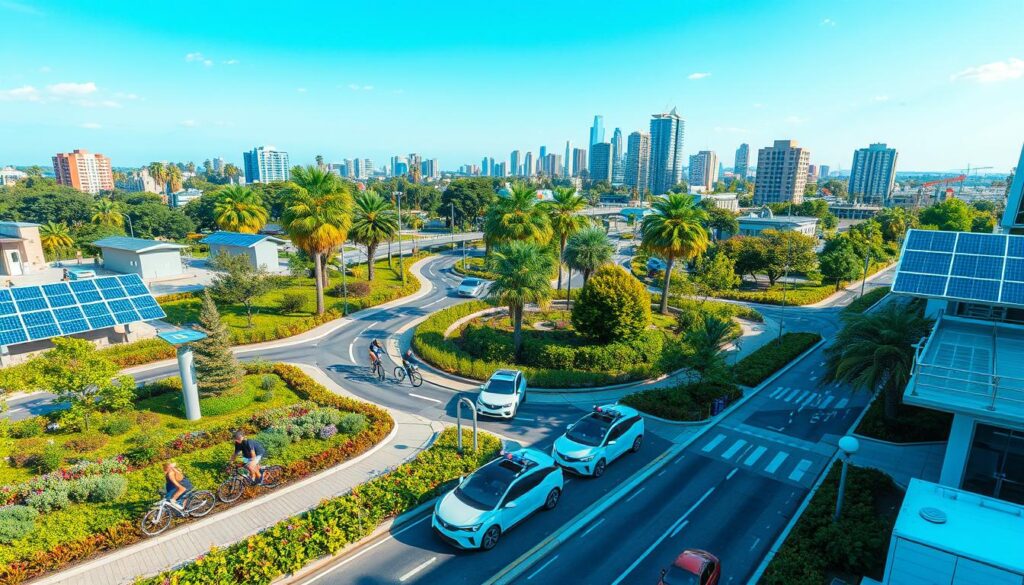
Self-driving cars could greatly reduce the harm caused by transportation. They can plan the best routes, cut down on traffic jams, and lower emissions. Eco-friendly features in self-driving cars are key in our fight against climate change.
Decreased Carbon Emissions
One big benefit of self driving cars is their ability to cut down carbon emissions. They use smart algorithms to drive more efficiently than humans. This can save 4-10% of fuel, which means less pollution.
“Automated cars can reduce energy consumption in transportation up to 90%.” – Research study
Also, electric self-driving cars are even better for the environment. By 2025, 20% of new cars might be electric. This combo of tech and electric power could cut carbon emissions a lot.
Improved Traffic Flow and Reduced Congestion
Self-driving cars can make traffic flow better and cut down on jams. They talk to each other and the road, driving smoothly. This can make highways up to 60% less congested.
| Scenario | Fuel Consumption Reduction | CO2 Emissions Reduction | Travel Speed Increase |
|---|---|---|---|
| 100% Autonomous Vehicles | 18% | 25% | 20% |
| 25% Autonomous Vehicles | 9% | 12.5% | 10% |
The advantages of autonomous vehicles go beyond just less traffic. They could mean fewer cars on the road. By 2030, over 11 million shared driverless cars might be on the road. This could help the environment a lot.
Electric vehicles and self-driving cars together are a strong answer to our transportation problems. By using these technologies and making good policies, we can make our future mobility cleaner and greener.
Economic Advantages
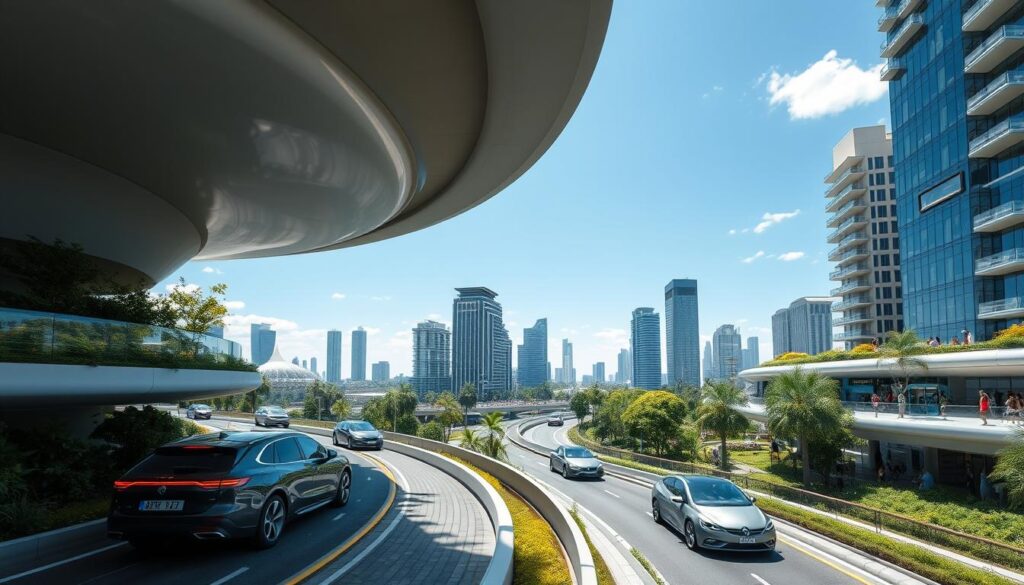
The arrival of self-driving cars is bringing big economic wins. They offer many driverless car pros and self-driving vehicle perks. As this tech gets better, we’ll see more savings and new jobs in different fields.
One big win is lower insurance costs. Most accidents are caused by human mistakes. Self-driving cars could cut these accidents by a lot. This means lower insurance bills for car owners.
Cost Savings on Insurance and Fuel
There’s also a big win in fuel savings. Self-driving cars can find the best routes, saving money for businesses. They use smart algorithms and traffic data to use less fuel and cut down on traffic jams. This saves money and helps the planet.
| Economic Advantage | Potential Impact |
|---|---|
| Reduced Insurance Costs | Lower premiums due to decreased accident risk |
| Fuel Efficiency | Optimized routes and speeds for reduced consumption |
| Parking Space Reduction | Better land use in urban areas |
| Increased Highway Capacity | Autonomous vehicles can operate closer together |
Job Creation in the Tech Sector
Some worry about jobs lost with self-driving cars. But, this tech is also creating new jobs in tech. As more money goes into this tech, we’ll need more people in tech fields. This means more jobs and growth in the tech world.
The projected number of self-driving cars on the road by 2025 is over 8 million, with estimates suggesting it could rise to 10 million by 2030 and nearly all cars on the road being autonomous by 2050.
As more self-driving cars hit the roads, the economy will change a lot. We’ll see savings on insurance and fuel, and new jobs in tech. The driverless car pros and self-driving vehicle perks are set to change transportation and the economy for the better.
Consumer Acceptance and Behavioral Changes
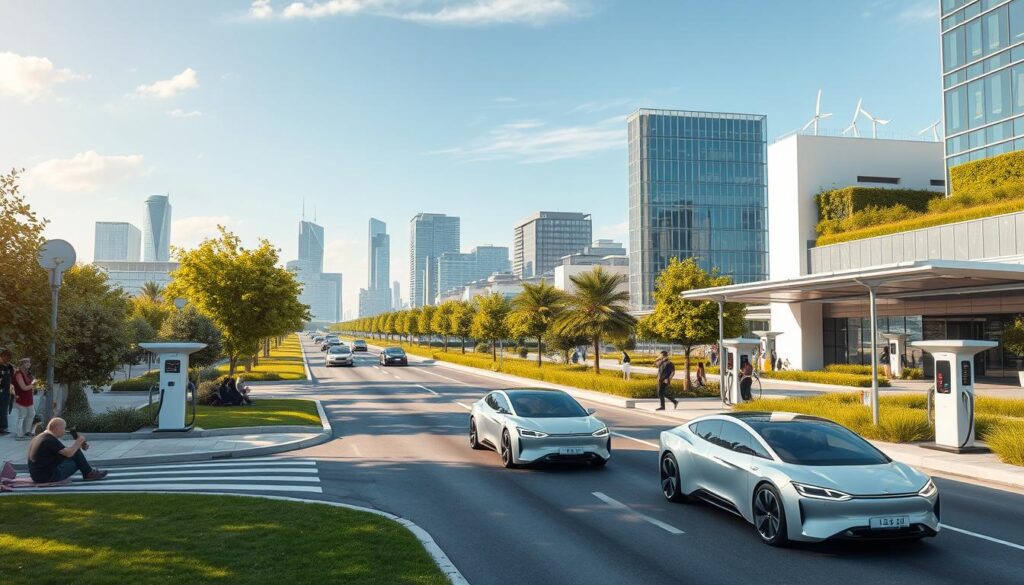
As self-driving cars get better, how people feel about them matters a lot. A survey found that 98% of people have heard of self-driving cars. After watching a video, 54% said they understood the tech well.
The survey also showed who’s most excited about self-driving cars. Most of the interested people don’t have kids and own more than one car. Almost everyone drives every day. When money isn’t a problem, 60% in Frisco want a self-driving car soon.
Public Perception of Autonomous Vehicles
Opinions on self-driving cars vary. In Frisco, 54% like them, 22% are neutral, and 24% don’t. But, those who’ve tried them are more positive, with 78% having a good view. People prefer different levels of self-driving, with some wanting more than others.
| Age Group | Intent to Use Self-Driving Vehicles |
|---|---|
| 18-29 | 75% |
| 30-44 | 68% |
| 45-59 | 54% |
| 60+ | 42% |
Young people and early tech users want self-driving cars the most. The table shows young people are most excited.
The Shift in Transportation Habits
Self-driving cars will change how we travel. People might read or sleep in cars. This could make ride-sharing more popular and reduce car ownership.
According to the National Highway and Transportation Safety Administration, autonomous vehicles are categorized into 5 levels of functionality: Level 0 – no automation, Level 1 – driver assistance system, Level 2 – partial automation, Level 3 – conditional automation, Level 4 – high automation, and Level 5 – full automation.
Self-driving cars offer many benefits, like safety and less traffic. As more people accept them, our future travel will be very different.
The Future of Urban Planning and Infrastructure
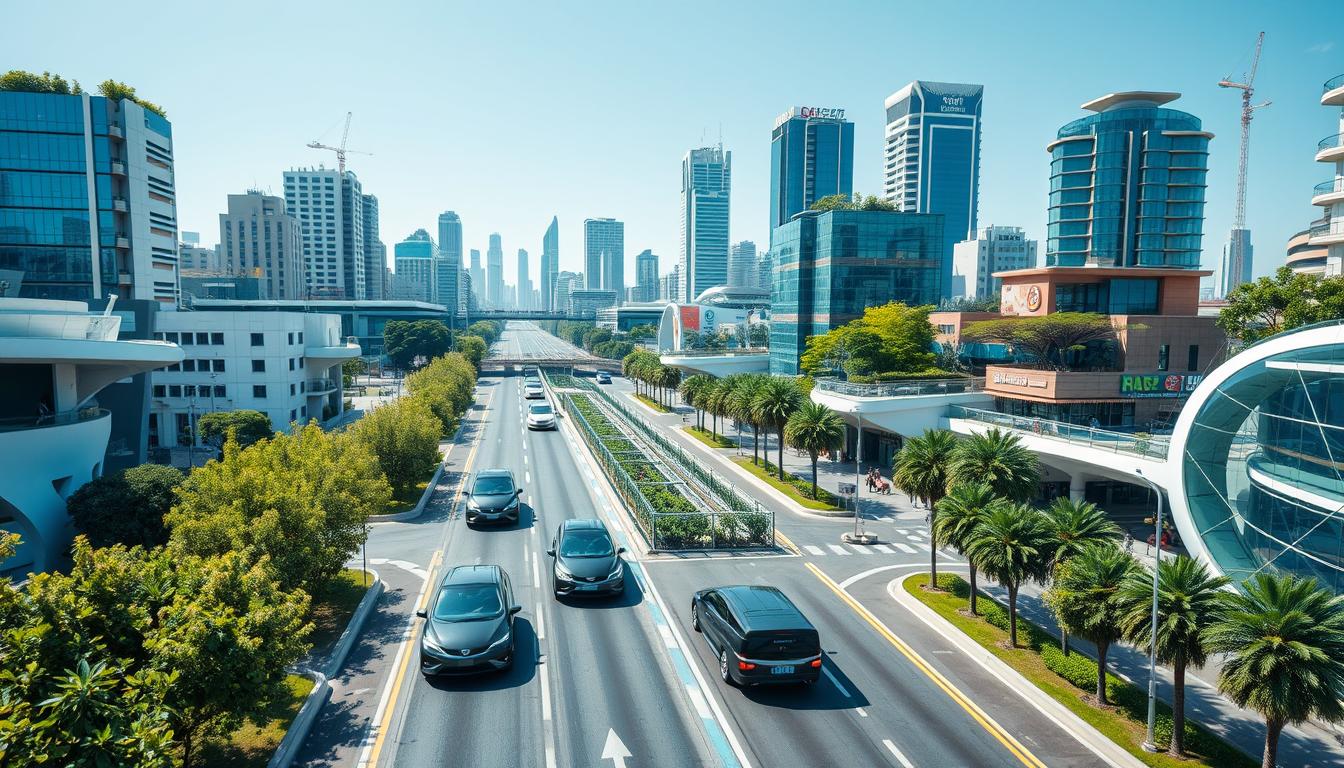
Autonomous vehicles are changing how cities are planned and built. As more self-driving cars hit the roads, cities must adjust. This change could make cities better for everyone, making life easier and more enjoyable.
Integration with Smart City Concepts
Autonomous vehicles are key to smart cities. They use advanced tech to improve traffic and safety. By 2040, they might make up half of all road travel.
Cities like Singapore and San Francisco are leading the way. They’re testing self-driving taxis and shuttles. This could make cities more efficient and green.
Redesigning Roadways for Autonomous Vehicles
Autonomous cars will change how we design roads. They can drive more smoothly, making roads narrower and needing less parking. This could free up space for parks, bike lanes, or walking areas.
Planners must think about safety for all users. They’ll need to make sure roads are safe for everyone. Also, smart traffic systems can help manage traffic better, making cities better places to live.
FAQ
How do self-driving cars enhance safety on the roads?
Self-driving cars could cut down on the 1.24 million deaths from car accidents each year. They do this by removing human mistakes, which cause 94% of crashes. These cars use sensors and AI to spot dangers and act quicker than humans.
What are the economic benefits of self-driving cars?
Self-driving cars could bring more jobs and investment in the U.S. They might also lower insurance costs by reducing accidents. Plus, they could make deliveries cheaper and more efficient.
They might also free up space in cities by reducing the need for parking.
How can self-driving cars increase accessibility and mobility?
Self-driving cars could help seniors and people with disabilities live more freely. They could also improve travel in cities without public transport. This could make getting around cheaper and more accessible.
What impact will self-driving cars have on the environment?
Self-driving cars could use less fuel by driving more smoothly. They might also reduce traffic jams, saving fuel and cutting down on pollution. This could lead to more people choosing electric cars, further lowering pollution.
How will consumer acceptance influence the adoption of self-driving cars?
As self-driving cars get better, more people will start to see their benefits. How much people accept them will affect how fast they become common. This could change how we travel, with more sharing and less owning.
What technological advancements are crucial for the development of self-driving cars?
Self-driving cars need advanced tech like automated driving and braking. They also need cameras and sensors for safety, AI for quick thinking, and fast computers for learning. LiDARs and AI are key for navigating and avoiding crashes.