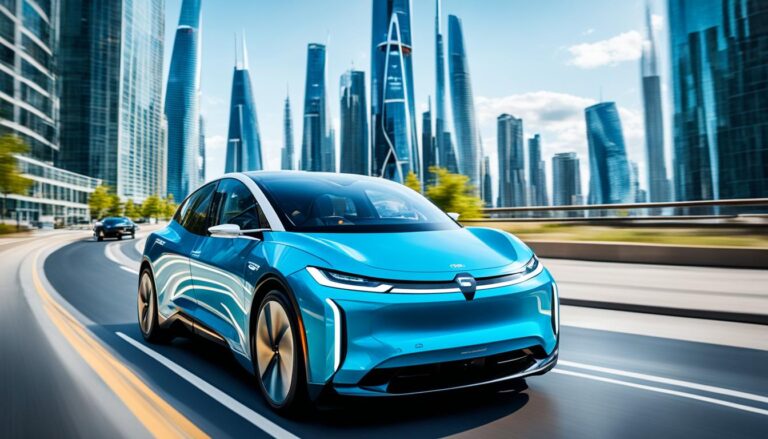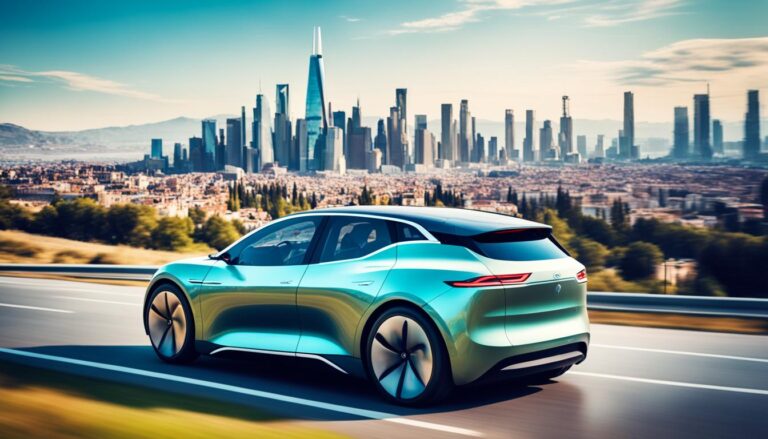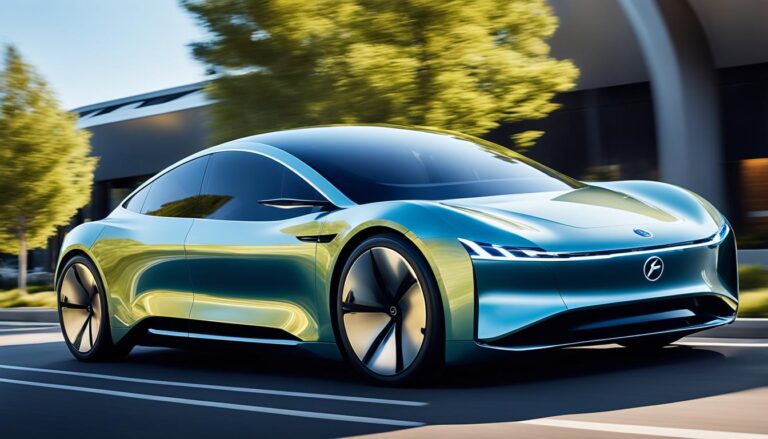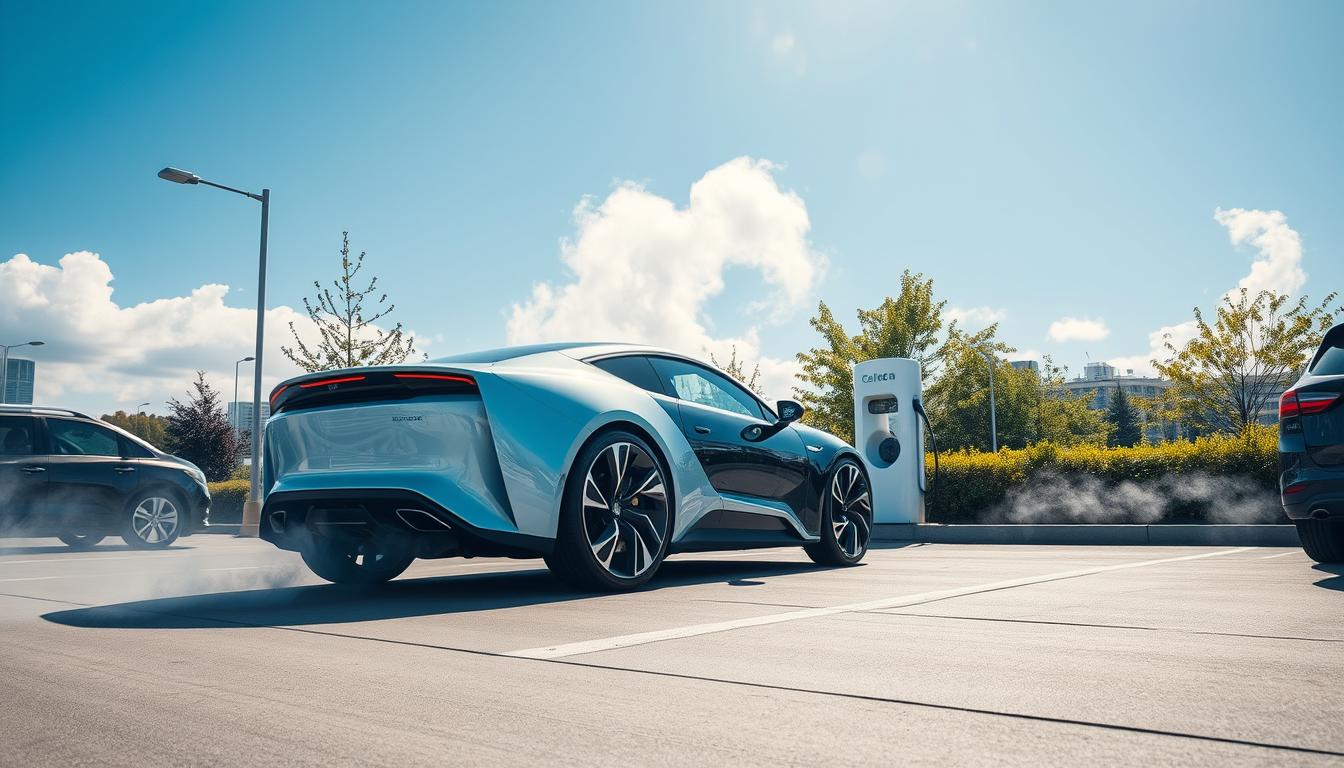
Many people are choosing electric vehicles over traditional cars because they are better for the environment. Electric cars can greatly reduce tailpipe emissions. These emissions are a big problem for air quality and climate change.
Electric cars don’t have tailpipes, so they don’t release harmful pollutants like gasoline cars do. This means they don’t send carbon dioxide, nitrogen oxides, and other harmful particles into the air. By not having tailpipe emissions, electric cars help make the air cleaner and reduce health risks.
But, it’s important to remember that electric cars’ environmental impact depends on how the electricity to charge them is made. If the electricity comes from coal or natural gas, electric cars might not be as green. But, as more countries use clean energy, electric cars will become even better for the planet.
Key Takeaways
- Electric vehicles produce zero tailpipe emissions during operation, reducing air pollution and greenhouse gas emissions.
- The environmental impact of electric cars depends on the source of electricity used for charging, with cleaner energy sources leading to lower lifecycle emissions.
- Over 53,000 publicly accessible charging stations with more than 137,000 charging ports were available in the United States in 2023.
- Electric vehicle batteries may last 12 to 15 years in moderate climates, and manufacturers offer 8-year/100,000-mile battery warranties.
- As countries transition towards renewable energy sources, the environmental benefits of electric cars are expected to increase further.
Understanding Tailpipe Emissions
Tailpipe emissions are key when talking about how vehicles affect the environment. These emissions come from the exhaust of cars with combustion engines. They pollute the air and contribute to climate change, harming both nature and people’s health.
Definition of Tailpipe Emissions
Tailpipe emissions happen when cars burn gasoline or diesel. This burning process creates pollutants that come out through the exhaust. These pollutants are mainly air pollutants and greenhouse gases.
Sources of Tailpipe Emissions
Most tailpipe emissions come from cars’ combustion engines. These engines burn fossil fuels to work, which means they release pollutants. The main pollutants include:
- Carbon monoxide (CO)
- Nitrogen oxides (NOx)
- Particulate matter (PM)
- Hydrocarbons (HC)
- Carbon dioxide (CO2)
Environmental Impact of Tailpipe Emissions
Tailpipe emissions have a big impact on the environment. Pollutants like nitrogen oxides and particulate matter cause smog and acid rain. They also harm human health, making breathing problems worse and raising heart disease risks.
Greenhouse gases, like carbon dioxide, lead to climate change. Vehicle emissions are a big part of these gases, making the car industry a key area for climate change action.
Electric vehicles, including all-electric, plug-in hybrid, and hybrid models, generally produce lower tailpipe emissions compared to their conventional counterparts. In fact, all-electric vehicles have zero tailpipe emissions when running solely on electricity.
But, we must look at the whole life cycle of vehicles. This includes emissions from making fuel and cars. Also, how we charge electric vehicles affects their environmental impact.
How Electric Cars Function
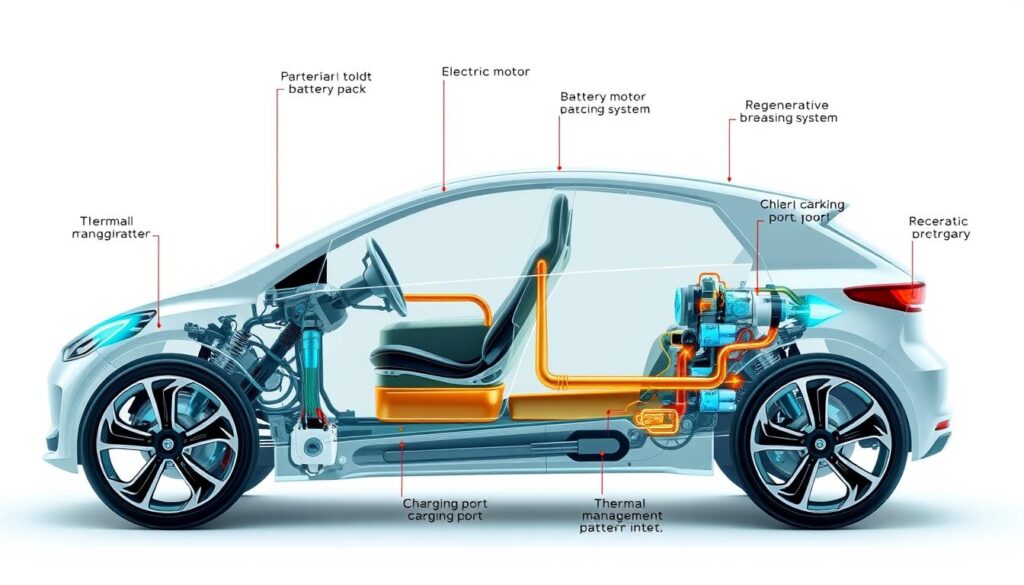
Electric vehicles (EVs) are changing how we think about cars. They are cleaner and more efficient than traditional cars. At the center of this change is electric vehicle technology. This technology lets EVs run on electricity stored in big, rechargeable batteries.
Overview of Electric Vehicle Technology
An EV has a battery pack, electric motors, and a control system. The battery pack is the main power source. It gives electricity to the motors that move the car. Lithium-ion batteries, used in EVs, last 8-10 years and are getting greener.
EVs also have regenerative braking. This feature captures energy when you brake and turns it into electricity. It makes the car more energy efficient. This system also means less wear on brakes and lower maintenance costs.
Differences from Internal Combustion Engines
EVs don’t use fossil fuels like traditional cars do. They are battery-powered. This means no need for a gasoline engine, fuel tank, or tailpipe. EVs don’t produce direct emissions, and PHEVs only do when their engine is on.
“The adoption of electric vehicles is not only about embracing cutting-edge technology; it’s about making a conscious choice to reduce our environmental impact and pave the way for a cleaner, more sustainable future.”
Running an EV is cheaper than a gasoline car. Electricity costs about 10 cents per kWh. This means an EV costs about 3 cents per mile to run. EVs also need less maintenance, making them a smart choice for those who care about the environment and saving money.
Emissions from Electric Vehicles
Electric vehicles are becoming more popular as a green alternative to gas cars. They offer many benefits, but it’s important to know about their emissions.
Zero Tailpipe Emissions Explained
Electric vehicles have a big advantage: zero tailpipe emissions. Unlike gas cars, they don’t release harmful pollutants like carbon dioxide. This makes the air in cities cleaner.
A 2023 study found that an electric car needs to be driven for 19,500 miles to match a gas car’s emissions. This shows electric cars are good for the environment in the long run.
Understanding Energy Sources for Charging
Even though electric cars don’t emit pollutants while driving, we must think about how they’re charged. The carbon footprint of an electric car depends on the electricity source. In areas with lots of renewable energy, like solar or wind, charging an electric car is much cleaner.
In 2021, the International Council on Clean Transportation found that electric cars are better for the environment. They reported a 66-69% reduction in emissions in Europe and a 60-68% reduction in the U.S. This shows electric cars can help lower greenhouse gas emissions, even more so in places with cleaner energy.
As countries move towards renewable energy, electric vehicles will have even more benefits. Governments and people need to support clean energy to make electric cars even more environmentally friendly.
The Role of Renewable Energy
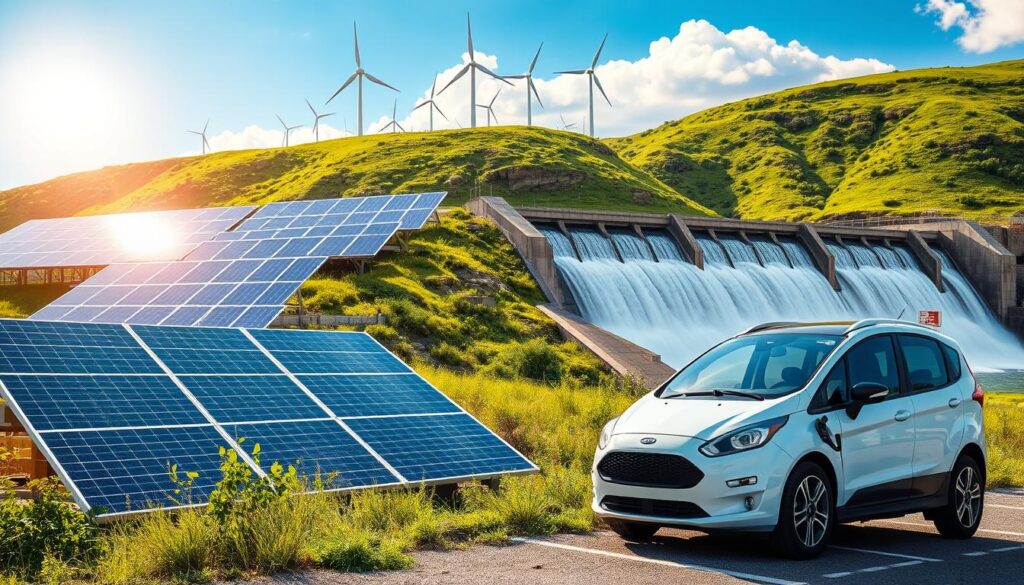
The world is moving towards a greener future, and renewable energy is key in powering electric cars. Using clean electricity from solar, wind, and water can cut down on emissions from charging EVs.
Benefits of Renewable Energy in EV Charging
Switching to electric cars powered by renewable energy brings many environmental perks:
- Zero tailpipe emissions, cutting down greenhouse gas emissions from cars
- Less energy used because electric motors are more efficient
- Could lower emissions by up to 90% by 2050 with renewable energy
Also, using renewable energy for EVs tackles concerns about their life cycle emissions. This makes them a cleaner choice than gas cars.
Examples of Renewable Energy Sources
Several renewable energy sources are great for charging electric vehicles:
- Solar power: Uses sunlight to generate electricity
- Wind energy: Turns wind into electricity with turbines
- Hydropower: Makes electricity from water movement in rivers and dams
Many countries are turning to these clean sources for their electric grids. This move is crucial for a greener future in transportation.
The table below shows how electric vehicles powered by different energy sources compare:
| Energy Source | Emissions Reduction |
|---|---|
| Renewable Energy | Up to 89% |
| Mix of Fossil Fuels and Clean Energy | 64% (on average) |
| Fossil Fuels Only | Minimal reduction |
By using renewable energy for EVs and moving away from gas, emissions could drop to 90% of today’s levels by 2050.
As battery tech improves and charging spots grow, electric cars and renewable energy will be vital for a greener transport system.
Comparing Electric Cars and Gasoline Vehicles
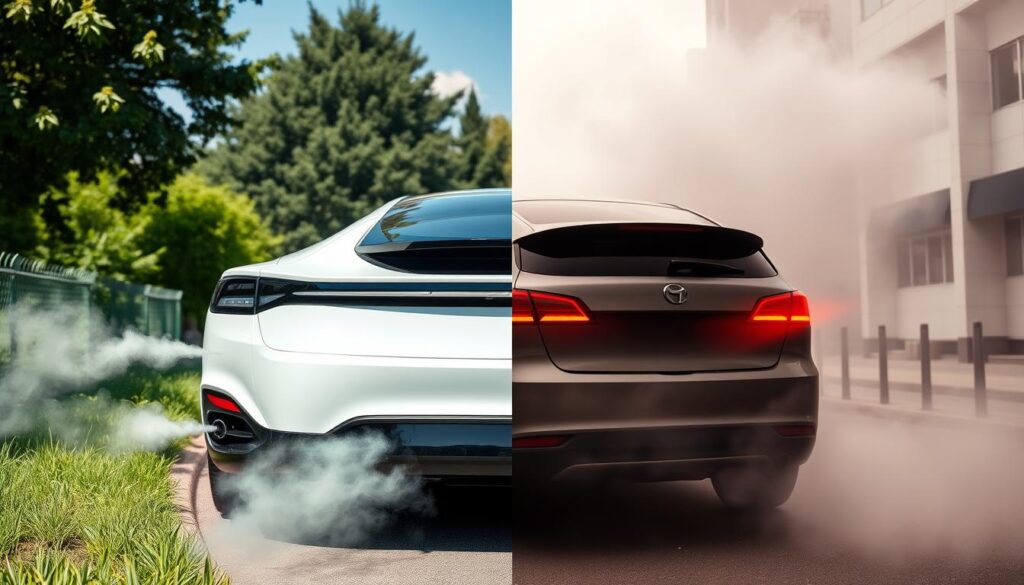
Electric cars and gasoline vehicles have different ways of affecting the environment. Electric cars don’t have tailpipe emissions. But, we must look at the whole life cycle, including how they’re made, to understand their true impact.
Emissions Profiles of Electric vs. Gasoline Cars
Studies show electric vehicles (EVs) cut emissions by more than half compared to gas cars. Electric cars make 52% less greenhouse gas emissions than gas cars. Electric trucks make 57% less than gas trucks.
The EPA uses a model from Argonne National Laboratories to compare emissions. A study found that after 13,500 miles, a Tesla 3 is better for the environment than a gas Toyota Corolla.
Life Cycle Emissions: A Broader Perspective
Looking at the whole life cycle, electric cars need to be driven 21,300 miles to match gas cars in emissions. Electric trucks need 17,500 miles.
| Vehicle Type | Break-even Point (Miles) |
|---|---|
| Electric Car | 21,300 |
| Electric Truck | 17,500 |
The time it takes for EVs to pay off in emissions changes by region. In states with cleaner electricity, like Massachusetts and Rhode Island, it’s shorter. With 95% renewable energy, electric cars and trucks reach their break-even points after 14,800 and 12,600 miles, respectively.
The expected impact of the Inflation Reduction Act is to reduce national emissions by 60-80 percent, accelerating the decrease in manufacturing emissions for electric vehicles.
Even though fewer people think EVs are better for the environment, those who consider them still do. Making EVs more affordable, improving charging, and making them more convenient will help increase their use. This will be key to reducing emissions.
Regulations and Standards
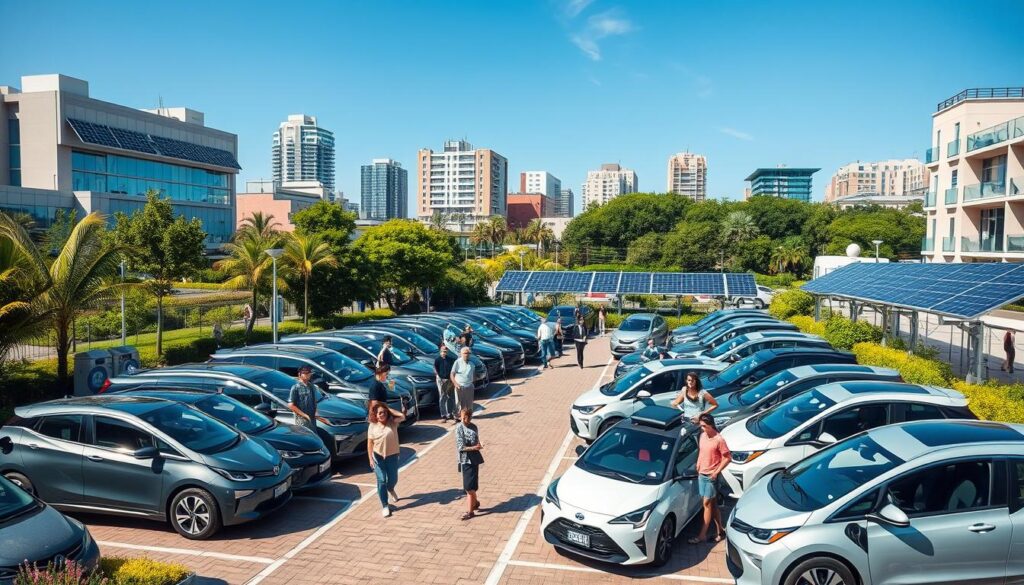
Governments around the world are fighting climate change with strict emissions regulations and incentives for electric vehicles. These steps are changing the car industry and leading to a greener future.
Government Regulations on Emissions
The Biden administration wants at least 50% of new cars to be electric by 2030. Car makers must cut emissions by half by 2032. This will cut carbon dioxide emissions by 7.2 billion metric tons by 2055, saving USD 13 billion in health costs.
| Country | Electric Vehicle Sales (% of total passenger vehicle sales) |
|---|---|
| Norway | 80% |
| China | 22% |
| United States | 6% |
Impact of Incentives on Electric Vehicle Adoption
Government incentives, like tax credits and subsidies, help people buy electric cars. In California, electric car sales jumped to 25% of new car sales in 2023. The state met its goal of 1.5 million electric cars two years early.
Consumer Reports study shows that battery electric vehicles can save consumers thousands of dollars over the vehicle’s lifetime.
With more rules and incentives, electric cars are becoming more popular. Over 100 electric car models are now available. This makes switching to electric cars easier than ever.
Future of Electric Vehicles and Emissions
The future of electric vehicles (EVs) looks bright. New technologies are making them cleaner and more sustainable. As we move towards cleaner energy, EVs will become more popular, cutting down on emissions.
Innovations Reducing Emissions Further
New battery tech, better charging systems, and clean energy integration are on the horizon. These advancements will make EVs more efficient and green. Improved batteries and materials will boost EV performance and reduce environmental harm.
More charging stations powered by clean energy will also lower emissions. This makes EVs a top choice for eco-friendly travel.
The Shift Towards Sustainable Practices
Everyone is now seeing the value of sustainable living and clean energy. Governments and companies are offering incentives for EVs. This, along with growing public awareness, is pushing us towards greener transport.
As EVs gain popularity and infrastructure grows, their positive effect on the environment will grow. This will help create a cleaner world for future generations.
FAQ
Do electric cars produce tailpipe emissions?
No, electric cars don’t have tailpipe emissions. They run on electricity from batteries, not fossil fuels. This means no pollution from their exhaust.
What are the main sources of tailpipe emissions in conventional vehicles?
Conventional cars burn gasoline or diesel, leading to emissions. These emissions harm the air and contribute to climate change. They’re a big problem for our health and planet.
How do electric vehicles differ from internal combustion engines?
Electric cars use batteries and electric motors, unlike gas cars. They also use regenerative braking to save energy. This makes them more efficient and different from traditional vehicles.
Do the emissions associated with charging electric vehicles vary by region?
Yes, charging EVs can have different emissions based on where you live. Places with lots of renewable energy have cleaner EVs. But areas that rely on fossil fuels have higher emissions.
How can renewable energy sources reduce the emissions of electric vehicles?
Renewable energy like solar and wind can make EVs even cleaner. Using clean energy for charging reduces their carbon footprint. This makes EVs a greener choice for transportation.
What factors should be considered when comparing the emissions of electric and gasoline vehicles?
It’s important to look at the whole life cycle of both types of vehicles. EVs have lower or no tailpipe emissions. But making them can create more emissions. Still, over time, EVs are often cleaner, thanks to cleaner energy sources.
How are governments promoting the adoption of electric vehicles to reduce emissions?
Governments are setting rules to cut emissions and encourage EVs. They aim to phase out gas cars and offer incentives like tax breaks. These steps help make EVs more appealing.
What advancements are expected to further reduce emissions from electric vehicles in the future?
The future of EVs looks bright with new tech on the horizon. Better batteries, charging systems, and renewable energy will make EVs even cleaner. As more people choose EVs, emissions from driving will drop significantly.