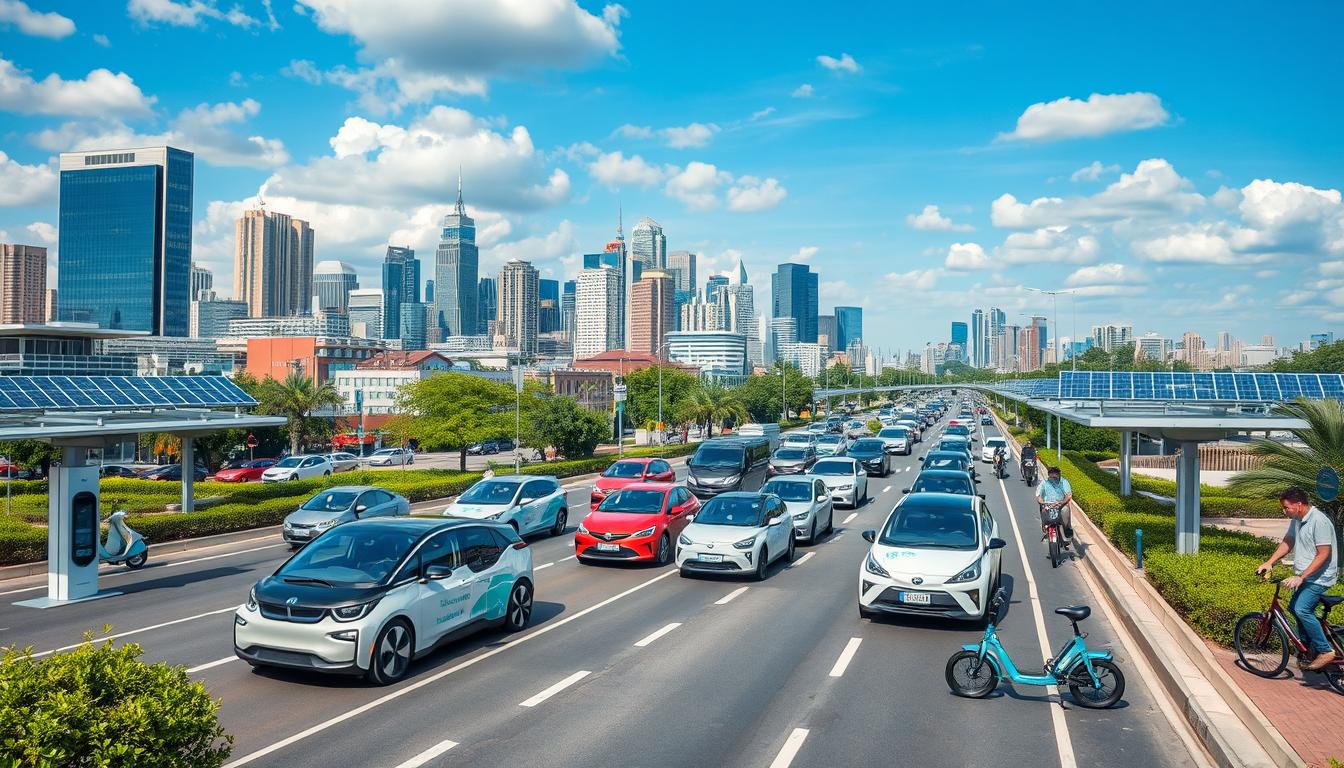
The electric vehicle market has seen huge growth in the second quarter of 2024. Global sales hit a record high. Nearly 2.6 million EVs were sold worldwide since May 2024.
This marks a big step towards more sustainable transportation. China’s market has been a big part of this growth. EV sales in China have soared, while sales of petrol and diesel cars have dropped by 20% in June.
This suggests that cars with internal combustion engines might soon be a thing of the past in China. By 2028, electric cars could be the norm as more people choose them over traditional vehicles.
In the United States, EV sales have also seen a big jump. There was a 12% increase in EV sales in the second quarter compared to the first. Over 1.15 million EVs have been sold in the US by June.
This shows that Americans are increasingly looking for eco-friendly cars. Despite challenges like policy issues and tariffs on Chinese EVs, the European market is holding strong. In fact, 4 out of 5 EU countries saw an increase in EV sales between May and June.
Germany and the UK have seen their highest EV market shares since December 2023. Germany reached 15% and the UK reached 19%.
Key Takeaways
- Global EV sales reached a record high in Q2 2024, with nearly 2.6 million units sold since May.
- China’s domestic market has been a major contributor to the growth, with a decline in petrol and diesel vehicle sales.
- The US experienced a 12% increase in EV sales in Q2 2024 compared to Q1.
- Despite challenges, the European market has shown resilience, with increasing EV market shares in key countries.
- Emerging markets such as Thailand, India, Brazil, Chile, and Mexico have collectively doubled their EV sales compared to the previous year.
Overview of the Global EV Market Landscape
The electric vehicle (EV) market has grown a lot in recent years. Sales jumped by 506% from 2019 to 2023. ABI Research says 16.84 million EVs will be sold worldwide in 2024, a 21% increase from last year.
This growth is expected to keep going. By 2030, EV sales could reach 47.44 million annually.
Many factors have helped the EV market grow. Government policies, good incentives, and better batteries are key. Governments offer subsidies, tax breaks, and other incentives to encourage EV use.
In the United States, for example, electric vehicle incentives were increased in Q3. This led to more sales. The “leasing loophole” also helped, allowing more buyers to get government incentives.
Key Drivers Behind EV Sales Growth
Several factors have driven EV sales up:
- Supportive government policies and regulations promoting EV adoption
- Attractive ev incentives, including subsidies, tax breaks, and other financial benefits
- Rapid advancements in battery technology, improving vehicle range and performance
- Increasing consumer awareness and preference for environmentally friendly transportation options
- Expanding charging infrastructure, making EV ownership more convenient and accessible
Impact of Government Policies
Government policies have been crucial for EV growth. Countries aim to cut carbon emissions and move to cleaner transport. Policies include:
- Subsidies and tax incentives for EV purchases
- Stricter emission standards for traditional internal combustion engine vehicles
- Investment in charging infrastructure development
- Preferential parking and lane access for EVs
- Mandates for automakers to produce a certain percentage of EVs in their fleet
Technological Advancements in EVs
Technological progress, mainly in battery tech, has changed the EV game. Better batteries make EVs more affordable and practical. Key advancements include:
- Lithium-ion battery improvements, enabling longer driving ranges and faster charging times
- Solid-state battery research, promising even higher energy density and safety
- Battery management systems that optimize performance and extend battery life
- Lightweight materials and aerodynamic designs to enhance vehicle efficiency
“The rapid growth of the EV market is a testament to the power of innovation, policy support, and shifting consumer preferences. As battery technology continues to advance and charging infrastructure expands, we can expect EVs to become an increasingly dominant force in the automotive industry.”
Regional Insights into EV Sales Performance
The electric vehicle (EV) market has grown a lot in recent years. Different regions are adding to this growth. Some areas are already big players, while others are starting to grow fast. Let’s explore the regional ev sales and what’s driving these trends.
North America: Trends and Predictions
In the United States, electric car sales jumped to 1.4 million in 2023. This is a 40% increase from 2022. The Clean Vehicle Tax Credit helped boost sales for some models.
Falling fuel prices slowed EV sales in 2019. But the region is bouncing back and expected to keep growing.
Europe: Leading the Charge
Europe is leading the EV charge. In 2023, new electric car registrations hit nearly 3.2 million, up 20% from 2022. Germany saw 18% of car sales as battery electric and 6% as plug-in hybrid.
The Nordics and the Netherlands are also at the forefront. Norway’s market share was an impressive 56% in 2019.
Asia-Pacific: Emerging Markets and Challenges
The Asia-Pacific region is growing fast in EV adoption. China leads with 8.1 million new electric car registrations in 2023. This is a 35% increase from 2022.
But, China faced challenges in 2019. Slashed subsidies led to a drop in plug-in hybrid sales and slower BEV growth.
Other markets like India, Thailand, Vietnam, and Malaysia are growing too. Government help, lower taxes, and carmaker investments are driving this growth. This shows big potential for the Asia-Pacific region.
| Country | Electric Car Registrations (2023) | Year-on-Year Growth |
|---|---|---|
| India | 80,000 | 70% |
| Thailand | 90,000 | Significant |
| Vietnam | 30,000 | Skyrocketed from under 100 in 2021 |
| Malaysia | 10,000 | More than tripled |
As the world moves towards electric vehicles, regional sales will shape the future of transport. With the right policies, tech, and consumer choices, the EV market will keep growing and innovating everywhere.
Major Automakers Leading EV Sales

The electric vehicle (EV) market has seen huge growth, with sales hitting new highs in 2024. As more people want green cars, automakers are working hard to get a bigger piece of the market. Tesla is leading the way with its innovative EVs.
Tesla’s Dominance and Innovations
Tesla is a big name in EVs, even with more companies joining the race. In Q3 2024, Tesla’s share of the U.S. EV market was 48%, down from 62% in 2022. But, Tesla’s sales went up by 6.6% in that quarter, thanks to the Cybertruck. Tesla keeps pushing EV tech forward, making it a top player.
Traditional Automakers’ Adaptation
Older car makers are now focusing on EVs to keep up. General Motors saw a 60% jump in EV sales, and Ford’s EV sales grew by 12%. Models like the Honda Prologue and Chevrolet Equinox EV are becoming popular.
The table below shows the EV sales share of different car makers in the U.S.:
| Automaker | EV Sales Share in the U.S. |
|---|---|
| Tesla | 100% |
| Smart | 96% |
| BMW | 7.37% |
| Porsche | 5.17% |
| Fiat | 14.50% |
| Ford | 0.39% |
| Toyota | 1.24% |
| Chevrolet | 1.80% |
Rise of New Players in the Market
New companies like VinFast are joining the EV market, making it more competitive. This competition will drive new ideas and give people more choices, helping green cars become more popular.
Consumer Preferences and Trends
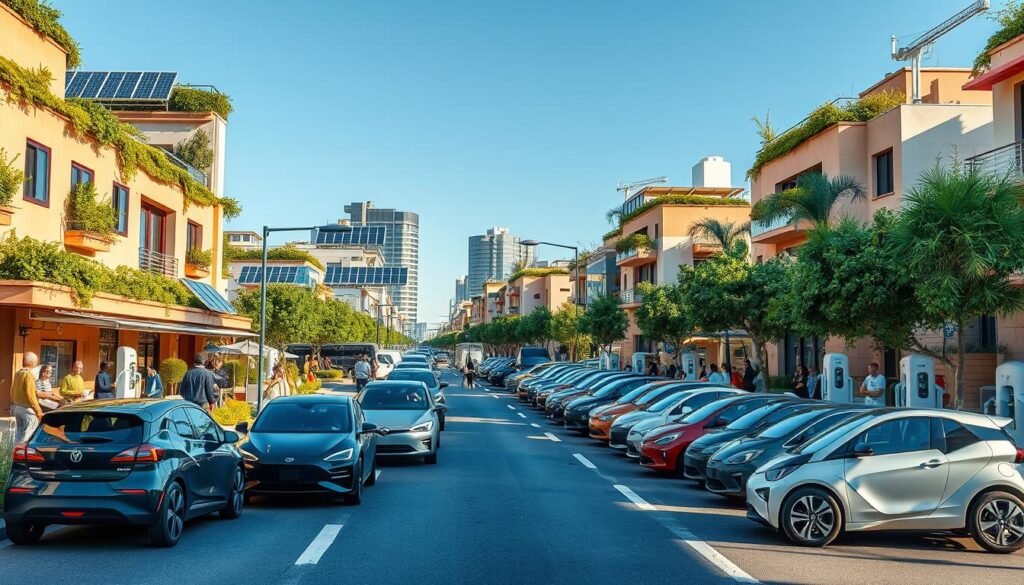
The global electric vehicle (EV) market is seeing a big change. More people want sustainable and eco-friendly cars. This is because of growing environmental awareness, government help, and cheaper EV models.
A recent survey found that 52% of people plan to buy a car. They mostly want electric, plug-in hybrid, or hybrid cars. China leads with 60% of all electric car sales in 2022. Europe and the U.S. also saw big increases in EV sales.
Factors Influencing EV Purchases
Several things are making people choose EVs:
- More people know EVs are good for the environment.
- Government offers help and tax credits for EV buyers.
- There are more affordable EV models now.
- Charging spots are getting easier to find.
The Role of Sustainability in Buying Decisions
Many people now think about the planet when buying cars. They want to help the environment and make the future greener. Governments are setting goals to stop using cars that pollute, pushing people towards EVs.
“Consumers are increasingly aware of the environmental impact of their transportation choices, and they are actively seeking out more sustainable options like EVs.”
Increased Interest in Luxury EVs
Even though EVs are getting cheaper, luxury ones are gaining fans. High-end models from big brands and new players are attracting those who want both luxury and green cars. The Tesla Cybertruck’s success shows luxury EVs have a special appeal.
As people’s tastes change and green living becomes more important, the EV market will keep growing. Car makers need to offer a wide range of EVs to meet everyone’s needs and wants around the world.
The Role of Charging Infrastructure in EV Adoption

The demand for electric vehicles (EVs) is growing fast. A strong and easy-to-use charging infrastructure is key. The state of charging networks worldwide is crucial for EV adoption’s future.
Companies and governments are spending a lot on charging infrastructure. The European Union wants to make mid-shift charging easier. Big car makers like Traton, Volvo, and Daimler have put EUR 500 million into fast and ultra-fast charging points in Europe.
Current State of Charging Networks Worldwide
Charging networks differ a lot around the world. Some countries have grown their charging spots a lot. But others struggle to make charging easy for everyone.
Most electric trucks and buses will charge during breaks. They might need up to 1 MW to charge quickly in 30-45 minutes.
| Charger Type | Residential Cost | Public/Workplace Cost |
|---|---|---|
| Level 1 | $0 to $900 | – |
| Level 2 | $380 to $690 | ~$2,500 per connector |
| DC Fast | – | $20,000 to $60,000 per connector |
Investments in Infrastructure Development
Everyone sees the need for more charging spots. In the U.S., the 30C Tax Credit can cut costs for EV charging. There are plans for high-power charging projects in the U.S. and Europe.
Planning charging stations near transmission lines can save money and make chargers more useful.
Challenges in Charging Accessibility
Even with more charging spots, making charging easy everywhere is hard. Building 1 MW chargers will cost a lot. We need to start building charging stations fast to keep up with EVs.
As we move to electric vehicles, charging infrastructure is vital. We must tackle challenges and invest in good charging networks. This will help us reach a greener future in transportation.
Environmental Impact of Increased EV Sales
The rise in electric vehicle (EV) sales is good for the environment, mainly by cutting down on greenhouse gas emissions. As more people choose EVs, the chance to reduce emissions grows. But, we must look at EVs’ whole lifecycle, from making to recycling, to see their true environmental effect.
Reduction in Greenhouse Gas Emissions
EVs can greatly lower greenhouse gas emissions since they don’t emit anything while running. In 2021, the U.S. saw 1.4 million EVs sold, making up 9.5% of all vehicles. This is a big jump from 3.2% just five years before. The government aims for half of all vehicles sold in 2030 to be zero-emission, mostly EVs.
Lifecycle Analysis of EVs vs. Traditional Vehicles
EVs are better for the environment when they’re running, but their whole lifecycle matters. Making EV batteries needs mining and processing of materials like lithium and nickel. A 60 kWh battery pack for smaller EVs has about 170kg of minerals, including 39kg of nickel and 5kg of lithium.
Bigger EV batteries, like those for SUVs, need even more materials. In 2022, SUVs made up 40% of EV sales. This means they use up to 75% more raw materials than smaller EVs.
| EV Model Type | Share in 2019 | Share in 2022 |
|---|---|---|
| SUVs | 30% | 40% |
| Small and Medium Cars | 70% | 40% |
| Large Models (excluding SUVs) | – | 15% |
Battery Recycling and Sustainability Concerns
As EV battery demand grows, worries about sustainable mining and battery recycling rise. By 2030, there might be a 55% lithium shortage and an 8% shortage in nickel and manganese. To tackle these issues, the EU has set rules for EV batteries to include recycled materials.
Investing in advanced recycling technologies and a circular economy for EV batteries is key. This will help the EV industry stay sustainable in the long run.
The environmental impact of EVs must be considered holistically, taking into account the entire lifecycle, from raw material extraction to end-of-life management, to ensure a truly sustainable future for transportation.
Future Forecasts for EV Sales Growth
The electric vehicle (EV) market is growing fast. New technologies and more people knowing about EVs are helping this growth. By 2025 and later, EV sales are expected to rise a lot.
Projections for 2025 and Beyond
Experts say EV sales will keep going up. The International Energy Agency (IEA) thinks the EV market share will hit new highs. Countries like the UK might see EVs and plug-in hybrids make up 25% of the market by 2024.
In the US, EVs are expected to be 29.5% of new car sales by 2030. This is a big jump from 3.4% in 2021. By 2030, the US might sell 4.7 million EVs, up from 500,000 in 2021.
Worldwide, over 26 million EVs are expected to be sold by 2030. Right now, about 25.19 million EVs are on the road.
Emerging Technologies Shaping Future Sales
New technologies will help EV sales grow. Better batteries and charging solutions will make EVs more appealing. Luxury cars might go 250-300 miles on a single charge by 2020.
Affordable SUVs and crossovers could also reach 250 miles. Charging times will get shorter, aiming for 15-20 minutes for an 80% charge by 2022.
The table below shows some key EV sales and tech predictions:
| Projection | Value | Year |
|---|---|---|
| Passenger EV sales per year | 30 million | 2027 |
| Passenger EV sales per year | 73 million | 2040 |
| Electric vehicles on the road | 476 million | 2035 |
| Electric vehicles on the road | 722 million | 2040 |
| Annual lithium-battery demand | 5.9 terawatt-hours | 2035 |
Potential Market Challenges Ahead
Despite the bright outlook, EV sales face challenges. Issues like supply chain problems and changing government rules could slow growth. The goal of a zero-emission fleet by 2050 is ambitious and will require a big change.
Conclusion and Strategic Implications
The electric vehicle (EV) market has seen huge growth in 2024. Sales have reached new highs in many places. This growth comes from government support, new tech, and people wanting green transport.
As the market grows, everyone needs to adjust their plans. This will help them make the most of the EV boom.
Summary of Key Findings
Research on 624 EV users showed how different models help people choose EVs. Experts say we need new EV models to grow the industry. The high-end EV sales model is key for brands to stand out.
Fixing service issues in EV models is also vital for success. This makes sure EVs meet customer needs.
Recommendations for Stakeholders
To do well in the EV market, everyone needs to be ready for change. Car makers should update their models to fit EV needs. Building a strong charging network is also key for more EVs.
Working with governments and others to support EVs is crucial. This will help EVs become more popular around the world.
The Future of Transportation and Mobility Solutions
The EV market will shape the future of travel. Better batteries and more charging spots will make EVs more appealing. EVs will work better with smart cities and self-driving cars.
By following these trends and investing in new transport ideas, companies can lead the change in the transport world.
FAQ
What are the key drivers behind the growth in global EV sales?
Government policies and incentives are key drivers for EV sales growth. Technological advancements in battery technology also play a big role. These advancements have made EVs more affordable and efficient.
Which regions are experiencing the most significant growth in EV sales?
China and the US are leading the growth in EV sales. In Europe, 80% of countries saw an increase in EV sales in May and June 2024. Countries like Thailand and India in Asia-Pacific are also growing fast.
How are major automakers adapting to the growing EV market?
Big car makers are introducing new EV models and investing in EV tech. Tesla is still a leader, but new players like VinFast are entering the market. General Motors is also boosting its EV sales.
What factors influence consumer preferences when purchasing EVs?
Awareness of sustainability and government incentives are key. More affordable EV models are also attracting buyers. People want to reduce their carbon footprint and enjoy luxury EVs.
How does charging infrastructure impact EV adoption?
Charging infrastructure is crucial for EV adoption. Better infrastructure means more people can buy EVs. But, ensuring charging is available everywhere is still a challenge.
What is the environmental impact of increased EV sales?
EVs help reduce greenhouse gas emissions from transport. But, we must consider their whole lifecycle, including production and recycling. Battery recycling and sustainability are key as EVs become more common.
What are the future forecasts for EV sales growth?
The IEA predicts EVs will keep growing in market share. Countries like the UK aim for 25% EV and plug-in hybrid market share by 2024. New technologies and solving supply chain issues will shape the future of EV sales.